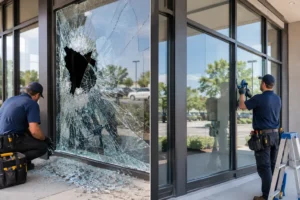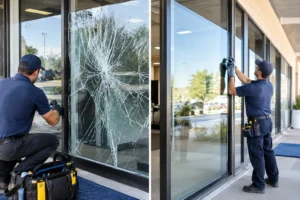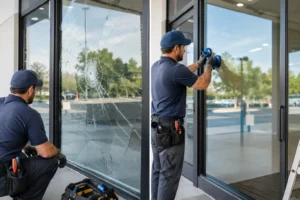
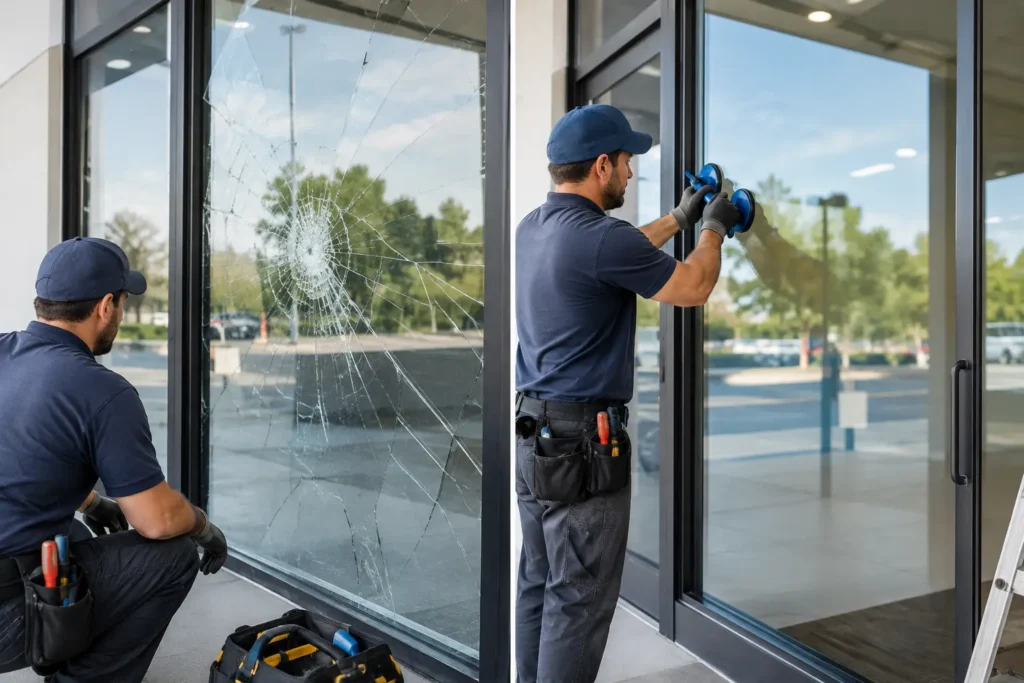
A crack in a glass door rarely stays a small problem. A thin line near the corner can spread after one hard close, a cold night, or normal daily use. If you are asking what causes door glass cracks, the answer is not always obvious from the damage alone. The cause matters because it determines whether you need a simple glass replacement, a frame repair, or immediate board-up and secure replacement service.
For homes, apartments, offices, and storefronts, damaged door glass creates more than an appearance issue. It can leave sharp edges, weaken security, allow water and drafts inside, and make the door less reliable during daily use. Here is what commonly causes cracks and what to do next.
Impact Damage Is the Most Obvious Cause
A direct hit is one of the most common reasons door glass cracks. A slammed door, moving furniture, a child’s ball, a dropped tool, or an attempted break-in can put more force on the glass than it can handle. Even tempered safety glass, which is designed to break into smaller, less dangerous pieces, has limits.
Impact damage often leaves a clear point of origin. You may see a small chip, star-shaped break, or concentrated mark where the object hit. But the visible mark does not always show the full extent of the problem. Cracks can travel through the panel, especially as the door vibrates or temperatures change.
If the glass is chipped, cracked through, loose in the frame, or beginning to crumble, keep people away from the area. Do not keep opening and closing the door to test it. A professional glass technician can determine whether the panel can remain safely in place until replacement or requires immediate removal and securing.
Temperature Changes Can Create Stress Cracks
Glass expands when it warms and contracts when it cools. Usually, a properly installed glass panel has enough room in the frame to move slightly without damage. Problems start when the glass is already under pressure or when one area heats or cools much faster than another.
In the DMV, this can happen during sharp seasonal changes, freezing nights followed by sunny mornings, or intense afternoon sun on a glass entry door. A dark exterior door, heavy window film, nearby heat source, or partial shade can create uneven temperatures across the pane. That uneven expansion is called thermal stress.
Thermal cracks often begin near an edge rather than at an obvious impact point. They may look like a long, clean line that gradually works its way inward. They are easy to mistake for accidental damage, but forcing a door or ignoring an overly tight frame can cause the crack to spread quickly.
A Tight, Damaged, or Misaligned Frame Can Crack Glass
Door glass does not work independently from the door. The frame, glazing stops, seals, hinges, and hardware all affect how pressure reaches the glass. When a door sags, sticks, swells from moisture, or is slammed because it does not latch smoothly, the glass panel can experience constant stress.
Wood doors can expand and contract with humidity. Metal frames may shift with temperature changes. In older homes, normal settling can leave a door opening slightly out of square. A door that rubs the threshold, needs force to lock, or has uneven gaps around the edges may be transferring stress into the glass.
Improper installation is another concern. Glass needs correct clearances, setting blocks, gaskets, and glazing materials to stay supported without being pinched. If a prior repair used the wrong materials or forced a replacement panel into place, a crack may appear weeks or months later. Replacing the pane without correcting the underlying door or frame issue can lead to the same failure again.
Edge Damage Often Turns Into a Full Crack
The edges of a glass panel are more vulnerable than the center. A small edge chip may occur during installation, from hardware contact, or when a door is bumped against a hard surface. It might be barely noticeable at first, especially when hidden behind trim or a gasket.
Over time, ordinary vibration and door movement can turn that small defect into a visible crack. This is one reason a panel can seem to crack “for no reason.” The damage may have started earlier, then finally reached a breaking point.
Do not try to sand, drill, or glue a cracked glass door panel. Those temporary fixes do not restore the strength of the glass, and they can make a safety issue worse. The dependable repair is to replace the damaged glass with the correct type, thickness, and safety rating for that door.
Why Does Insulated Door Glass Crack or Fog Up?
Many exterior doors use insulated glass units, often called double-pane or triple-pane glass. These units have two or more panes sealed together with a spacer between them. The space improves energy efficiency, reduces outside noise, and helps maintain more comfortable indoor temperatures.
A failed seal does not always crack the glass, but it can signal a related problem. When the perimeter seal breaks down, moisture can enter between the panes. You may see fogging, haze, or water droplets that cannot be wiped away from either side of the glass. The door may also feel draftier or show discoloration around the edges.
A cracked insulated unit needs prompt attention because the insulating value is compromised and moisture can spread. In many cases, the full door does not need replacement. A qualified glazing contractor can often replace the insulated glass unit while preserving the existing door, provided the frame and surrounding components are in good condition.
Glass Type Matters, Especially Near Doors
Not every pane of glass is suitable for a door. Building codes typically require safety glazing in doors and in nearby hazardous locations where people could fall into the glass. Tempered glass is common because it is heat-treated to break into small pieces rather than large, sharp shards. Laminated safety glass uses layers bonded together, helping the glass remain held in place after breakage.
The right option depends on the door’s location, size, use, and frame design. Entry doors, patio doors, French doors, commercial doors, and sidelights can have different requirements. Decorative inserts may also require custom fabrication to match the existing design.
If an older door has cracked glass, the replacement is an opportunity to confirm that the new panel meets current safety expectations. It may also be worth considering insulated, low-emissivity glass or laminated glass when security, sun exposure, noise, or energy performance is a concern. The best choice depends on your door and your priorities, not on a one-size-fits-all recommendation.
When a Cracked Glass Door Needs Same-Day Service
Some cracks can be scheduled for prompt replacement, but others require action now. Treat the situation as urgent when the panel has broken through, glass pieces are loose, the opening no longer locks securely, or the damage exposes your home or business to weather or unauthorized entry.
Commercial properties should also act quickly when broken glass affects customer access, employee safety, or storefront security. A cracked glass entry can create a liability concern and leave a poor first impression long before the door fully fails.
Until help arrives, keep the area clear and protect children and pets from broken pieces. Avoid placing tape directly over a stressed or shattered panel as a substitute for professional securing. If there is a security gap or exposed opening, emergency glass service can secure the property and arrange the right replacement glass.
Get the Cause Checked Before Replacing the Pane
A new piece of glass should solve the problem, not simply cover it up. Before replacement, the technician should assess the crack pattern, glass type, door operation, frame condition, glazing materials, and signs of seal failure. That inspection helps separate an isolated impact from a recurring pressure or installation issue.
Quick Glass Repairs provides responsive glass door repair and replacement for homeowners, property managers, and businesses throughout the DMV. Licensed and insured technicians can help secure dangerous damage, replace broken safety glass, and explain what is driving the problem before work begins. Free estimates and clear communication make it easier to choose the right repair without unnecessary disruption.
A cracked door panel is your cue to act before a small line becomes a safety hazard, security gap, or expensive water-damage problem. Keep the door protected, avoid forcing it open or shut, and have the glass and its frame evaluated promptly.