
A bathroom window that needs to stay covered all day, a conference room with no visual separation, or a front door that puts your foyer on display creates the same problem: you need privacy without giving up natural light. Privacy glass solves that problem more permanently and cleanly than blinds, curtains, or temporary window film.
The right choice depends on where the glass will go, how much privacy you actually need, and whether the opening also needs to meet safety, energy, or security requirements. A decorative bathroom panel and a street-facing commercial storefront may both need obscured glass, but they should not necessarily use the same product.
What Is Privacy Glass?
Privacy glass is glass designed to limit clear visibility through a window, door, partition, or enclosure. It may blur shapes, scatter light, create a patterned visual barrier, or switch from clear to opaque on demand. The goal is not always complete blackout. In many homes and businesses, the best result is daylight with softened views.
People often use the term for several different products. Understanding the difference prevents an expensive mismatch between expectations and the finished installation.
Frosted and acid-etched glass
Frosted glass has a matte surface that diffuses light and obscures details. Acid-etched glass achieves a similar effect through a permanent treatment rather than an applied coating. Both are popular for shower doors, bathroom windows, interior doors, office partitions, and sidelights near an entry door.
These options provide strong daytime and nighttime privacy because the obscuring surface is built into the glass. They still allow light through, although they reduce clarity and can make a room feel slightly dimmer than clear glass. Frosted glass is usually a practical choice when privacy is needed around the clock.
Patterned or textured glass
Textured privacy glass uses a raised or patterned surface to distort the view. Rain, reed, glue-chip, and other decorative patterns can offer different levels of concealment. Some patterns hide details well but allow silhouettes; others are much more opaque.
This is often the best fit when appearance matters as much as function. A textured glass insert can give an entry door character while keeping a direct view into the home blocked. Before choosing a pattern, look at a full-size sample if possible. A small piece can make a texture appear more private than it will be across a large window.
Tinted, reflective, and low-visibility glass
Tinted or reflective glass can reduce glare and make it harder to see inside during daylight hours. It is useful for some office, retail, and street-facing applications, but it has a major limitation: after dark, interior lighting can reverse the effect. People outside may be able to see in more easily than people inside can see out.
For that reason, tint alone is not a dependable privacy solution for a bathroom, bedroom, or ground-floor home window. It works better as a supplemental measure where solar control and daytime visual screening are the main goals.
Switchable smart glass
Switchable glass uses an electrically controlled layer that changes from clear to frosted. It can be a smart option for conference rooms, medical offices, high-end residential interiors, and spaces that need openness at one moment and discretion the next.
It is also the most complex option. The installation requires planning for wiring, controls, compatible framing, and future service. Smart glass costs more than conventional obscured glass, so it makes the most sense when the ability to change visibility is genuinely valuable rather than simply impressive.
Where Privacy Glass Makes the Biggest Difference
Bathrooms are the most obvious setting, especially for windows near a neighbor’s property line or a busy sidewalk. A permanently frosted or textured insulated glass unit removes the daily task of closing blinds and eliminates fabric that can collect moisture and mildew. For a shower enclosure, privacy glass can make a shared bathroom more comfortable without closing in the space.
Entry doors are another strong application. Clear sidelights and decorative door lites bring welcome daylight into a foyer, but they can also reveal who is home, what is inside, and whether the entry is occupied. Obscured glass preserves brightness while reducing direct sightlines from the street or porch.
In offices, privacy glass can separate meeting rooms, treatment spaces, reception areas, and work zones without the weight of a solid wall. Frosted bands are sometimes enough when people need visual separation but still benefit from an open, light-filled layout. Full-height obscured panels are better for confidential conversations or rooms where clients expect more discretion.
Multifamily properties also benefit from durable privacy solutions in common-area doors, bathroom windows, balcony dividers, and lobby partitions. Property managers should choose materials that are easy to clean and capable of handling frequent use. A decorative film may be less expensive at first, but it can scratch, peel, or show damaged edges in high-traffic areas.
Choosing the Right Level of Privacy Glass
Start by deciding what must be hidden. If you only want to blur a view of landscaping or a nearby wall, a lighter texture may be enough. If you need to prevent recognizable faces, body outlines, or activity from being visible, use a more heavily frosted or denser patterned glass.
Then consider when the space is used. A daylight-only office has different needs from a first-floor bathroom used at night with lights on. Test the intended glass under realistic lighting conditions, including interior lights after dark. This step matters because many products look highly private in a showroom but perform differently once installed.
Glass location matters just as much. A door, shower enclosure, low window, or large sidelight may require tempered safety glass. Tempered glass is designed to break into small pieces rather than sharp shards if it fails. In some commercial and residential applications, laminated glass may also be appropriate because it holds together better after impact.
If the glass is part of an exterior window or door, privacy is only one part of the decision. The insulating glass unit should also be specified for energy performance, proper sealing, and a secure fit in the existing frame. Replacing only a fogged or broken pane can often restore the opening without replacing the full window or door, provided the frame and hardware remain in good condition.
Privacy Glass vs. Window Film
Window film can be useful when you need a fast, budget-conscious visual change and the existing glass is otherwise sound. Decorative frosted film is common on office doors and interior partitions because it can be installed without removing the glass. It is also easier to change later.
But film is not a substitute for damaged, failed, or unsafe glass. It does not repair a cracked pane, restore a broken insulated seal, or provide the same long-term finish as factory-frosted or textured glass. In showers, exterior openings, and heavily used doors, a purpose-built glass replacement is usually the more durable choice.
There is also a security distinction. Privacy does not automatically mean stronger glass. If your concern is forced entry, impact resistance, or keeping broken glass contained, ask for a glazing recommendation that addresses security as well as visibility. The right answer may involve tempered or laminated safety glass, upgraded hardware, or repairs to the frame and surrounding components.
Installation Details That Should Not Be Overlooked
Accurate measurement is critical. Privacy glass patterns, etched surfaces, door cutouts, and insulated units all need to be ordered to the correct dimensions. A professional glazing contractor should inspect the frame, glazing channels, seals, hinges, and adjacent hardware before recommending a replacement.
For shower doors and frameless partitions, precise alignment is especially important. A panel that looks good on installation day but leaves uneven gaps or puts stress on hardware can become a safety and water-control problem later. For exterior units, proper setting blocks, weather seals, and glazing materials help protect against drafts, leaks, and premature seal failure.
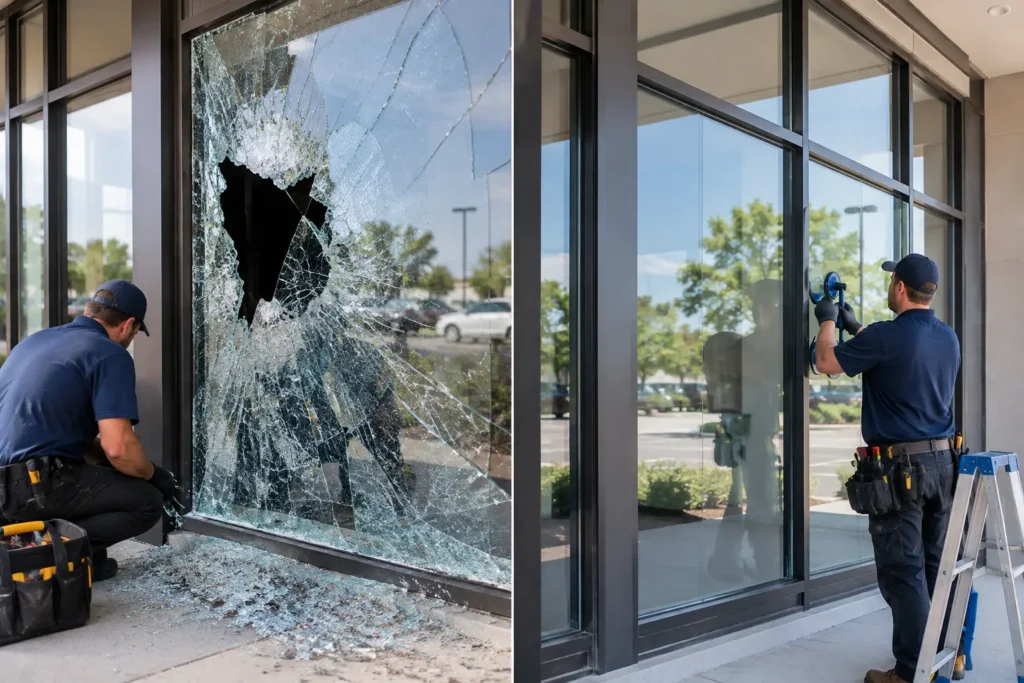
If broken glass leaves a home or business exposed, do not wait for a custom panel before securing the opening. Emergency board-up or temporary protection can reduce security and weather risks while the correct replacement is measured and ordered. Quick Glass Repairs provides rapid, safety-focused service for damaged glass throughout the DMV, including emergency response when an opening cannot be left unsecured.
What Privacy Glass Usually Costs
Costs vary widely because the glass itself is only part of the job. A small frosted interior door lite may be straightforward, while a custom insulated, tempered, patterned panel for an exterior door can require fabrication, specialty hardware work, and careful installation.
The main cost factors are the size and thickness of the glass, the privacy treatment or pattern, whether safety glass is required, the type of frame, access to the opening, and whether the existing unit is insulated or damaged. Switchable glass adds electrical components and control equipment. Custom shower glass and frameless systems also require more precise field measurement than a standard window pane.
A free estimate should clearly separate the condition of the existing opening from the requested privacy upgrade. That helps you see whether a targeted glass replacement will solve the problem or whether the frame, door, seals, or hardware need attention too.
A well-chosen privacy glass panel should make the space feel safer and more comfortable without making it darker, harder to maintain, or less functional. Choose the level of obscurity for real life, not just for how it looks in a sample, and let the installation details receive the same attention as the glass itself.