
A broken mirror changes fast from a cosmetic problem into a safety problem. One sharp edge can injure a child, pet, tenant, employee, or anyone brushing past it. If the mirror is near an entry, bathroom sink, closet, or hallway, it can also make an otherwise usable space feel unfinished and unsafe. Knowing how to replace broken mirror glass starts with securing the area, then deciding whether the mirror can be safely removed and replaced without damaging the wall, frame, or surrounding tile.
How to Replace a Broken Mirror Safely
Do not start by pulling at loose pieces. Keep people and pets away from the area, put on cut-resistant gloves, closed-toe shoes, and safety glasses, and cover the mirror with painter’s tape or packing tape if the glass is still largely intact. The tape helps hold fragments together while you work, but it does not make cracked glass safe to handle.
Place a drop cloth, cardboard, or thick towels beneath the mirror to catch small pieces. Pick up larger fragments carefully and place them in a rigid container, not a thin trash bag that can tear. Sweep the area, then use a vacuum around baseboards, corners, and nearby flooring. A flashlight held low to the floor can reveal small reflective shards that are easy to miss.
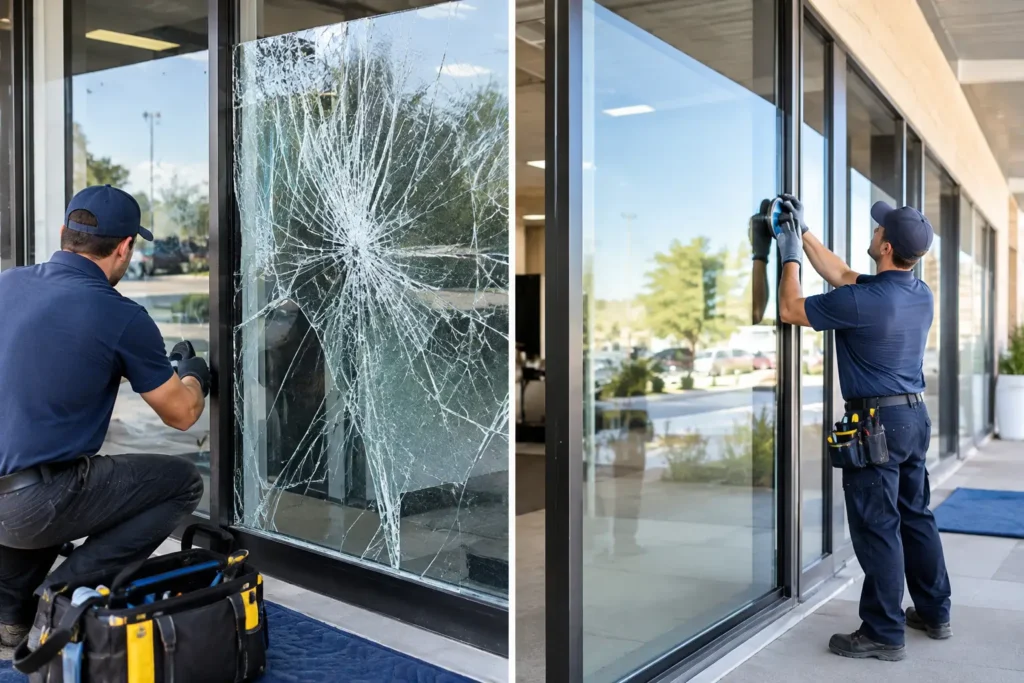
If a mirror is shattered, spiderweb-cracked, hanging overhead, or installed across a large wall, stop after securing the space. Large mirror panels can be far heavier than they look, and broken sections do not release from adhesive or mounting hardware predictably. This is a situation where professional glass service is the safer choice.
First, Identify How the Mirror Is Installed
The right replacement method depends on the mounting system. A framed mirror often comes off as one unit after removing screws, clips, or retaining tabs. A frameless mirror may be held by visible J-channel, decorative clips, adhesive, or a combination of all three. Bathroom vanity mirrors are frequently glued directly to drywall, while closet mirrors may sit in tracks or be part of a sliding door system.
Look closely before removing anything. If you see clips at the top and bottom, support the mirror before loosening them. If there is a metal channel, the glass may need to slide upward before it can come out. Never assume that a mirror glued to a wall will lift away cleanly. Adhesive can pull off drywall paper, damage plaster, crack tile, or leave a wall that needs repair before a new mirror can be installed.
For renters, confirm responsibility with the property owner or manager before ordering replacement glass. A matching mirror may be required for a uniform bathroom, hallway, or apartment turnover. Commercial and multifamily properties should also consider whether a damaged mirror affects accessibility, tenant safety, or the appearance of a public-facing space.
Measure Before Ordering a Replacement
Do not measure only the visible opening if the mirror sits in a frame or channel. Measure the width and height of the old glass itself when possible, along with the thickness. Standard mirror thickness is often 1/8 inch or 1/4 inch, but the correct choice depends on the size, mounting method, and location.
For a mirror that fits inside a frame, measure the rabbet, which is the recessed ledge holding the glass. Take measurements in several places because older walls and frames may not be perfectly square. If the opening is out of square, record the narrowest and widest measurements rather than guessing.
A replacement also needs the right edges. Polished edges are common where glass is exposed, such as frameless bathroom mirrors. Seamed edges may be appropriate when the perimeter is concealed in a frame. Bathrooms and other high-traffic locations may call for safety backing or a specific mounting approach. The lowest price is not always the best value if the glass is too thin, poorly finished, or not suited to the installation.
When a DIY Mirror Replacement Makes Sense
A careful do-it-yourself replacement can work for a small, lightweight framed mirror with accessible hardware and a replacement piece that matches the original. It is most manageable when the frame is in good condition, the wall is undamaged, and a second person is available to help hold the glass.
Remove the frame or mirror assembly slowly, keeping one hand on the glass while releasing clips or fasteners. Set the old mirror face-up on a protected, flat surface. Clean the frame channel and inspect it for bent clips, rust, damaged backing, or loose hardware before inserting new glass. A new mirror installed in a failing frame will not stay secure for long.
Once the replacement glass is seated, reinstall clips or fasteners without overtightening. Tight hardware can place pressure on the edge of the mirror and cause a new crack. Confirm the mirror is stable, level, and fully supported before removing protective coverings from the work area.
Why Glued Wall Mirrors Are Different
A wall-sized mirror adhered directly to drywall or tile is rarely a simple swap. The old adhesive may be stronger than the mirror itself, which means removal can produce sharp fragments and leave substantial surface damage. Trying to pry behind the glass with a screwdriver, crowbar, or putty knife can turn a contained break into flying glass.
Professional removal usually involves controlled scoring, protective coverings, proper cutting tools, and techniques designed to separate sections safely. After removal, the installer can assess the wall, remove adhesive residue, and prepare a flat surface for the new mirror. This matters because a mirror needs full, even support. A low spot, protruding adhesive blob, or warped backing can create stress points that lead to another break.
The same caution applies to mirrors installed over tile. Replacing the glass without cracking surrounding tile or damaging grout requires patience and specialized tools. In a finished bathroom, protecting the vanity, countertop, fixtures, and floor is as important as getting the new mirror in place.
Choose the Right Replacement, Not Just Any Mirror
A replacement should match the function of the space. A hallway mirror may need a clean polished edge and secure clips. A bathroom vanity mirror may need moisture-conscious installation, carefully placed adhesive, and edge clearance above the backsplash. A closet mirror needs accurate sizing so it clears tracks and operates correctly.
You can also use replacement as an opportunity to improve the room. A foggy, chipped, or dated mirror can be replaced with a custom-cut shape, beveled edge, or a larger panel that improves light and visibility. However, larger does not always mean better. Oversized mirrors are heavier, more difficult to install, and may require a wall system that can support them safely.
If the original mirror broke because a door slammed, a frame shifted, a wall moved, or a mounting clip failed, address that cause before installing new glass. Otherwise, the replacement may face the same stress that broke the first mirror.
When to Call a Professional Glass Company
Call for professional help when the mirror is large, cracked in multiple places, installed with adhesive, mounted over tile, part of a sliding closet door, or located in a commercial or multifamily setting. It is also the better option when you need an exact custom size, a polished edge, safety backing, or a finished result without wall damage and cleanup concerns.
For property managers and business owners, a fast repair helps prevent injuries, complaints, and avoidable downtime. A broken mirror in a restroom, fitness area, lobby, retail fitting room, or common hallway should be secured promptly and replaced with glass that fits the use of the space.
Quick Glass Repairs provides prompt, safety-focused mirror replacement for homeowners, property managers, and businesses throughout the DMV. A professional assessment can confirm the glass size, thickness, mounting method, and condition of the surrounding surface before work begins.
Do not live around sharp edges, loose fragments, or a mirror that could fall without warning. Secure the area now, take clear measurements if it is safe to do so, and choose the repair approach that protects both the people in the space and the surfaces around it.