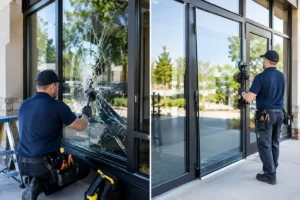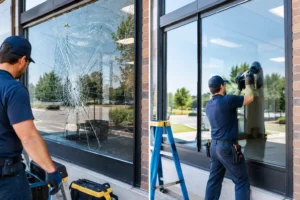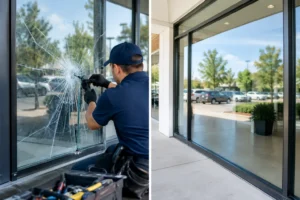
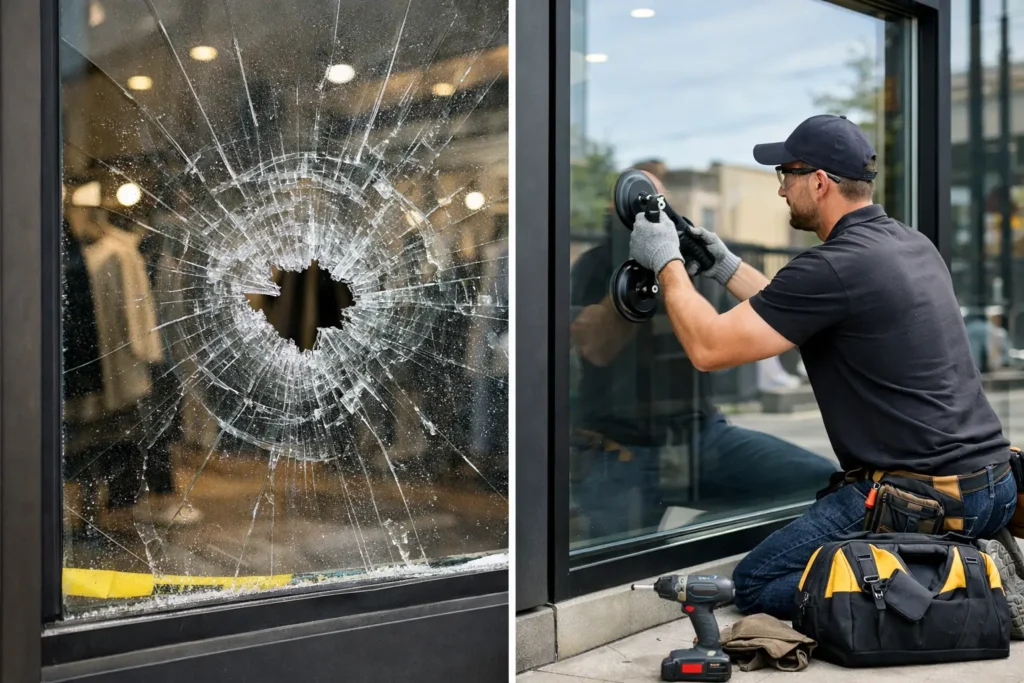
A cracked storefront pane is more than a cosmetic problem. It can leave inventory exposed, invite a second break-in, create a liability hazard for customers and staff, and force a business to close when it should be serving customers. The best storefront security upgrades address the glass, frame, entry points, and response plan together – so one weak component does not undermine the rest.
For retailers, offices, restaurants, and multifamily commercial properties in the DMV, the right choice depends on your location, hours, merchandise, door traffic, and existing storefront system. A jewelry shop and a neighborhood café do not need the same level of protection. What they do need is glass and hardware installed precisely, maintained properly, and repaired without delay when damage occurs.
Start With the Storefront’s Real Risks
Before choosing a stronger pane or adding a security film, look at how an intruder could actually gain access. Is the front glass directly exposed to a sidewalk? Does the entrance door have a narrow aluminum frame or worn-out lock hardware? Are the side windows hidden from street visibility? Is the business vacant overnight, or does staff arrive before daylight?
A security upgrade should solve a specific vulnerability. Heavy glass alone may not help if a loose door closer lets someone force the entry open. Likewise, a high-quality lock will not protect a door with damaged framing or shattered sidelites. A professional inspection can identify whether the immediate need is replacement glass, reinforced framing, upgraded hardware, or a combination of measures.
1. Laminated Security Glass
Laminated glass is one of the most effective upgrades for ground-level storefronts. It uses two or more layers of glass bonded with a durable interlayer. When struck, the glass may crack, but the interlayer helps hold the panel together instead of allowing it to collapse into an open entry point.
That delay matters. Smash-and-grab attempts depend on speed. A pane that remains in place can discourage an intruder, give an alarm system more time to work, and reduce the dangerous spread of loose shards across your entryway.
Laminated glass is not indestructible, and it should not be sold as such. A determined attacker with time and tools can still damage it. But for many storefronts, it provides a meaningful improvement over standard annealed glass and can preserve a cleaner, more professional appearance than exterior bars or shutters.
When Laminated Glass Makes Sense
This option is especially useful for street-facing retail glass, door sidelites, and businesses displaying electronics, designer goods, alcohol, or other easy-to-carry inventory. It is also a smart consideration where broken glass could fall near a public sidewalk or a busy customer entrance.
2. Tempered Glass Where Safety Is the Priority
Tempered glass is designed to break into smaller, less sharp pieces than standard glass. It is a common and often code-required choice for doors, large storefront panels, and other high-contact areas. Its primary advantage is occupant safety, not forced-entry resistance.
That distinction is worth understanding. Tempered glass can be stronger than standard glass under everyday impacts, but once it breaks, it generally clears from the opening. For a storefront where break-in resistance is the primary concern, laminated security glass or a laminated-tempered configuration may be the better fit.
The best approach is often not choosing tempered versus laminated glass in isolation. It is specifying the right safety and security glazing for the exact opening, local code requirements, and the level of risk involved.
3. Security Window Film for Existing Glass
Security film can be a practical upgrade when existing storefront glass is in good condition but a full replacement is not currently in the budget. Applied correctly, a quality film helps hold broken glass together after impact, reducing dangerous debris and making it harder to create a clear opening quickly.
Film has limits. Its performance depends on the glass type, film thickness, attachment method, and condition of the frame. A film installed without proper edge retention may not deliver the level of forced-entry delay a business expects. It also cannot correct compromised glass, failing seals, loose frames, or damaged door hardware.
For businesses that need a fast layer of added protection, film can be a sensible part of a broader security plan. For repeated break-in exposure or high-value displays, replacing vulnerable panels with laminated security glass is usually the stronger long-term move.
4. Reinforced Storefront Frames and Glazing Systems
Glass performs only as well as the system holding it. Older aluminum storefront frames can develop loose gaskets, worn glazing stops, corrosion, poor alignment, or gaps around the glass. Those issues affect security, weather resistance, and energy efficiency all at once.
A properly installed commercial glazing system keeps panels seated firmly and supports the intended glass thickness and weight. Reinforced framing can make it more difficult to remove a panel from the outside after the glass is damaged. It also helps prevent rattling, water intrusion, and the premature failure that comes from a poorly fitted opening.
This is not always a small repair. If the storefront system is badly damaged, a larger replacement may be more cost-effective than repeatedly patching weak components. A clear estimate should explain what can be repaired, what should be replaced, and why.
5. Better Commercial Door Hardware
Many break-ins happen at the door, not through the largest pane of glass. Upgrade decisions should include the lock, panic hardware, door closer, hinges, threshold, and frame condition. A secure door that does not latch consistently is not truly secure.
For commercial entrances, heavy-duty hardware should match the door type and how the building is used. A retail door with constant customer traffic needs different hardware than a rear service entry that stays locked most of the day. Door closers also deserve attention: they should close and latch the door reliably without slamming or leaving it partially open.
If the door is sagging, dragging, or difficult to lock, do not wait for a break-in or after-hours lockout. The problem may be adjustment-related, or it may indicate a damaged pivot, frame, or glass door component that needs professional service.
6. Roll-Down Security Grilles or Shutters
For businesses with a high theft risk, roll-down grilles and shutters provide a visible physical barrier after closing. Open grilles allow passersby to see displayed merchandise while limiting access. Solid shutters offer more privacy and can provide stronger protection against impact and forced entry.
The trade-off is appearance and operational discipline. Exterior shutters can change the look of a storefront, may be subject to property rules or local requirements, and must be opened and closed consistently. Interior grilles may be less visually disruptive during business hours, but they require adequate interior clearance and professional installation.
These systems work best when paired with secure glass and door hardware, not as a substitute for repairing damaged storefront components.
7. Exterior Lighting and Clear Sightlines
A well-lit storefront makes suspicious activity easier to see and harder to hide. Lighting should cover entry doors, sidewalk-facing glass, loading areas, rear doors, and side access points without creating glare that prevents cameras or nearby observers from seeing clearly.
Clear sightlines matter just as much. Tall display fixtures, dense window graphics, overgrown landscaping, or stored materials near side entrances can create concealment. Keep the areas around doors and storefront glass clean, visible, and free of objects that could be used to strike or obstruct an entry.
This is one of the lower-cost improvements, but it should support physical security rather than replace it. Good lighting will not keep a broken panel in place or repair a failing door lock.
8. A Fast Emergency Glass Repair Plan
Even the strongest storefront can be damaged by an attempted break-in, accident, vandalism, or severe weather. The difference between a one-night disruption and a prolonged security problem is often how quickly the opening is secured.
Every business should know who is authorized to approve emergency work, where the relevant insurance and property-management information is kept, and how to reach a qualified commercial glass professional after hours. Temporary board-up can secure an opening immediately, followed by precise replacement glass and repairs that restore the storefront’s appearance and function.
Quick Glass Repairs provides 24/7 emergency glass response and same-day repair availability for commercial properties that cannot afford to leave broken glass exposed. Licensed and insured workmanship, clear communication, and a properly completed repair help business owners move from an urgent security problem to a safe, presentable storefront without unnecessary delays.
Choose Upgrades That Work Together
The best storefront security upgrades are rarely one product. A street-facing shop may need laminated glass, a secure door closer, brighter entry lighting, and an emergency response plan. An office suite may benefit more from upgraded locks, repaired framing, and safety glazing at its main entrance. A property manager may need a repeatable plan for several buildings with different exposure levels.
Start with the opening that creates the greatest risk, not the upgrade that sounds most impressive. Repair damaged glass and hardware promptly, then build protection around the way your business actually operates. When an opening is compromised, fast professional service is not just a repair decision – it is how you protect people, property, and tomorrow’s business.