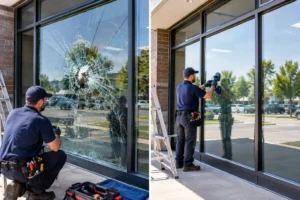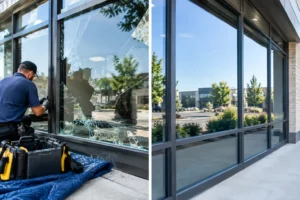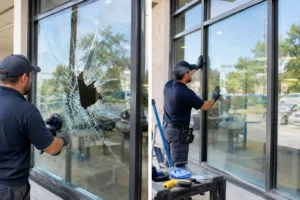
A storefront can look fine from across the parking lot while a loose door closer, failed seal, chipped corner, or scratched safety pane is already creating a real problem. This guide to commercial glass maintenance gives property managers, retail operators, and facility teams a practical way to protect their building, customers, and daily operations before minor glass issues turn into emergency calls.
Commercial glass does more than improve curb appeal. It helps secure entrances, control indoor comfort, direct foot traffic, and create the clear, professional appearance customers expect. In busy DMV properties, where weather swings, heavy use, and high-traffic entryways are common, maintenance needs to be scheduled and specific.
1. Build a Routine Commercial Glass Inspection Schedule
Do not wait for a visible break to inspect commercial glass. A quick monthly walk-through catches many issues early, especially at storefronts, vestibules, office entrances, and common areas. For large properties or high-traffic doors, a brief weekly check is often worth the time.
Start with the glass itself. Look for chips at corners and edges, spreading cracks, deep scratches, cloudiness between double-pane glass, and any movement in the frame. Edge damage may seem small, but it can weaken the pane and spread under vibration, door impact, or temperature changes.
Then inspect the surrounding system. Check glazing seals, gaskets, frame joints, caulking, door rails, pivots, handles, locks, and closers. Glass is only as secure as the system holding and operating it. A door that drags, slams, or does not latch reliably puts repeated stress on the glass and can become a security issue after hours.
Keep a simple record of what you find, including the location, date, condition, and photos. This helps your team spot recurring issues and gives a glass contractor clear information when repair is needed.
2. Clean Glass Without Damaging Coatings or Hardware
Dirty glass makes a property look neglected, but aggressive cleaning can cause more damage than dirt. Avoid abrasive pads, razor blades, powder cleansers, and harsh chemicals unless the glass manufacturer specifically approves them. These products can scratch glass, dull protective coatings, stain metal framing, or damage nearby sealants.
For routine cleaning, use a clean microfiber cloth or soft applicator with a non-abrasive glass cleaner. Wipe frames, tracks, and door hardware as well. Dirt in sliding tracks and at the bottom of doors can affect alignment and make hardware wear faster.
Pay special attention to entry doors near sidewalks, restaurants, loading areas, and landscaping. Road grit, salt residue, grease, and sprinkler overspray can build up quickly. If your property uses tinted, low-emissivity, decorative, or safety glass, confirm the cleaning method with your glazing professional. The right process depends on the glass type and where it is installed.
3. Treat Failed Seals and Fogged Glass as a Repair Issue
Moisture or haze between panes is not surface dirt. It usually means the insulated glass unit seal has failed, allowing moisture into the space between the panes. The result is a fogged appearance that cannot be cleaned away from the outside.
For an office, retail storefront, or multifamily common area, fogged glass can make an otherwise well-maintained property feel run-down. It may also reduce the insulating performance that helps manage heating and cooling costs. In many cases, the full window frame does not need replacement. A qualified glass contractor can assess whether replacing the insulated glass unit is the more efficient solution.
Do not ignore condensation around the edges of glass either. Interior humidity can contribute, but persistent moisture, staining, or deterioration near a frame deserves a closer look. The cause may be a failed seal, drainage issue, damaged glazing, or air leakage around the opening.
4. Keep Commercial Glass Doors Aligned and Secure
Commercial glass doors take more abuse than nearly any other glass component in a building. Customers push on the glass instead of the handle. Delivery teams move carts through the entrance. Wind catches doors. A closer loses adjustment. Small alignment problems can become broken hardware or cracked glass if they are allowed to continue.
During inspections, open and close every glass door several times. It should move smoothly, close at a controlled speed, latch securely, and maintain even gaps around the perimeter. Look for rubbing at the floor, metal-to-glass contact, loose handles, worn weatherstripping, and visible play in pivots or hinges.
If a door slams, binds, fails to lock, or has a cracked panel, take action quickly. Do not ask staff to force it closed or prop it open as a long-term workaround. That can create a security risk, limit accessibility, and increase the chance of a more expensive failure.
5. Respond Fast to Chips, Cracks, and Impact Damage
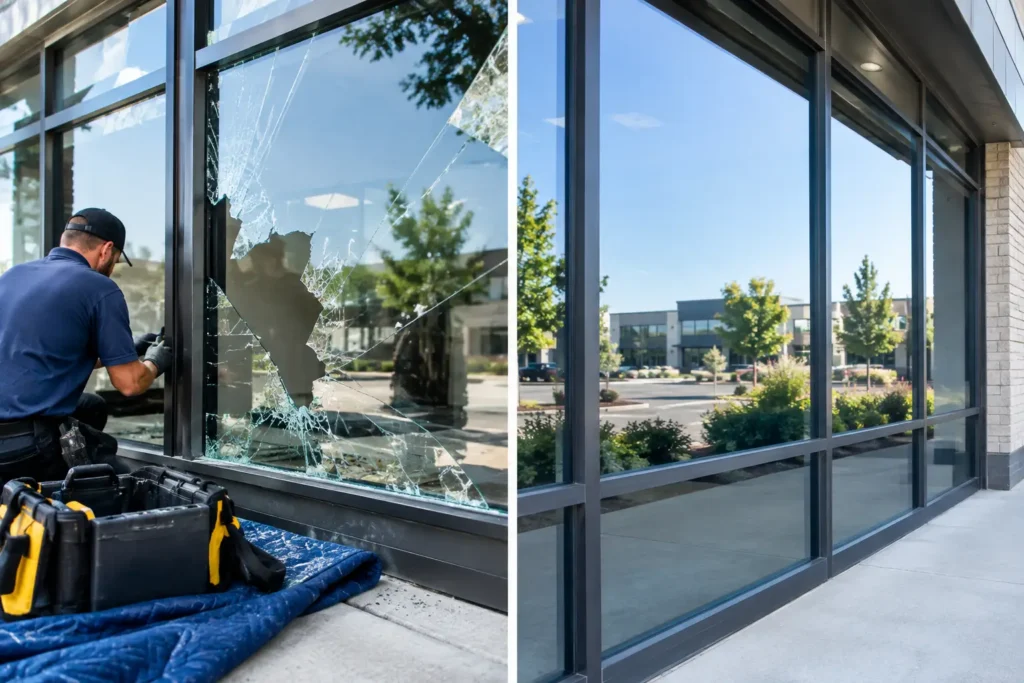
Broken commercial glass is not just an appearance issue. It can expose the property to weather, theft, injury claims, and interrupted business operations. The right response depends on the type of damage, the glass location, and whether the affected area can be safely secured.
A small chip in a low-impact interior panel may be monitored briefly while replacement is scheduled. A cracked entry door, shattered storefront pane, damaged sidelight, or broken safety glass needs immediate professional attention. Keep customers and employees away from the area, remove loose glass only if it can be done safely, and block access until the opening is secured.
Avoid taping over cracks as a repair. Tape may temporarily mark a hazard, but it does not restore the glass’s structural integrity or secure the opening. For after-hours damage, 24/7 emergency board-up or glass service can protect the building while the correct replacement glass is ordered and installed.
6. Plan Ahead for Seasonal Stress and High-Traffic Periods
Commercial glass maintenance should match how your property operates. A retail center may need extra inspections before holiday traffic. An office building may see more door wear during rainy months, when wet shoes and gusty entrances affect thresholds and closers. A restaurant with glass entry doors may need more frequent cleaning and hardware checks than a low-traffic professional office.
Seasonal weather also matters. Summer heat can reveal problems with failed insulated glass seals and expansion around frames. Winter cold and wind can make air leaks, loose weatherstripping, and poorly closing doors more noticeable. Before severe weather, inspect exterior storefront glass, door latches, frame joints, and any areas with previous water intrusion.
If your building has aging storefront systems, budget for proactive work rather than waiting for a failure. Replacing worn gaskets, adjusting doors, renewing failed glass units, or upgrading damaged hardware during planned maintenance is usually less disruptive than handling an emergency during business hours.
7. Use the Right Glass for the Location and Risk
Not every replacement pane should be standard glass. The correct choice depends on the opening, code requirements, exposure to impact, security needs, energy goals, and the property’s design. Entry doors, sidelights, and other hazardous locations may require safety glazing. Ground-floor storefronts may benefit from glass options selected for higher impact resistance or security needs.
There are trade-offs. A more durable or specialized glass product may cost more upfront and may require a longer lead time, but it can reduce repeat damage and downtime. On the other hand, replacing every pane with the highest-specification product is not always necessary. A professional assessment should match the glass system to the actual risks at that location.
For property managers, consistency matters too. Matching tint, thickness, glazing profile, and appearance across a storefront or multi-unit property protects the building’s professional look. A rushed mismatch may solve the immediate opening but create an obvious visual problem that has to be corrected later.
When to Call a Commercial Glass Professional
Call for professional service when glass is cracked, chipped at an edge, loose in its frame, fogged between panes, leaking, or difficult to operate as part of a door system. Also call when door hardware is loose, the door will not latch, a frame has separated, or you are unsure whether the existing glass meets current safety needs.
Quick Glass Repairs provides licensed and insured commercial glass service for businesses and property managers who need clear answers, careful installation, and fast action when an opening cannot wait. A detailed assessment can separate a simple repair from a condition that needs replacement, helping you avoid unnecessary disruption.
The best maintenance plan is the one your team can follow. Give commercial glass the same attention you give locks, lighting, and HVAC equipment, and address small warning signs before they affect the people walking through your doors.