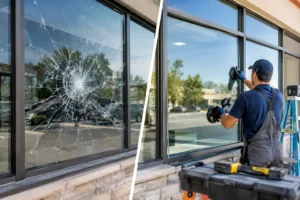

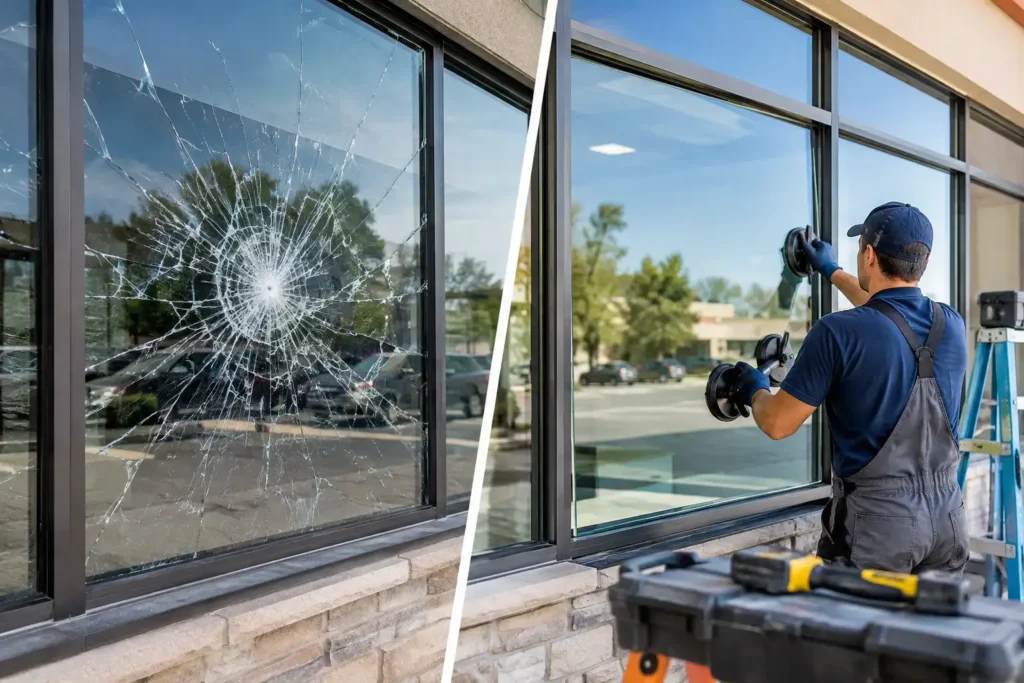
A storm damaged window project can go from inconvenient to unsafe in a matter of minutes. A cracked pane may still be holding together, but high winds, rain, falling branches, or another impact can turn it into an open path for water, pests, and intruders. Whether the damage affects a house, apartment building, office, or storefront, the first priority is simple: protect people and secure the opening.
Storm damage is rarely limited to what you can see from the sidewalk. Glass can be weakened around the edges, window frames can shift, insulated glass seals can fail, and water can enter wall cavities before it becomes obvious indoors. Fast action helps prevent a manageable glass repair from becoming a larger restoration project.
Start With Safety, Not Cleanup
Keep children, pets, tenants, customers, and employees away from broken or visibly cracked glass. Do not press on a fractured pane to see whether it is stable. Tempered glass can release suddenly, and larger window panes may have sharp pieces still held in place by the frame.
If glass has fallen inside, wear closed-toe shoes and heavy gloves before approaching the area. Pick up larger pieces carefully, but do not spend time trying to remove every tiny shard while the opening is still exposed. A professional glass technician can safely remove damaged glazing, inspect the frame, and clean the work area as part of the repair process.
For commercial properties, create a clear boundary around the damaged area. A broken entrance door or storefront window creates both a safety concern and a security gap. Moving foot traffic away from the opening is often necessary until emergency board-up or glass replacement is complete.
Secure the Opening Before Weather Gets Worse
A temporary cover is not a finished repair, but it can reduce immediate exposure. If conditions are safe and the opening is accessible, cover it from the outside with a durable material that extends beyond the damaged area. Secure the cover to the surrounding frame or structure rather than directly onto unstable glass.
Avoid using thin plastic alone for a large broken opening. Plastic may help block light rain and drafts for a short period, but it can tear or pull loose in wind. It also does little to protect against forced entry. Plywood board-up is generally the better emergency option for a fully broken window, glass door, or ground-level commercial opening.
Do not climb ladders, lean out of upper-story windows, or work outside during active lightning, severe winds, or heavy rain. Waiting for safe conditions and calling for emergency glass service is the right decision. The goal is to stop further damage without creating an injury risk.
Document the Damage Clearly
Once everyone is safe, take photos and short videos before moving debris or installing a temporary cover. Capture the damaged glass up close, the full window or door from farther back, interior water intrusion if present, and any visible damage to frames, screens, trim, or nearby property.
Documentation helps you communicate clearly with a property manager, landlord, insurer, or glazing contractor. It also gives the technician useful information before arrival. If you can safely identify the window type, note whether it is a single-pane window, double-pane insulated unit, sliding glass door, storefront system, or specialty glass installation.
Keep any records related to the storm, including the date, time, weather alerts, and repair receipts. If temporary board-up is necessary, photograph the secured opening after the work is complete. This creates a clear record of the steps taken to protect the property from additional damage.
Know What a Professional Inspection Should Cover
A storm damaged window project is not always solved by replacing the visible broken pane. The right repair depends on the glass type, the condition of the sash and frame, and whether the opening still seals properly against wind and water.
A qualified glazing professional should inspect the glass, glazing beads or stops, seals, frame alignment, locks, tracks, and surrounding caulk. For double-pane windows, they should also look for moisture between panes, cloudy glass, or a broken perimeter seal. Those signs may not mean the glass shattered, but they do indicate the insulated unit has failed and is no longer performing as intended.
In many cases, the insulated glass unit can be replaced without replacing the entire window. That can be a cost-effective option when the frame, hardware, and sash remain in good condition. However, full window replacement may make more sense if the frame is warped, rotted, badly corroded, or no longer able to hold new glass securely.
The same principle applies to glass doors. A cracked sliding door panel may need new glass, while damaged rollers, tracks, locks, or framing can require a broader repair. The best option depends on what will restore safe operation, security, and weather protection for the long term.
Choose Glass That Matches the Job
Replacement glass should not be selected by appearance alone. Residential windows, entry doors, shower enclosures, offices, and storefronts may require different glass types and safety standards. A technician should match the new unit to the existing application or recommend an upgrade where appropriate.
For example, tempered safety glass is commonly required in doors and other impact-prone areas because it breaks into small pieces rather than large sharp shards. Laminated glass can offer added security because its interlayer helps hold broken glass together after impact. Insulated glass units can improve comfort and energy efficiency when replacing failed double-pane windows.
An upgrade can be worthwhile after storm damage, especially for exposed windows, first-floor glass, and high-traffic commercial areas. Still, higher-performance glass is not automatically necessary for every opening. A straightforward like-for-like repair may be the most practical choice when the damage is isolated and the existing system is otherwise in good shape.
Watch for Water Damage After the Glass Is Repaired
Replacing the glass closes the opening, but water that entered during the storm may need attention afterward. Check the nearby wall, sill, flooring, and ceiling below the window for dampness, staining, bubbling paint, soft drywall, or a musty odor. These issues can appear days after the rain has stopped.
If water entered around a window, the cause may be more than broken glass. Damaged exterior caulk, displaced trim, blocked drainage paths, or frame damage can allow future leaks if they are not addressed. Ask the contractor to explain what they found and whether the window opening needs sealing work in addition to glass replacement.
Property managers should also inspect similar windows on the same elevation of the building. If one older seal failed under storm pressure, nearby units may show early signs of wear. Addressing those issues on a planned schedule can prevent repeated emergency calls.
Plan for Fast Repair Without Rushing the Details
When a window is broken, same-day board-up or repair is often the right move. That said, custom insulated units, specialty shapes, tinted glass, decorative panels, and certain commercial systems may need to be ordered. In those cases, a reliable temporary securement solution protects the property while the correct glass is fabricated.
Ask for a clear explanation of the timeline: what can be secured today, what material is being ordered, when installation is expected, and how updates will be handled. Good communication matters when your home or business has been disrupted. You should not have to chase down basic answers about the status of your repair.
For homeowners and commercial decision-makers across the DMV, Quick Glass Repairs provides emergency response, board-up, window and door glass repair, and replacement service with licensed and insured workmanship. The focus is to secure the property quickly, complete precise installation, and leave you with a repair that is built to hold up.
Reduce the Risk Before the Next Storm
You cannot control the weather, but you can spot vulnerabilities before a storm exposes them. Check windows and glass doors seasonally for loose frames, cracked caulk, fogged double-pane glass, sticking operation, worn weatherstripping, and damaged locks. Trim back branches that could strike windows in high winds, and make sure exterior drainage directs water away from the home or building.
For buildings with older windows, consider a proactive inspection before storm season. Replacing failed seals or damaged glass on your schedule is usually less stressful than managing a break during a nighttime storm.
Broken glass should never be left as a problem for later. Secure the area, document what happened, and arrange qualified service as soon as conditions allow. A fast, well-planned repair protects more than the window – it protects the people and property behind it.