
A storm can leave behind more than a few branches in the yard. A cracked pane, loose frame, shattered patio door, or fogged double-pane window can quickly become a safety, security, and water-intrusion problem. Knowing how to protect windows after storms helps you make the right call in the first few minutes, when small damage can turn into a soaked wall, a break-in risk, or an expensive repair.
The priority is simple: keep people away from damaged glass, stop rain and wind from entering, and arrange a proper repair as soon as possible. Do not treat a broken window as a cosmetic issue, especially when another round of weather may be on the way.
Start With Safety, Not Cleanup
Before touching anything, look at the window from a safe distance. If there are sharp fragments on the sill, floor, or exterior ground, keep children, pets, tenants, and customers away from the area. Close interior doors to isolate the room if you can do so without crossing broken glass.
Put on closed-toe shoes, work gloves, and eye protection before handling any debris. Avoid pressing on cracked glass. A pane that looks mostly intact can fail suddenly, particularly if the frame has shifted or wind pressure has weakened it.
If glass has fallen indoors, pick up larger pieces carefully and place them in a rigid container. Sweep smaller pieces, then use a vacuum around the frame, flooring edges, and nearby furniture. For carpet, make several slow passes from different directions. Do not let anyone walk barefoot near the area until it has been cleaned thoroughly.
A damaged window near an entry door, a ground-level room, or a commercial storefront deserves immediate attention. It creates an obvious access point and leaves your property exposed after dark.
Check What the Storm Actually Damaged
Not every storm-related window problem involves shattered glass. A careful inspection helps you determine whether the opening needs emergency protection or a scheduled repair.
Look for visible cracks, missing pieces, loose glazing, bent screens, damaged locks, and gaps between the window frame and surrounding wall. Check the floor and sill for moisture, peeling paint, swelling trim, or damp drywall. Water can enter through a small opening and travel farther than expected behind walls or beneath flooring.
Double-pane windows need a closer look. If you see moisture, haze, or streaking between the panes, the insulated seal may have failed. That is not usually an overnight security emergency, but it can reduce energy efficiency and leave the glass more vulnerable over time. If the outer pane is cracked or the sash is loose, treat it as urgent.
For sliding glass doors and large fixed panels, inspect the track, rollers, frame corners, and locking hardware. Do not force a door that no longer slides correctly after high winds or impact. Forcing it can shatter damaged glass or make frame damage worse.
Take Photos Before Temporary Repairs
Photograph the damage from inside and outside if conditions are safe. Capture the full window, close-ups of cracks or frame gaps, and any water damage nearby. This creates a clear record for your property manager, landlord, insurer, or repair professional.
If you rent, notify the property owner or manager right away. You may be able to take reasonable steps to prevent further damage, but approval for permanent repair or replacement typically rests with the owner. In a commercial property, alert the person responsible for building maintenance and secure the area from employees and visitors.
How to Protect Windows After Storms Until Repair Arrives
A temporary barrier is meant to reduce exposure, not replace a proper glass repair. The right method depends on the size of the opening, the weather forecast, the window’s location, and whether the frame remains stable.
For a small crack with no missing glass, keep the area dry and avoid opening or closing the window. A professional should assess it promptly because temperature changes and wind vibration can cause the crack to spread.
For broken or missing glass, cover the opening from the outside whenever safely possible. Exterior coverage is better at deflecting rain and wind. Use a solid board cut larger than the damaged opening, then fasten it into sound framing rather than through fragile glass or crumbling trim. If you cannot safely access the exterior, cover the interior opening as a short-term measure and keep the room closed off.
Heavy plastic sheeting can help stop light rain and drafts, but it is not a reliable barrier against strong wind or forced entry. Tape alone is not enough for a large opening. It can loosen when surfaces are wet, dusty, or cold, leaving the property exposed when you are not there.
Do not use cardboard as exterior protection. It absorbs water, breaks down quickly, and can hold moisture against the frame. Also avoid placing tape directly across cracked glass in an attempt to make it safe. Tape may catch loose fragments, but it does not stabilize the pane or remove the risk of collapse.
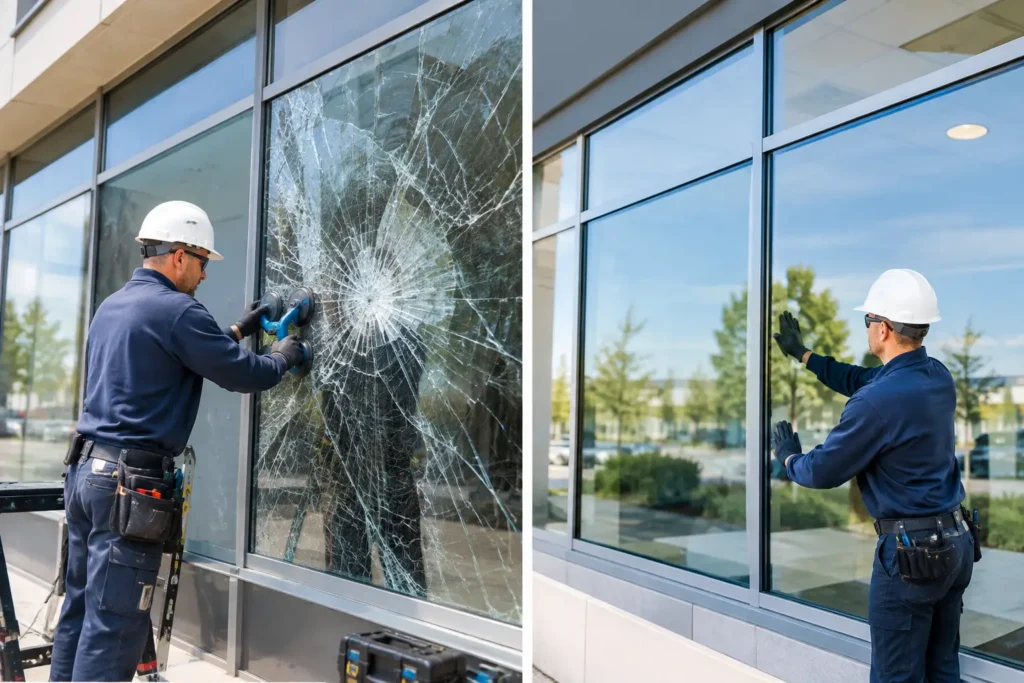
If the opening is large, high off the ground, near electrical equipment, or part of a storefront or glass door, skip the do-it-yourself boarding attempt. The risk of falling, cuts, or creating more damage is too high. Emergency glass service is the safer choice.
Stop Water From Causing a Second Problem
Once the opening is covered, focus on moisture. Move rugs, electronics, upholstered furniture, and paper items away from the affected area. Place towels along the sill and floor edge, then change them as they become saturated. If water entered the room, use fans and dehumidification after the opening is secured.
Do not seal water inside a wall or window cavity. If drywall is wet, bulging, or soft, document it and contact the appropriate restoration or building professional. Glass repair stops the entry point, but trapped moisture can lead to staining, warped materials, and mold growth.
Check the window again after the next rain. A temporary board may shift, plastic may tear, and water may find a gap that was not visible during the initial inspection. This is particularly relevant around older wood frames, bay windows, and sliding doors with worn drainage channels.
Know When You Need Emergency Window Repair
Call for urgent professional help when glass is shattered, an opening cannot be securely covered, rain is entering the building, or the damage affects a door, ground-floor window, or business entrance. The same applies when a frame is bent, the window will not lock, or a large glass panel appears unstable.
Fast repair is not only about appearance. Proper glazing work requires the right glass type, secure setting, weather-resistant sealing, and a frame inspection. A rushed patch with the wrong materials can leak, rattle, fail under wind pressure, or create an uneven security point.
For homeowners and property managers in the DC, Northern Virginia, and Maryland area, Quick Glass Repairs provides 24/7 emergency response and same-day availability for damaged residential and commercial glass. Licensed and insured technicians can secure the opening, assess the frame and glass system, and explain the repair or replacement path clearly. That matters when you need protection now but also want the finished work backed by dependable workmanship and warranties.
Prevent More Damage Before the Next Storm
After repairs are complete, take a few practical steps to reduce future risk. Keep tree limbs trimmed back from windows and glass doors. Clear debris from window tracks and drainage holes so rainwater has a path out. Test locks and latches periodically, especially on windows that are rarely opened.
Older windows with recurring drafts, failed seals, loose hardware, or deteriorated glazing may be worth repairing or replacing before severe weather exposes a bigger problem. The best choice depends on the frame condition, the type of glass, the age of the unit, and whether the issue is isolated or happening across the property.
Storm damage is stressful, but you do not have to solve every part of it alone. Secure the area, limit water exposure, document what you see, and get qualified glass help before a temporary fix becomes a larger repair.