
A passing siren, early delivery truck, barking dog, or loud patio can turn a room near a busy DMV street into a place where conversations compete with the outside. Acoustic glass is designed to reduce that intrusion without closing off the natural light and views that make windows, glass doors, and storefronts valuable. It is not a magic mute button, but when it is specified and installed correctly, it can make a noticeable, practical difference.
For homeowners, the goal may be better sleep in a front bedroom or a calmer home office. For property managers and commercial owners, it may be creating a more comfortable tenant space, conference room, office, or street-facing retail environment. The right solution starts with identifying where the sound enters, because glass is often only one part of the equation.
What Acoustic Glass Actually Does
Sound travels as vibration through the air. When sound waves strike a window or door, the glass vibrates and transfers some of that energy indoors. Acoustic glazing reduces this transfer by using glass layers and interlayers that disrupt vibration more effectively than a standard single pane.
Most acoustic glass is laminated glass. It uses two panes bonded with a specialized acoustic interlayer, commonly a sound-dampening polyvinyl butyral layer. The interlayer absorbs part of the vibration and helps prevent the two panes from moving as one. The result is less sound passing through the glazing.
Acoustic performance can also improve when laminated glass is combined with an insulated glass unit. In that setup, the unit includes an air or gas space between panes, while one or more panes may be laminated. Different glass thicknesses are often used as well. This asymmetry matters because panes of identical thickness tend to block certain frequencies less effectively. Combining different thicknesses helps address a broader range of everyday noise.
The improvement depends on the glass build-up, the opening, and the sound source. Low-frequency road rumble, intermittent construction noise, aircraft noise, voices, and sharp high-frequency sounds do not all behave the same way. A qualified glazing contractor should assess the specific problem before recommending a product.
When Acoustic Glass Makes Sense
Acoustic glazing is most useful where exterior noise is persistent enough to affect how a space is used. Homes along active commuter routes, near restaurants or nightlife, close to construction zones, or in dense parts of Washington, DC, Northern Virginia, and Maryland can be strong candidates. It can also help in townhomes and condominiums where a bedroom, office, or living area faces a shared outdoor space.
Commercial properties often benefit when noise affects work, customer comfort, or privacy. A storefront facing heavy pedestrian and vehicle traffic may feel more inviting with reduced street noise. Office buildings may use acoustic glass in exterior windows, interior sidelites, or glass partitions where a degree of speech privacy is needed.
There is a key distinction, though. Exterior acoustic windows are intended to reduce incoming environmental sound. Interior acoustic partitions are designed to limit sound transfer between rooms. They may use similar laminated products, but the framing, seals, and performance expectations are different. A glass wall that looks substantial may still offer limited privacy if the system does not run fully to the structural deck or has gaps around doors and edges.
The Frame, Seals, and Installation Matter Just as Much
Replacing glass alone does not always solve a noise problem. Sound finds weak points. A high-performing acoustic glass unit installed in a loose sash, worn frame, poorly sealed opening, or door with visible perimeter gaps will not deliver its full benefit.
This is why an inspection should look beyond the pane. Failed window seals, damaged weatherstripping, deteriorated caulk, warped door frames, and gaps around sliding glass doors can allow sound and air to bypass the glass entirely. In some cases, repairing the seal or adjusting a door can produce an immediate improvement. In others, the existing window system cannot accept thicker, heavier laminated glass safely, and full window or door replacement is the more reliable path.
Precision installation matters especially with insulated units. Incorrect glazing, inadequate edge support, or poor sealant application can shorten the life of the glass and leave the opening vulnerable to drafts and moisture. Professional work protects the investment by ensuring the glass is properly sized, supported, sealed, and compatible with the existing frame system.
Glass Ratings Are Helpful, but They Are Not the Whole Story
You may see acoustic products described with Sound Transmission Class, or STC, ratings. A higher STC generally indicates better resistance to airborne sound transmission, especially common sounds such as speech. Outdoor-Indoor Transmission Class, or OITC, is also useful for exterior conditions because it places more emphasis on lower-frequency noise from traffic and aircraft.
These ratings are valuable for comparing tested assemblies, but they should not be treated as a guarantee for a specific room. A laboratory rating reflects a particular glass and frame configuration under controlled conditions. Your actual results depend on the whole opening and surrounding construction.
A window may have excellent glass but still underperform because of wall penetrations, an unsealed vent, a thin door, or a gap below a sliding panel. Likewise, an acoustic upgrade will usually reduce noise rather than remove it completely. Setting that expectation upfront prevents disappointment and leads to better decisions about where to invest.
Choosing the Right Upgrade for Your Property
The best option depends on the existing system and the issue you want to solve. If the frame is in good condition and can support the new unit, replacing an insulated glass unit with an acoustic laminated configuration may be practical. This can preserve the existing appearance while improving comfort.
If the frame is damaged, the windows are drafty, or the hardware and seals are failing, a complete replacement may make more sense. New frames and improved weather seals can address multiple concerns at once: noise, air leakage, water protection, security, and energy efficiency. For a glass entry door or sliding door, the decision may include whether heavier laminated panels are suitable for the rollers, hinges, locks, and track system.
Do not assume thicker glass is always the answer. Weight, thermal performance, safety-glass requirements, frame depth, and budget all matter. Laminated acoustic glass can cost more than standard replacement glass, and a full replacement project costs more than a glass-only repair. Still, the value can be clear when the upgrade improves sleep, concentration, tenant satisfaction, or the usability of a room that has become too loud.
Safety and Security Are Meaningful Added Benefits
Laminated glass is often selected for its acoustic properties, but its construction can provide other advantages. When broken, the interlayer helps hold fragments together rather than allowing the pane to shatter into an open hole immediately. That can reduce hazards from broken glass and provide an extra layer of resistance against forced entry.
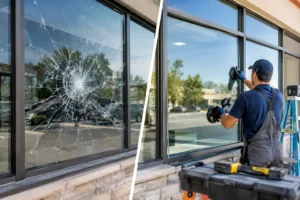
It is not a substitute for a complete security plan, and not every laminated product has the same security rating. But for ground-level windows, glass doors, and street-facing commercial glazing, the added retention can be an important part of the decision. If a panel is already cracked, loose, or broken, address it quickly. Damaged glass compromises safety, security, weather protection, and any sound-control benefit it once provided.
Start With a Clear Assessment
Before choosing acoustic glass, pay attention to when the noise occurs and where it is strongest. Is the problem traffic during rush hour, voices from a neighboring patio, a constant HVAC hum, or sound leaking through a sliding door? Does closing interior doors help? Can you feel a draft around the frame? Those details help determine whether new glazing, seal repair, door adjustment, or a broader replacement is the right fix.
Quick Glass Repairs can inspect damaged or underperforming residential and commercial glass systems, explain the available options clearly, and provide a free estimate for the work needed. For broken glass, do not wait with an exposed opening. Fast, licensed and insured repair protects the property first, then creates a dependable path toward a quieter, more comfortable space.
A quieter room is rarely the result of one material alone. It comes from the right glass, a sound frame and seal, and careful installation that gives noise fewer places to enter.