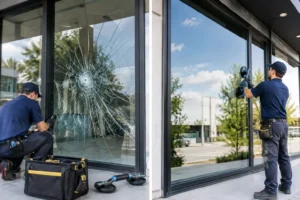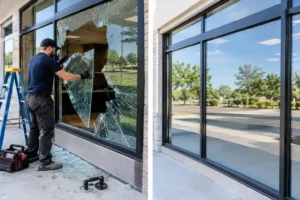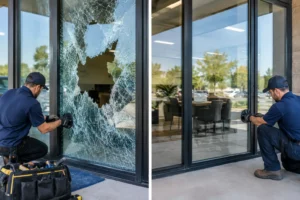


A cracked pane, fogged double-pane window, or frame that no longer closes properly is more than an eyesore. Window replacement can protect your property from rain, drafts, forced entry, and rising energy costs – but replacing the entire window is not always the right first move. In many cases, a skilled glazing contractor can replace the damaged glass or insulated glass unit while preserving a sound frame.
The right decision comes down to what failed, how much of the window is affected, and whether the existing frame can still do its job. Acting quickly keeps a manageable window problem from becoming water damage, security exposure, or a larger renovation.
When Window Replacement Cannot Wait
Some window problems need immediate attention. Broken glass leaves sharp edges, creates an easy access point for intruders, and exposes interiors to weather. A damaged ground-floor window, storefront opening, or glass door should be secured as soon as possible, especially after a break-in, storm, or accident.
Water entering around a damaged window deserves the same urgency. Moisture can stain drywall, swell trim, damage flooring, and create conditions for mold. In the DC, Virginia, and Maryland area, a sudden downpour or a hard winter freeze can turn a small opening into a costly repair fast.
Call for prompt professional service when you see shattered or cracked glass, an opening that will not lock, loose glass in the sash, visible water intrusion, or a window that has been boarded up after damage. Temporary protection may be necessary while the correct glass is measured and ordered, but temporary does not mean the issue is resolved.
Glass Replacement vs. Full Window Replacement
The phrase window replacement can describe two very different jobs. One is replacing the glass inside an existing window. The other is removing the complete unit, including the frame, sash, and glazing, and installing a new window system.
When Glass-Only Replacement Is the Smarter Choice
If the frame is structurally sound, the window operates correctly, and the damage is limited to the pane or sealed unit, glass-only replacement is often the practical solution. This is common with broken single panes, cracked tempered glass, and fogged double-pane insulated glass units.
Fog between panes is a clear sign that the seal on an insulated glass unit has failed. The window may still look intact from a distance, but the insulating gas has escaped and moisture has entered the space between the panes. Cleaning the surface will not remove that fog because it is trapped inside the unit. Replacing the insulated glass restores clarity and can improve thermal performance without requiring a full frame replacement.
Glass-only work can also preserve custom windows, matching trim, historic details, or a frame that would be disruptive and expensive to remove. It is not a shortcut when completed correctly. Precise measurement, compatible glass selection, proper setting materials, and weather-tight sealing matter.
When the Whole Window Should Be Replaced
Full replacement is usually warranted when the frame is rotted, warped, badly corroded, or separated from the surrounding wall. It may also make sense if the sash will not stay open, locks no longer align, repeated repairs have failed, or the window design itself is outdated and inefficient.
Wood frames with widespread rot are a common example. Replacing only the glass does not solve a frame that is absorbing water or losing structural integrity. The same applies to frames that have shifted enough to create persistent gaps. If air and water are moving around the window rather than through damaged glass, the complete assembly needs closer evaluation.
For property owners planning a major exterior update, full window replacement can offer a consistent appearance, upgraded hardware, and improved energy performance across the building. The trade-off is cost and installation scope. A full replacement affects trim, finishes, and sometimes siding or interior wall areas, so it should be planned rather than rushed when there is no active safety issue.
Signs Your Windows Are Costing You More Than They Should
Not every failing window breaks dramatically. Many problems show up as daily discomfort or gradual property damage. Rooms that feel noticeably colder near the glass, drafts around closed sashes, condensation that repeatedly forms on interior surfaces, and peeling paint around the frame all deserve attention.
High utility bills can be part of the picture, though windows are not always the only cause. Insulation, attic ventilation, exterior doors, and HVAC performance also affect comfort and energy use. A professional assessment should identify the actual source before you commit to a larger project.
Watch for these issues, especially in older homes, rental properties, and commercial spaces with heavy daily use:
- Cloudiness or moisture between double-pane glass
- Cracked, chipped, or loose panes
- Windows that stick, will not lock, or will not stay open
- Soft wood, staining, or bubbling paint around the frame
- Noticeable drafts or rattling during wind
- Water on the sill or damp drywall after rain
A window does not have to be completely broken to need service. Early repair can protect the surrounding structure and prevent a sudden emergency later.
Choosing the Right Glass for the Job
Replacement glass should match the location and function of the opening, not simply fill the space. A bathroom, entry area, sliding door, street-facing storefront, and upper-story bedroom can each require different glass types and safety considerations.
Tempered safety glass is commonly used where impact risk is higher, such as near doors, in bathrooms, and in certain low-level openings. When it breaks, it is designed to fragment into smaller pieces rather than dangerous sharp shards. Laminated glass may be appropriate where additional security, sound control, or glass retention is desired. Insulated glass units are often selected for exterior windows to improve comfort and reduce heat transfer.
Appearance matters too. Clear, tinted, obscure, patterned, and low-emissivity glass options each serve a purpose. Obscure glass can add privacy in bathrooms without blocking daylight. Low-emissivity coatings can help manage heat transfer, but the best option depends on window orientation, surrounding shade, building design, and your priorities for light, privacy, and efficiency.
For commercial properties, the choice also affects safety, code compliance, customer visibility, and downtime. A professional glass contractor can identify the appropriate product and install it accurately, rather than leaving a property owner to guess at thickness, safety ratings, or compatibility.
What a Professional Replacement Process Should Look Like
A reliable project starts with a clear inspection. The technician should identify whether the failure is in the glass, seal, sash, frame, hardware, or surrounding opening. That diagnosis prevents paying for a full replacement when a glass repair would solve the problem – or paying for new glass when hidden frame damage will cause another failure.
Measurements must be exact. Glass that is even slightly wrong can stress the frame, leave gaps, or fail to operate safely. Once the correct material is selected, the damaged components are removed carefully, the opening is prepared, and the new glass or window assembly is installed and sealed for proper performance.
Communication matters throughout the process. You should know what is being replaced, whether a temporary board-up or protection step is needed, what the expected timeline is, and how the finished work is covered. Quick Glass Repairs provides licensed and insured glazing service, free estimates, and warranty-backed workmanship for homeowners, property managers, and businesses that need clear answers as well as fast service.
Do Not Ignore a Small Window Problem
A hairline crack can spread with temperature changes. A failed seal can worsen until the view is permanently clouded. A little water at the sill can work behind trim where damage is harder to see. Waiting may seem convenient, but it often reduces your options and increases the final scope of work.
If your glass is broken, fogged, drafty, or no longer secure, get it evaluated while the repair may still be straightforward. The best window replacement decision is not always the biggest one – it is the one that restores safety, weather protection, appearance, and peace of mind without unnecessary disruption.