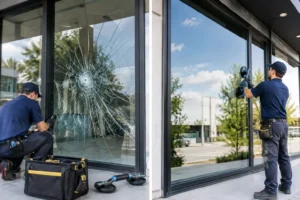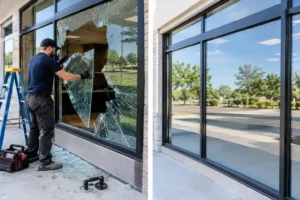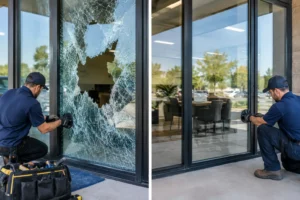


A cracked pane after a storm, a storefront window hit overnight, or double-pane glass that suddenly looks cloudy can turn into more than an appearance problem. Timely window repair protects the people inside, keeps out rain and wind, and restores the security your home or business depends on. In the DC, Virginia, and Maryland area, waiting can also mean water damage, rising energy bills, and a much larger repair later.
The right answer is not always a complete new window. Many problems can be solved by replacing the glass, repairing the seal, or correcting damaged hardware while preserving the existing frame. The key is identifying what failed and acting before the opening becomes vulnerable.
Broken Glass Calls for Fast Window Repair
Broken or shattered glass is the clearest urgent repair situation. Even a small break can leave sharp edges, weaken the rest of the pane, and create an easy access point for intruders. A damaged ground-floor window, glass entry door, or commercial storefront should be secured as quickly as possible.
If the glass has broken, keep children, pets, customers, and employees away from the area. Do not press tape directly onto cracked glass in an attempt to hold it together. If it is safe, clear loose glass from walkways while wearing appropriate hand protection, but leave glass that is still unstable for a glazing professional.
Emergency service can secure the opening and prevent further exposure, even when a custom glass unit needs to be ordered. This matters after hours, during heavy weather, or when a broken window affects a business’s ability to open safely. A professional should also inspect the frame, stops, and surrounding materials. Replacing the pane without addressing a bent frame or compromised seal can lead to another failure.
Fogged Windows Usually Mean a Failed Seal
A foggy window is frustrating because cleaning the interior and exterior glass does nothing. The haze is trapped between the panes. In most double-pane and triple-pane windows, that means the insulated glass unit’s perimeter seal has failed.
That seal does two jobs: it keeps moisture out and helps maintain the insulating space between panes. Once it fails, humid air enters, condensation forms, and the glass can look milky, streaked, or permanently fogged. The window may still be intact, but it is no longer performing as designed.
In many cases, the frame itself is still in good condition. Replacing the insulated glass unit can restore clarity and efficiency without the cost and disruption of replacing the entire window. That is often the practical option for homeowners, condos, apartments, and commercial properties with otherwise sound windows.
Full replacement may make more sense when the frame is rotted, warped, badly corroded, leaking around the opening, or no longer able to hold a new glass unit securely. A clear assessment should separate a glass problem from a full-window problem. You should not be pushed into replacing more than the condition requires.
Drafts and Leaks Are Not Always Glass Problems
A cold draft near a window can point to failed weatherstripping, worn caulk, a misaligned sash, a loose lock, or gaps around the frame. Water entering during rain can have similar causes. The glass may be fine, while the components that keep the window closed and sealed are not.
That distinction matters. Replacing a pane will not fix water that is entering behind damaged exterior trim. On the other hand, repeatedly adding caulk over a failed insulated unit will not remove the moisture trapped between panes. A proper inspection should identify the source before work begins.
Watch for peeling paint, soft wood, staining around the sill, bubbling drywall, or a musty smell near the window. Those signs can indicate that water has been getting in longer than expected. Addressing the glass and the surrounding seal promptly helps limit damage to interior finishes and framing.
When Repair Is the Better Choice
Window repair is often the smartest route when the damage is limited and the existing window system remains structurally sound. A replacement pane, insulated glass unit, screen, balance, lock, roller, or seal can restore function with less waste and a shorter turnaround.
Repair is especially worth considering when you have custom-sized windows, matching windows across a façade, or a commercial property where changing the entire system would disrupt operations. For landlords and property managers, repairing a damaged unit quickly can also keep a vacancy, tenant complaint, or maintenance issue from becoming a larger turnover expense.
The trade-off is condition. A repair cannot make a severely deteriorated frame new again. If several components have failed, the window no longer operates properly, or water damage has spread beyond the glass, replacement may provide better long-term value. The best decision is based on the actual condition, not on a one-size-fits-all recommendation.
What a Professional Window Repair Visit Should Include
Good glazing work begins with accurate measurements and a clear explanation of the problem. Glass is not interchangeable. Thickness, safety requirements, tint, low-emissivity coatings, grid patterns, tempered glass, and insulated-unit construction all affect what should be installed.
For a broken or fogged pane, the technician should verify the opening, inspect the frame, and determine whether the existing glass can be replaced in place. For operational issues, they should check hardware, tracks, balances, locks, and seals. At commercial locations, the evaluation should also consider safety glazing requirements, building access, and how to protect customers and staff during the work.
Communication matters just as much. You should know whether the repair can be completed the same day, whether custom glass must be ordered, how the opening will be secured in the meantime, and what the final scope includes. Licensed and insured service, careful installation, and a warranty provide accountability after the glass is in place.
Quick Glass Repairs provides fast, safety-focused window and glass service for residential and commercial properties across the DMV, including emergency response when damaged glass cannot wait.
Prevent Small Window Problems From Becoming Major Repairs
Windows work hard through summer heat, winter cold, driving rain, and daily use. A little attention can catch problems before they become urgent. Look at your windows seasonally, especially after severe weather. Check for new cracks, interior condensation, difficulty opening or locking, loose screens, damaged seals, and water marks on the sill.
Avoid slamming windows that stick. Forcing a sash can damage balances, locks, or the glass itself. Keep tracks reasonably clear of dirt and debris, and report fogging or leaks early if you rent or manage a property. Quick reporting gives the owner or manager more repair options and helps protect the unit from water intrusion.
For businesses, inspect glass doors and storefront panels as part of routine property checks. A small edge chip, loose door closer, or damaged glazing bead can become a safety issue in a high-traffic entrance. Scheduling repair before a panel fails is usually less disruptive than dealing with an emergency board-up during business hours.
Don’t Wait With Damaged Windows
Whether you are dealing with shattered glass, cloudy double-pane windows, a drafty bedroom, or a commercial window that will not secure, the fastest solution starts with an accurate assessment. Take photos if it is safe, note when the problem began, and keep the area clear if glass is cracked or broken.
A window should make your property feel secure, comfortable, and protected from the weather. When it stops doing that, prompt professional repair gives you a clear path forward – without unnecessary disruption or guesswork.