

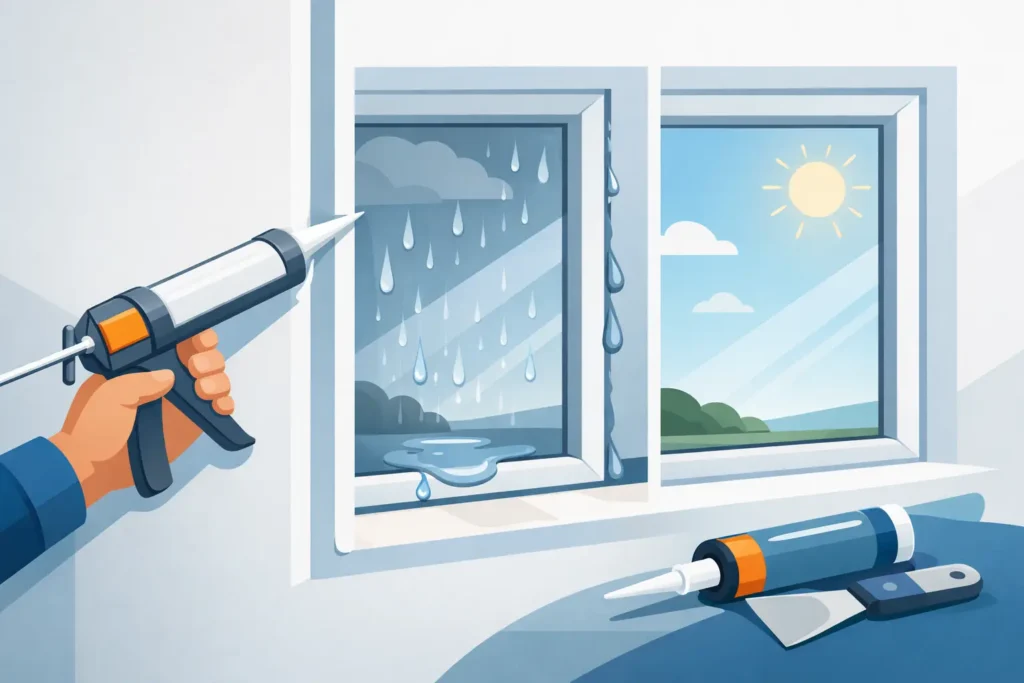
A thin line of failed caulk can send rainwater behind siding, into a wall cavity, or across a finished windowsill long before you see a major stain. Window caulking leak repair is often a fast, effective answer to water intrusion around an otherwise sound window. But caulk is not a cure-all. The key is identifying whether water is entering at the exterior window-to-wall joint, through a damaged frame, or through a failed glass or installation system.
For homeowners, landlords, and property managers in the DMV, waiting through another storm can turn a manageable repair into rotted trim, mold growth, damaged drywall, and higher repair costs. If water is actively coming in, protect the interior, document the issue, and arrange a professional inspection promptly.
What Failed Window Caulk Looks Like
Exterior window caulk is a weather barrier. It fills selected gaps between the window frame and the surrounding exterior materials, helping keep out wind-driven rain, drafts, insects, and debris. Sun exposure, temperature swings, building movement, and normal aging eventually cause it to shrink, crack, pull away, or become brittle.
The warning signs are usually visible if you know where to look. You may see separated caulk along the top or sides of a window, narrow gaps at the frame edge, cracked beads, or areas where old sealant feels hard and loose. Inside, peeling paint, bubbling drywall, a musty smell, soft trim, or water marks beneath a window deserve attention even if the exterior caulk appears intact.
A leak that only occurs during heavy, wind-driven rain is especially telling. Water may be getting past a small exterior opening that does not cause problems in lighter rainfall. Drafts around a window can also point to failed caulk, although they may come from worn weatherstripping or poor window operation instead.
When Window Caulking Leak Repair Is the Right Fix
Fresh exterior caulk can be the right repair when the window itself is structurally sound, the frame is secure, and the leak is clearly traced to deteriorated perimeter sealant. This is common on aging wood, vinyl, aluminum, and composite window systems where the original caulk has reached the end of its service life.
Proper repair is more than applying a new bead over the old one. Loose or failed caulk needs to be removed, the joint needs to be cleaned and dried, and the correct sealant must be applied in the right location. A continuous, properly sized bead matters. Gaps, poor adhesion, or sealing over moisture can leave the leak exactly where it started.
Material compatibility matters, too. Different exterior surfaces and window-frame materials may require different caulks. A product that sticks well to one surface may fail early on another. The joint also needs to allow for normal expansion and contraction. An overly rigid or poorly placed seal can split as temperatures change.
Why Caulk Does Not Fix Every Window Leak
Water around a window does not automatically mean the caulk failed. That assumption can lead to a cosmetic patch while water continues to move behind the wall.
A window can leak because of damaged flashing, missing or poorly installed drip caps, cracked siding or stucco, failed trim, blocked drainage paths, or an installation issue behind the exterior finish. On older homes, deteriorated wood framing or trim may be part of the problem. On commercial buildings, water can travel from higher facade openings and show up at a window far below the true entry point.
There is another issue that caulk cannot solve: a failed insulated glass unit. If a double-pane window looks foggy between the panes, has moisture trapped inside the glass, or shows a hazy appearance that cannot be wiped off, its internal seal has failed. Exterior caulking will not restore that glass. The insulated unit may need replacement to restore clarity and energy performance.
Never seal weep holes or manufacturer-designed drainage openings at the bottom of a window. Those openings are there to let incidental water drain out. Blocking them can trap water inside the frame and create a worse problem.
The Risks of Waiting After a Window Leak
A slow leak rarely stays small. Water follows gravity and can travel along framing, insulation, and wall materials before it becomes visible. By the time a ceiling stain or swollen baseboard appears, moisture may have been present for weeks or months.
For a home, that can mean warped flooring, stained finishes, damaged insulation, wood rot, and conditions that support mold. For rental properties and multifamily buildings, unresolved leaks can affect neighboring units and create repeated maintenance calls. For offices, retail spaces, and other commercial properties, water intrusion can damage inventory, disrupt operations, and make a storefront or workspace look neglected.
Leaks also affect comfort and efficiency. Gaps around windows can allow air movement that makes rooms feel cold in winter and hot in summer. While a caulk repair will not correct every energy problem, it can eliminate a direct path for drafts when failed perimeter sealing is the cause.
What to Do When Water Is Coming Through a Window
Start by moving furniture, electronics, rugs, and paper goods away from the wet area. Place towels or a container beneath active drips, but do not rely on an interior patch as a permanent repair. Avoid repeatedly opening a wet wood window, since swollen components can crack or cause additional damage.
Take clear photos of the water path, damaged finishes, and the exterior area if it is safe to do so. Note the weather conditions. Did the leak happen during steady rain, only when wind hit one side of the building, or after melting snow? Those details help identify the source.
If the window glass is cracked, the frame is loose, or the opening is no longer secure, treat it as a safety and security issue. Keep children and pets away from broken glass, avoid touching sharp edges, and arrange urgent professional service. A temporary covering may help protect the opening, but it should not substitute for a properly secured repair.
A Professional Inspection Finds the Real Entry Point
The most valuable part of a leak repair is often the diagnosis. A glazing professional can inspect the glass, sash, frame, exterior sealant, trim, drainage points, and visible surrounding materials to determine whether window caulking is the true issue.
At Quick Glass Repairs, the goal is not to sell an unnecessary replacement when targeted repair will solve the problem. If the window needs recaulking, frame repair, insulated glass replacement, or a more complete window solution, customers receive a clear explanation of what is wrong and what needs to happen next. Licensed and insured workmanship, responsive communication, and warranty-backed service help take the uncertainty out of an urgent repair.
For property managers and commercial decision-makers, clear updates are just as important as the repair itself. A leaking window can affect tenants, scheduling, access, and daily operations. Fast assessment and organized follow-through reduce downtime and prevent a small maintenance issue from becoming a larger restoration project.
Keeping New Caulk Working Longer
Exterior caulk is not permanent, so plan to inspect it periodically, especially after harsh winters, major storms, or exterior renovation work. Look closely at windows on the weather-exposed sides of the building and at upper-floor openings where wind-driven rain is more likely.
Keep nearby gutters and downspouts functioning correctly. Overflowing gutters can saturate siding and trim around windows, making a minor weakness look like a window failure. Trim shrubs back from the wall so moisture can dry and exterior joints remain visible for inspection.
Be cautious with quick DIY fixes. Small, accessible cracks may seem simple, but applying the wrong caulk, skipping surface preparation, or sealing drainage areas can complicate the repair. If there are interior water marks, soft materials, recurring leaks, fogged glass, cracked panes, or uncertainty about the source, professional evaluation is the safer call.
The best time to address a leaking window is before the next hard rain tests it again. A dry, secure window protects more than the view – it protects the wall, the room behind it, and the people who rely on that space every day.