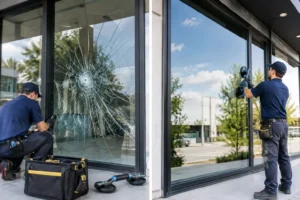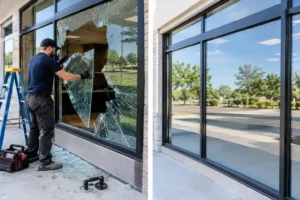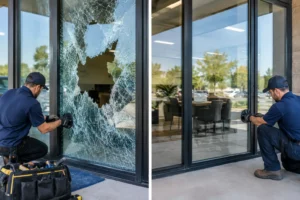

A cracked pane beside your front door is not just a cosmetic problem. It can leave sharp edges at hand level, weaken the door’s security, and let rain or cold air into the property. Knowing when should door glass be replaced helps you make the right call quickly – before a small defect becomes a safety issue, a break-in risk, or an avoidable source of energy loss.
The answer depends on the type of damage, the glass location, and whether the door still closes and protects the building properly. Some issues can be repaired or stabilized. Others require immediate replacement, especially on entry doors, patio doors, storefront doors, and doors used by children, customers, or tenants.
When Should Door Glass Be Replaced Immediately?
Replace damaged door glass right away when it creates an active safety, security, or weather-exposure problem. A shattered pane is the clearest example, but visible breakage is not the only reason to act.
Glass should be replaced promptly if it has a crack that reaches an edge, a hole, loose pieces, deep chips, or a break near the lock, handle, hinges, or door frame. Damage in these areas can make the entire door less stable. On a commercial entrance, it can also create a liability concern and leave the property vulnerable after hours.
Do not keep using a door with glass that rattles in its frame or appears to be separating from its glazing. The pane may shift or fall, particularly when the door is opened, closed, or exposed to wind. If the glass is broken after a storm, attempted break-in, accident, or vandalism, secure the opening as soon as possible and arrange professional glass service.
For homes and businesses in the DMV, a broken exterior door pane should not be left exposed overnight if it can be avoided. Temporary boarding can protect the opening until the correct replacement glass is measured, ordered, and installed.
Cracked Door Glass Is Usually a Replacement Issue
A small crack may look manageable, particularly if the pane has not fallen apart. However, cracks in door glass rarely stay the same. Normal door movement, temperature swings, slamming, and vibration place stress on the glass every day. A hairline crack can spread without warning.
Replacement is generally the safer choice when the crack is longer than a few inches, branches in more than one direction, reaches the edge of the glass, or sits near a high-contact area. This includes sidelights next to front doors, glass inserts in storm doors, and sliding glass door panels. Even a crack that appears minor can compromise tempered safety glass.
Door glass often needs to meet specific safety requirements because people are likely to walk into it, push against it, or fall near it. A glazing professional can identify whether the existing pane is tempered, laminated, insulated, decorative, or another specialty product and recommend a compatible replacement. Installing ordinary glass where safety glass is required is not a shortcut worth taking.
Fogging Between Panes Means the Seal Has Failed
If your double-pane door glass looks cloudy, milky, or streaked between the panes, cleaning the inside and outside surfaces will not solve it. The moisture is trapped inside the insulated glass unit because its perimeter seal has failed.
A failed seal does not always mean the entire door must be replaced. In many cases, the insulated glass unit can be measured and replaced while the existing door slab and frame remain in place. This is often a practical option for French doors, patio doors, exterior doors with glass inserts, and sidelights that are otherwise in good condition.
Fogged glass is more than an appearance issue. The failed seal reduces insulation performance, which can make the door area feel colder in winter and warmer in summer. It may also allow persistent condensation that obscures the view and affects the look of an entryway or business entrance. If you notice fogging, schedule an estimate before the issue progresses to visible water marks or deterioration around the glazing.
Damage Around the Glass Can Change the Decision
The pane itself is only part of the assembly. The frame, glazing beads, weatherstripping, door slab, and hardware all affect whether replacing the glass alone is appropriate.
If the glass is intact but the surrounding frame is rotted, warped, heavily corroded, or loose, a technician should inspect the full door system. Water infiltration around a glass insert can damage wood, weaken fasteners, and cause the pane to shift. On sliding doors, worn rollers or alignment problems can place repeated stress on the glass and seals.
In these situations, glass replacement may still be possible, but it should be paired with repairs to the door or frame. If the door is severely deteriorated or no longer operates correctly, full door replacement may deliver better long-term value. The right choice comes down to the condition of the structure holding the glass, not simply the appearance of the pane.
Security Glass Concerns Should Never Wait
A door with damaged glass can provide an easy access point for an intruder. This is especially concerning when broken or weakened glass is within reach of a deadbolt, thumbturn, or interior lock.
Replace the glass quickly when the opening can be manipulated from outside, when a pane near the locking area is cracked, or when prior damage suggests an attempted forced entry. Depending on the door and application, tempered or laminated safety glass may improve protection. Laminated glass is designed to hold together when fractured, which can help keep the opening covered after impact.
For retail spaces, offices, apartment buildings, and other commercial properties, prompt replacement also supports a professional appearance. Customers and tenants notice damaged entrance glass immediately. More importantly, delaying repairs can affect access control, weather protection, and the ability to secure the building at closing time.
Can Door Glass Be Repaired Instead of Replaced?
Sometimes, but only in limited circumstances. Minor surface scratches on certain glass types may be reduced through specialized polishing. Small issues with caulk, glazing compound, or trim may be repairable if the pane itself is sound. A loose but unbroken insert may only need to be reset and secured.
Cracks, shattered glass, deep impact damage, failed insulated units, and compromised safety glass are different. These conditions generally call for replacement rather than a patch. Adhesives and do-it-yourself crack products may change the appearance temporarily, but they do not restore the original strength, insulation value, or safety performance of a door pane.
A professional assessment avoids two expensive mistakes: replacing a whole door when only the glass unit needs attention, or trying to preserve glass that is no longer safe to use. Accurate measurements matter because door inserts, sidelights, decorative panels, and insulated units are often made to specific sizes and thicknesses.
What to Do While You Wait for Replacement
Keep people away from damaged glass, especially children, pets, customers, and delivery personnel. Avoid repeatedly opening or closing the door if the pane is cracked, loose, or shattered. Door movement can turn a stable-looking crack into a full break.
If safe to do so, remove only loose glass that can fall freely, using protective gloves and closed-toe shoes. Do not press on cracked areas, tape over sharp edges as a permanent fix, or attempt to force broken pieces back into place. Photograph the damage for your property records, then have the opening professionally secured.
For an exterior opening, protecting the interior from weather and unauthorized entry is the immediate priority. For an interior glass door or shower-style panel, the priority is preventing contact with sharp or unstable glass. The replacement process can then focus on matching the correct glass type, finish, thickness, and safety rating.
Choosing the Right Replacement Glass
A replacement should do more than fill the opening. It should match the door’s intended use. Clear glass may be right for a patio door with a view, while privacy glass can suit a bathroom, office, or entry door. Decorative glass can refresh curb appeal without replacing the entire door.
Energy performance also matters for exterior doors. Insulated glass units, low-emissivity coatings, and properly sealed edges can improve comfort near the opening. For high-traffic areas, safety glazing is usually the priority. A qualified glazing contractor can explain the trade-offs clearly and make sure the finished installation fits, seals, and operates correctly.
When a door pane is broken, fogged, cracked, or insecure, do not wait for the damage to become an emergency. Quick Glass Repairs provides fast, safety-focused door glass service with clear communication, precise installation, and options for scheduled or urgent repairs. A timely inspection can protect the people and property behind the door.