

A cracked pane beside a child’s bed, a window that will not lock, or a fogged double-pane unit may look like a repair to handle later. In practice, each can create an immediate safety problem. This residential window safety guide helps homeowners, landlords, and property managers spot the risks early, take the right short-term precautions, and know when professional glass repair should happen now.
Start With the Risks You Can See
Walk through your home and look at windows as safety barriers, not just sources of light and fresh air. A window should open when needed, close securely, lock reliably, and hold its glass firmly in place. If any part of that system has failed, the risk can range from cuts and water intrusion to a fall or an easier point of entry.
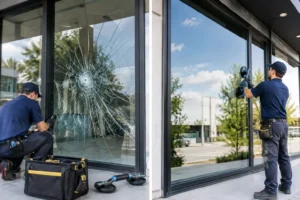
Broken glass is the most obvious concern. Even a small crack can spread quickly with temperature changes, a slammed door, or pressure during cleaning. Loose fragments can fall without warning, especially when the damaged pane is in a door, a low-level window, or a high-traffic area.
Less obvious problems deserve attention too. A window that sticks may not provide a dependable exit during an emergency. A failed lock can compromise home security. Condensation trapped between double-pane glass usually signals a failed seal. It is not always an emergency on its own, but it reduces insulation and can be a warning that the insulated glass unit needs replacement.
Prevent Window Falls Before They Happen
Window falls are a serious concern in homes with young children, particularly in bedrooms and upper-floor living spaces. Screens do not stop a person from falling. They are designed to keep insects out, not to carry weight.
Keep furniture, cribs, beds, and climbing-friendly items away from windows. A child who can reach a sill may be able to open a window far enough to fall, even if the screen is intact. Window guards or approved opening-control devices can limit how far a window opens while still allowing the window to function as an emergency exit when required.
The right solution depends on the window’s location. A second-story bedroom window may need fall protection, but it also needs to remain usable for emergency escape. Avoid permanently blocking or nailing shut a window that may serve as a required exit. If you are unsure whether a window is an egress window, a qualified glazing professional can identify the condition of the window and help you understand what repairs or upgrades make sense.
Make Upper-Floor Windows a Regular Check
Test upper-level windows every few months. Confirm that locks engage, opening-control devices work as intended, and the frame is secure. If a sash drops unexpectedly, will not stay open, or feels loose in its track, stop using it until it has been repaired.
For rental properties, inspections between tenants are especially valuable. A damaged latch, missing screen, or worn balance mechanism can become a liability quickly when a new household moves in.
Use the Right Glass in High-Risk Locations
Some areas of a home call for safety glass because ordinary annealed glass can break into large, sharp pieces. Tempered glass is designed to break into small, pebble-like fragments. Laminated glass uses an inner layer that helps hold broken pieces together. Both can reduce injury risk, but they perform differently.
Tempered glass is common near doors, in bathroom areas, and in other locations where people may fall against the glass. Laminated glass can be a strong option where added security, sound reduction, or shard retention is a priority. The best choice depends on the opening, local code requirements, the frame system, and how the space is used.
Pay close attention to glass beside entry doors, sliding glass doors, stairways, showers, tubs, and low windows near walkways. These are places where accidental impact is more likely. If you are replacing a pane in one of these areas, matching the old glass is not always the safest choice. An upgrade may be warranted.
Treat Broken or Loose Glass as an Urgent Repair
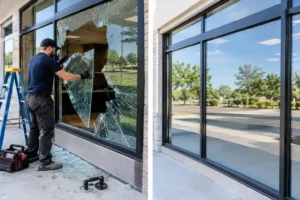
Do not keep using a window with a cracked, shattered, or loose pane. Keep children and pets away from the area, close off the room if needed, and avoid pressing tape directly onto unstable fragments. If glass has already fallen, wear sturdy shoes and gloves while keeping others clear. Pick up larger pieces carefully and use a broom and dustpan for smaller debris.
Do not attempt a full glass replacement with household materials. Incorrectly secured glass can shift, break again, leak, or create a more dangerous opening. A temporary covering can reduce exposure while you wait for service, but it is not a substitute for a properly fitted pane and secure glazing system.
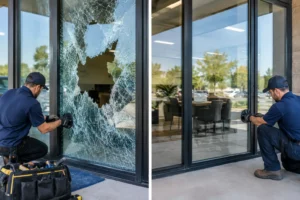
A broken window also changes your home’s security and weather protection immediately. Rain, wind, outdoor debris, and pests can enter through even a modest opening. At ground level, damaged glass or a window that cannot lock creates an easier access point for an intruder. For these situations, fast professional service is the practical choice.
Check Locks, Frames, and Hardware Together
A window is only as secure as its full assembly. Replacing glass will not solve a frame that has separated, a sash that will not align, or a lock that does not catch. During your inspection, look for gaps between the sash and frame, damaged weatherstripping, warped tracks, missing screws, and locks that require force to engage.
Moisture is often behind these issues. In the DC, Maryland, and Northern Virginia area, seasonal humidity, heavy rain, and temperature swings can expose weaknesses around older windows. Water stains on drywall, peeling paint near the sill, or a persistent draft are signs worth addressing before rot or interior damage spreads.
When a window does not close squarely, avoid forcing it. Extra pressure can crack the glass, damage the hardware further, or leave the window stuck open. A proper repair starts with identifying whether the problem is the sash, balance, lock, frame, seal, or glass unit itself.
Keep Emergency Escape Windows Functional
Bedrooms often rely on windows as an alternate exit in a fire or other emergency. That means the window should be accessible, operable, and free of furniture or heavy window treatments that delay opening.
Test the window from inside the room. Can an adult open it without tools? Does it stay open? Is the path outside clear enough for a person to exit? A window with painted-shut sashes, corroded hardware, broken balances, or a damaged frame may fail at the moment it is needed most.
Security and escape should work together. Window guards, locks, and opening-limit devices are useful only when they are properly selected and installed for the window’s role. Never assume a one-size-fits-all product is appropriate for every room.
Know When Fogged Glass Needs Attention
Fog between panes means the seal on an insulated glass unit has failed. The window may still be intact, but its insulating performance is reduced. You may notice a colder interior surface, more outside noise, or moisture-related staining around the opening over time.
This is usually a scheduled repair rather than a middle-of-the-night emergency. Still, delaying it for years can mean higher energy costs and a steadily less comfortable room. In many cases, the glass unit can be replaced without replacing the entire window frame, depending on the window’s condition.
A Safer Response When Something Goes Wrong
If a window breaks, will not lock, or cannot be closed, act based on the immediate risk. Protect people first, then secure the opening and arrange a professional assessment. Take clear photos for your records, especially if the damage affects a rental property, a condominium, or a recently completed renovation.
Quick Glass Repairs provides licensed and insured residential glass service with same-day availability for many urgent needs and 24/7 emergency response when broken glass cannot wait. The goal is not just to cover an opening. It is to restore safe, secure, properly fitted glass with clear communication and workmanship backed by a warranty.
Your windows should protect the people inside your home without becoming a daily worry. A quick inspection, the right safety upgrades, and prompt repair when something fails can keep a small window problem from becoming a serious injury, security, or weather-damage event.