
A patio door that will not lock, drags across the track, or has cracked glass is more than an inconvenience. It can leave your home exposed to break-ins, rain, pests, sharp glass, and costly energy loss. Prompt patio door repair restores the part of your home that protects your family while giving you a clear, reliable way to move between indoors and out.
For homes, apartments, condos, and commercial properties across the DMV, the right response depends on what failed. A dirty track may be a simple maintenance issue. A shattered insulated glass panel, bent frame, or failed lock needs professional attention quickly. The key is knowing the difference before a minor problem becomes a security or safety issue.
When Patio Door Repair Cannot Wait
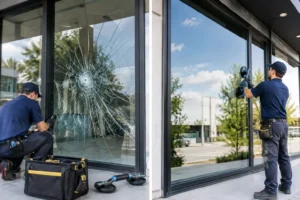
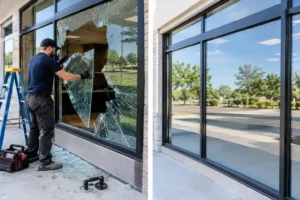
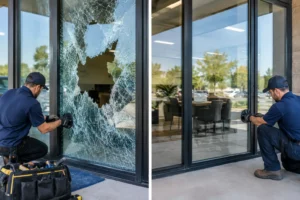
Broken or cracked glass should be treated as urgent. Even a crack that appears stable can spread with temperature changes, door movement, or a light impact. Glass near a walkway or patio also creates a cut hazard for children, pets, guests, and employees. Keep people away from the damaged area, avoid operating the door, and arrange professional service as soon as possible.
A door that does not close or lock securely deserves the same urgency. Patio doors are a common access point, and a weak latch, damaged strike plate, or misaligned panel can compromise your property’s security. If the opening cannot be secured, temporary protection may be needed while replacement glass or hardware is ordered.
Water entering around the frame is another problem worth addressing fast. A little moisture at the threshold can point to worn weatherstripping, clogged drainage channels, failed seals, or a door that is no longer square in the opening. Left alone, water can damage flooring, drywall, trim, and the framing behind the wall.
Common Patio Door Problems and What Causes Them
The door is hard to slide
Sliding doors usually become difficult to move because dirt, leaves, pet hair, and grit have built up in the bottom track. But cleaning is not always the answer. Worn rollers, a damaged track, loose hardware, or a heavy door panel that has fallen out of alignment can create the same symptom.
For a quick check, vacuum loose debris from the track and wipe it with a dry cloth. Do not force the door or coat the track with heavy oil. Thick lubricants can collect more grit and make the problem worse over time. If the door still catches, scrapes, or takes two hands to move, the rollers and alignment should be inspected. Continued force can damage the frame or crack the glass panel.
The glass is foggy or cloudy
Fog between the panes of a double-pane patio door means the insulated glass seal has failed. The seal is designed to keep insulating gas and dry air inside the unit. Once it fails, moisture enters and creates the familiar haze, streaking, or droplets between the glass.
Cleaning the inside or outside surfaces will not fix it because the moisture is trapped inside the glass unit. In many cases, the glass can be replaced without replacing the entire patio door frame. That can preserve a functioning door system while improving visibility, appearance, and insulation.
The lock does not catch
A lock that will not engage may be caused by a simple alignment issue, especially if the door has settled over time. It can also signal worn latch hardware, a damaged handle, a loose strike plate, or frame movement. Avoid relying on a stick in the track or an improvised lock as a long-term solution. Those measures do not provide dependable security and can make emergency exit harder.
A technician can assess whether the hardware can be adjusted or whether it needs replacement. The goal is a door that closes smoothly, locks fully, and opens easily when you need to leave.
Air or water is coming through the door
Drafts make rooms uncomfortable and force your heating and cooling system to work harder. They often come from compressed weatherstripping, failed perimeter seals, gaps around the frame, or a panel that is not closing squarely. Water intrusion may also result from blocked weep holes, which are small drainage openings designed to direct moisture out of the door system.
The repair may be as targeted as new weatherstripping or drainage cleaning. If the frame is damaged, the track is badly corroded, or the door was installed incorrectly, a more involved repair or replacement may make better financial sense. A clear inspection prevents spending money on a temporary fix that does not address the source of the leak.
What to Do Before a Technician Arrives
If glass is broken, keep the area clear and wear closed-toe shoes. Do not press tape directly across shattered or unstable glass, and do not attempt to remove large pieces from the frame yourself. If it is safe to do so, close off the room or use a barrier to keep children and pets away.
For a sliding issue, remove furniture, planters, or rugs that block access to the door. Take note of when the issue started and whether it followed a storm, attempted break-in, impact, or recent construction nearby. Those details can help identify whether the cause is isolated hardware wear or a larger alignment problem.
Property managers and commercial decision-makers should also document the door location, the nature of the damage, and whether the opening can be locked. This helps prioritize emergency service, protects occupants, and keeps the repair process moving with fewer back-and-forth questions.
Repair or Replace: How to Make the Right Call
Patio door repair is often the most practical option when the frame is sound and the problem is limited to glass, rollers, locks, handles, seals, or track components. Replacing only what failed can reduce downtime and preserve the look of the existing opening.
Full door replacement may be the better choice when there is extensive frame rot, severe corrosion, repeated water intrusion, major warping, obsolete parts that cannot be sourced, or broad damage from a break-in. It may also be worth considering if your current door has poor insulation and you are already facing multiple repairs.
There is no one-size-fits-all answer. A newer door with a failed insulated glass unit is often a strong repair candidate. An older door that leaks, sticks, has failing hardware, and no longer locks reliably may be signaling that replacement is the more durable investment. A professional estimate should explain the condition of the door, available repair options, expected timing, and warranty coverage in plain language.
Why Specialized Glass Service Matters
Patio doors combine large glass panels, moving hardware, locks, tracks, weather barriers, and structural framing. A rushed adjustment can leave the panel dragging, misaligned, or improperly secured. Incorrect glass sizing or installation can create stress on the panel and affect how the door operates.
Specialized glazing service focuses on both the glass and the system around it. That means measuring accurately, identifying the right glass type, restoring secure operation, and checking that the door closes and locks correctly before the work is complete. For broken glass or an unsecured opening, 24/7 emergency response can be the difference between a temporary worry and a protected property.
Quick Glass Repairs provides licensed and insured patio door service for homeowners, property managers, and businesses throughout the DC, Virginia, and Maryland region. Same-day availability may be possible for urgent situations, while custom glass and specific hardware can be scheduled with clear updates from estimate through installation.
A patio door should feel solid when it closes, glide without a fight, and lock without guesswork. If yours does not, do not wait for the next storm, cold snap, or security concern to force the issue. Get the problem assessed early and restore the safe, comfortable access your property needs.