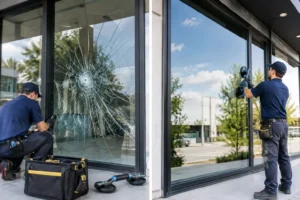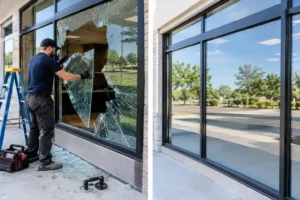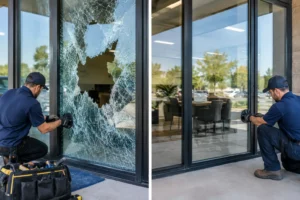


A cracked window can become a security problem long before the glass falls out. A sharp impact, a failed seal, or a branch through a pane can leave your home or business exposed to weather, moisture, pests, and unwanted entry. This guide to replacing window panes explains what needs immediate attention, what can wait for a scheduled repair, and when a professional glazing team is the safer choice.
Start by identifying what actually failed
Not every damaged window needs a full replacement. The pane is the glass itself, while the sash is the movable frame that holds it. The overall window frame is the structure secured to the wall. If the glass is broken but the sash and frame remain square, stable, and free of rot or corrosion, replacing the glass may restore the window at a lower cost than replacing the entire unit.
A visibly shattered pane calls for fast action, especially on a ground floor, near an entry door, or in a commercial space. Keep people and pets away from the area. Do not press tape directly onto cracked glass in an attempt to hold it together. Tape can pull loose shards when it is removed, and it does not make a compromised window secure.
Fogging between two panes is different. That haze usually means the seal on an insulated glass unit has failed. The exterior surfaces may be intact, but the window has lost its sealed airspace, which reduces clarity and can hurt energy performance. In many cases, the insulated glass unit can be replaced without replacing the full window.
Look closely at the surrounding materials, too. Peeling paint, soft wood, warped vinyl, loose glazing, water staining, or a sash that will not open and close properly can point to a larger issue. Replacing the pane alone will not solve a frame that is failing.
Guide to replacing window panes: choose the right glass
Correct measurements and glass selection are where many pane replacement projects go wrong. A replacement that is even slightly undersized may rattle, leak air, or shift under pressure. One that is too large can stress the sash, crack during installation, or prevent the window from operating correctly.
The new pane should match the original window’s function, not simply its visible thickness. Older single-pane windows may use standard annealed glass, but newer windows often contain insulated glass units with two panes, spacers, and sealed edges. Some locations also require safety glass. Doors, sidelights, shower enclosures, glass close to walking surfaces, and certain low-level windows may need tempered or laminated glass to meet applicable safety requirements.
A few details affect the right replacement:
- Glass type: Single-pane, double-pane insulated, tempered, laminated, tinted, low-E, and obscure glass all perform differently.
- Thickness: Glass thickness must work with the existing sash, stops, glazing channel, or beads.
- Spacer and seal design: For insulated glass, the spacer color, thickness, and seal construction affect fit and appearance.
- Grid pattern: Grilles between the glass or applied grids should align with nearby windows.
- Energy performance: A low-E coated insulated unit can help limit heat transfer, but it must be specified correctly for the window orientation and existing system.
For a double-pane window, measuring only the visible glass is not enough. The insulated unit must be fabricated to the precise overall size, including its edge seal. That is why professional measurements are valuable after a seal failure or impact break.
Make the opening safe before replacement begins
If the break creates an open hole, treat it as an immediate repair need. Wear cut-resistant gloves, closed-toe shoes, and eye protection before approaching loose fragments. Pick up large pieces carefully, then use a vacuum around the sill, floor, and nearby furniture. Small shards travel farther than most people expect.
For a broken exterior window, a temporary board-up or secure covering can protect the opening until the correct glass arrives. This matters during rain, high winds, cold nights, or when the window is accessible from outside. A temporary covering is a short-term safety measure, not a replacement for properly installed glass and weather sealing.
Avoid forcing a damaged sash open or closed. Movement can turn a stable crack into a full break, bend hardware, or send fragments into the room. If the damaged pane is in a door, near a stairway, or in a busy storefront, restrict access to the area until it is secured.
What professional pane replacement involves
The exact process depends on the window design, but a proper replacement follows a careful sequence. First, the technician confirms whether the problem is limited to the glass or involves the sash, seal, glazing compound, stops, or frame. Next comes precise measurement and identification of the required glass type.
For a traditional single-pane wood window, the old glazing compound and points may be removed, the damaged pane is taken out, and the sash is cleaned and prepared. The new glass is set with the correct clearance, secured, and sealed with fresh glazing compound. Rushing this step can create leaks or put damaging pressure on the glass as the sash expands and contracts through the seasons.
For vinyl, aluminum, and many modern wood windows, the work often involves removing interior or exterior glazing beads, releasing the old insulated glass unit, setting the replacement onto proper blocks, and reinstalling the beads securely. The glass must sit squarely and evenly. Improper setting blocks or pressure points can lead to premature seal failure or stress cracks.
After installation, the window should be checked for clean sightlines, stable fit, proper sash operation, and an intact weather seal. A quality repair also includes a careful cleanup. Broken glass should not be left in landscaping, carpet, tracks, or window wells.
When replacing the pane is not the best fix
Pane replacement is usually the practical solution when damage is isolated. It may not be the right investment when the frame is rotted, the sash is badly warped, hardware has failed repeatedly, or several windows are nearing the end of their useful life. A full window replacement may offer better long-term value in those cases.
There are trade-offs. Replacing only a fogged insulated unit preserves the existing frame and usually causes less disruption. Replacing the entire window can improve overall insulation, operation, and appearance, but it costs more and may involve trim work. For a rental property, condominium, office, or retail location, approval requirements and matching existing windows can also affect the decision.
If a window has broken due to a break-in, storm damage, or a sudden impact, speed matters first. Secure the opening, then determine whether the sash and frame can safely accept replacement glass. Do not wait for a small crack to spread across a pane or for a loose unit to fail completely.
Get a clear scope before work starts
A reliable estimate should identify whether the work covers a single pane, an insulated glass unit, glazing materials, new stops or beads, temporary securing, and cleanup. It should also make clear if the replacement glass is tempered, insulated, tinted, or otherwise specialized. That clarity prevents surprises after fabrication is underway.
For homeowners and property managers in the DMV, Quick Glass Repairs provides fast, licensed and insured glass service for broken panes, fogged double-pane units, damaged window glass, doors, and commercial glass systems. Same-day help may be available for urgent breaks, while custom insulated units and specialty glass can be measured, ordered, and installed with updates throughout the process.
A broken pane rarely becomes less urgent with time. Protect the opening, get the glass correctly identified, and choose a repair that restores security, weather protection, and a clean finish without creating a second problem behind the glass.