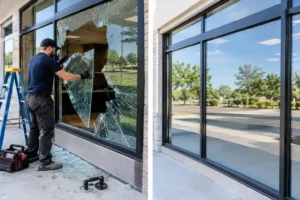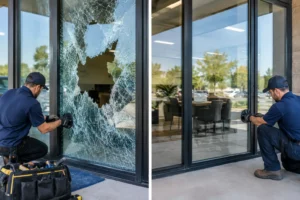


A cracked dining table, shattered patio table, or chipped desk surface is more than an eyesore. It can leave sharp edges at hand height, make a room unsafe for children and guests, and put the furniture beneath it at risk. Professional glass table top replacement restores the look and function of the piece without forcing you to replace a table base you still like.
For homeowners, property managers, and businesses across the DMV, the right answer depends on the break, the table’s intended use, and whether the glass is a protective cover or the actual structural surface. A precise measurement and the correct safety glass make the difference between a table that looks finished and one that becomes another problem.
When a Glass Table Top Needs Replacement
A completely shattered top clearly needs immediate attention. Keep people away from the area, wear closed-toe shoes, and do not try to lift large broken pieces with bare hands. If the table is in a busy lobby, retail area, restaurant, office, or home entry, block off the space right away. Broken glass should not sit where customers, tenants, pets, or children can reach it.
Replacement is also the practical choice when a crack runs through the panel, a corner is missing, or the edge has deep chips. Even if the top has not broken apart, damaged glass can fail under normal use. Heat from serving dishes, pressure from a person leaning on the table, or an accidental bump may be enough to turn a small crack into a full break.
Some damage is less dramatic but still worth addressing. Scratches, cloudy areas, worn coatings, and rough edges can make an otherwise well-kept table look neglected. A new top is often a cost-effective way to refresh a dining room, conference room, patio, reception area, or rental property while keeping the existing base.
Why the Right Glass Matters
Not every piece of glass belongs on a tabletop. The thickness, edge finish, shape, and glass type must match how the table will be used. Choosing solely by the lowest price can create a surface that feels flimsy, fits poorly, or does not offer the safety performance the location demands.
Tempered glass is usually the safer choice
Tempered glass is heat-treated for greater strength than standard annealed glass. If it breaks, it is designed to crumble into small, pebble-like pieces rather than long, dangerous shards. That makes it a common choice for dining tables, coffee tables, outdoor furniture, commercial tables, and other areas where people regularly sit, work, or walk nearby.
There are trade-offs. Tempered glass cannot be cut, drilled, or reshaped after tempering. Every measurement, corner radius, hole location, and edge detail must be confirmed before fabrication begins. A professional glass company will account for this during the estimating and measuring process instead of guessing from a photo or an old piece of broken glass.
Laminated glass may make sense in certain specialty applications because it has an interlayer that holds fragments together after breakage. It can be useful where retention is a priority, but it is not automatically the best fit for every furniture project. The best material depends on the base, the location, expected impact, and the look you want.
Thickness should match the table base
A protective glass cover placed over a solid wood tabletop may use a thinner panel than a freestanding glass dining top. By contrast, a large piece of glass resting on a metal pedestal, a minimal frame, or small support points may need a thicker panel and careful engineering. The unsupported span matters just as much as the length and width.
The table base also needs to be level and stable. Replacing the glass without correcting a warped frame, missing support pad, loose fastener, or uneven base can put stress on the new panel. Before installation, the supports should be inspected so the glass sits evenly rather than rocking or bearing weight at one corner.
Edge work is part of the safety plan
A clean edge is not just a cosmetic upgrade. Polished edges remove the raw, sharp feel of cut glass and give a tabletop a finished appearance. Flat-polished edges work well for many contemporary tables, while a beveled edge can add a more traditional, decorative look.
For outdoor tables or furniture in active homes and commercial spaces, smooth finished edges are especially worthwhile. They are easier to clean, more comfortable to touch, and less likely to become a snag point during everyday use.
Getting an Accurate Replacement Fit
A replacement top should be made for the actual table base, not an assumed standard size. Even rectangular tables can have slightly different dimensions, rounded corners, clipped corners, or irregular support layouts. Oval, racetrack, round, and custom-shaped tops require even more attention.
Measure the length and width at more than one point. If the top has rounded corners, record the corner radius. If it has an umbrella hole, cable opening, mounting holes, or notches around posts, each detail needs a precise location and size. Photos are useful for explaining the project, but they should support measurements rather than replace them.
If an intact old top is available, do not assume it is the perfect template. It may have been cut incorrectly in the first place, or the table base may have shifted over time. A glass professional can verify the base and identify whether a slight size adjustment will give the new top better support and clearance.
For high-value furniture, large conference tables, unusual shapes, and commercial surfaces, on-site measuring is the safer route. It reduces fabrication mistakes and gives the installer a chance to inspect the supports, bumpers, and surrounding conditions before the glass is ordered.
What to Do Right After a Tabletop Breaks
Your first job is safety, not cleanup speed. Keep the area closed off and move children and pets away. If the glass is still partly in the frame, do not press on it or try to pull it free. A damaged panel can release suddenly.
For loose fragments, use heavy gloves and a broom and dustpan rather than your hands. Place debris in a rigid container when possible, not a thin trash bag that can tear. Vacuum the surrounding floor after the larger pieces are gone, especially around rugs, chair legs, and baseboards.
If the tabletop was installed at a business or multifamily property, document the damage and remove the furniture from service. A cracked glass surface in a common area is a liability issue as well as a presentation problem. For an urgent hazard, Quick Glass Repairs can provide responsive, safety-focused service and help move the project from damage assessment to a properly fitted replacement.
The Replacement Process: Fast, Clear, and Precise
Custom glass fabrication takes planning. While emergency service may be available to address unsafe broken glass, a finished custom table top may require fabrication time based on its size, shape, thickness, edge work, tint, and specialty details. Be cautious of anyone promising a made-to-order tempered top immediately without confirming the specifications.
A dependable process starts with a clear estimate and a discussion of how the table is used. Is it a family dining table? A glass cover protecting an antique wood surface? An outdoor patio table exposed to weather? A conference table that needs cable openings? These details guide the material and fabrication choices.
Once dimensions are confirmed, the glass is fabricated to the approved specifications. At installation, the base should be cleaned and checked for stability. Clear rubber bumpers or setting pads may be used between the base and the glass to prevent slipping, reduce point pressure, and protect the finish below. The completed top should sit flat, align with the base, and have no sharp or unfinished edges.
Care That Helps a New Glass Top Last
Glass is durable, but it is not indestructible. Avoid placing very hot cookware directly on the surface unless the table was specifically designed for that use. Do not drag heavy decor, ceramic planters, or metal objects across the glass. Use placemats, coasters, and soft pads under decorative pieces that remain in one spot.
Clean the surface with a soft microfiber cloth and a glass cleaner that does not leave heavy residue. Check the bumpers and supports occasionally, particularly on patio furniture or tables that are moved often. Replacing a worn bumper is simple, and it can prevent repeated contact between glass and metal.
A new glass top should make the space feel safe and put back together, not create another item on your repair list. If the surface is cracked, chipped, loose, or missing, get the dimensions and support system checked before everyday use resumes.