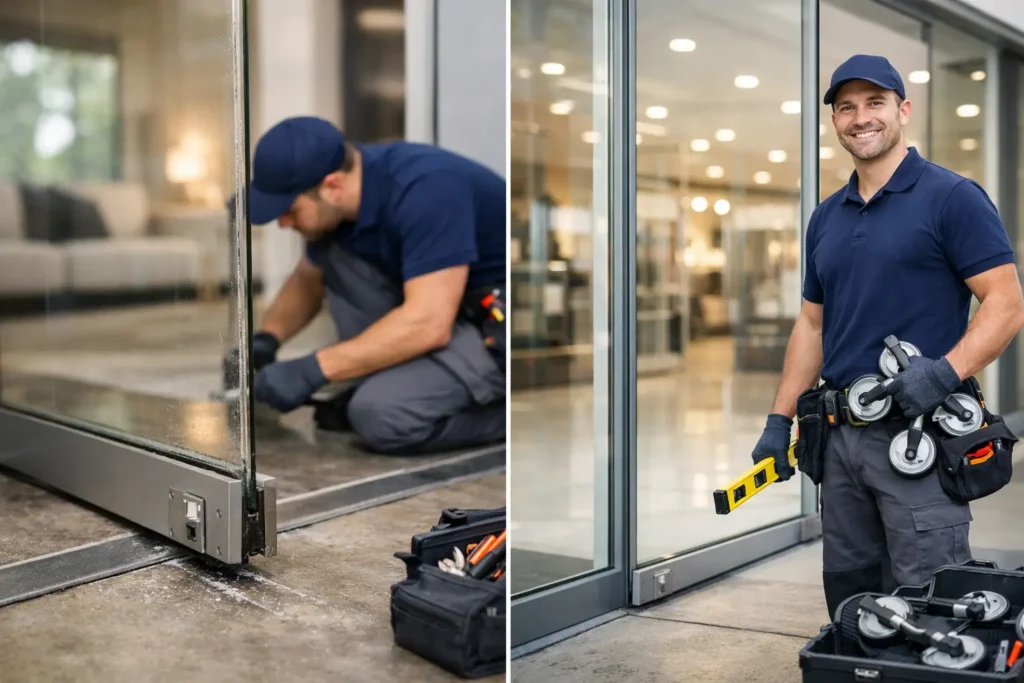
A glass door that scrapes the floor, refuses to latch, or leaves a draft is not just annoying. Glass door alignment affects security, weather protection, hardware life, and the safety of everyone using the opening. A small shift can turn into a cracked panel, stripped rollers, damaged hinges, or a door that will not close when you need it most.
For homeowners, property managers, and businesses, the right response depends on the type of door and what caused it to move out of position. Some issues are simple adjustments. Others point to worn hardware, frame movement, moisture damage, or glass that needs professional handling. The goal is not to force the door back into place. It is to restore smooth, secure operation without putting the glass or surrounding structure at risk.
What Proper Glass Door Alignment Should Look Like
A correctly aligned glass door should move with controlled, even resistance. A sliding door should travel on its track without grinding, lifting, or jumping. A swinging entry or storefront door should swing freely, sit evenly in the frame, and engage the latch without being pushed, lifted, or slammed.
Look closely at the gaps around the panel. They should be reasonably even from top to bottom, and the weatherstripping should make consistent contact when the door is closed. On a shower enclosure, the door should close cleanly against its seal without rubbing the threshold, drifting open, or striking adjacent glass.
Alignment is also about the hardware doing its job. Handles, locks, pivots, rollers, hinges, closers, guides, and strike plates all work together. When one component wears down or loosens, the glass panel can appear to be the problem even when the real issue is underneath, above, or beside it.
Signs Your Glass Door Is Out of Alignment
The early signs are usually easy to spot, but they are often ignored until the door becomes hard to use. You may hear metal scraping, feel the panel catch at one point in its travel, or notice that you must lift the door to lock it. A door that closes by itself, swings open unexpectedly, or drifts away from the frame can also signal a hinge, pivot, or frame issue.
For sliding glass doors, dirt in the track is common, but cleaning alone will not fix worn rollers or a panel that has dropped. If the bottom rail rubs, the door becomes heavier to move, or the lock no longer meets the keeper, the rollers and adjustment points need inspection.
With swinging glass doors, misalignment may show up as a latch that misses the strike plate, a top or bottom corner rubbing the frame, or a closer that slams the door. In commercial spaces, these problems can slow foot traffic, create accessibility concerns, and leave an entrance less secure after business hours.
Do not overlook drafts or water intrusion. A door can still close while sitting slightly crooked in its opening. If cold air, rain, or pests are getting past the seals, alignment may be part of the problem. In the DMV area, changing temperatures, humidity, and seasonal storms can expose a small gap quickly.
Why Glass Doors Move Out of Position
Glass is strong, but the systems that hold and move it experience daily stress. Sliding doors carry substantial weight on rollers. Hinged and pivot doors transfer that weight through hardware attached to the frame, wall, or floor. Normal use creates wear over time, especially on high-traffic patio doors, storefront entrances, and multifamily common-area doors.
Settling is another factor. A home, condominium building, or commercial property can shift slightly over the years. Wood framing can expand or contract with moisture. A damaged or uneven threshold can change the way a door sits. On older doors, prior repairs may have addressed the visible symptom without replacing worn or improperly sized components.
Accidental impact can cause immediate alignment trouble. A heavy object hitting the panel, a door being forced against a stop, or repeated slamming can loosen hardware and stress glass edges. Even if the glass does not break, stop using the door if you see chips, cracks, loose clamps, or movement at the hinges or pivots.
Glass Door Alignment Is Not Always a DIY Job
A basic track cleaning can be a safe first step for a sliding door. Vacuum loose grit, wipe the track with a nonabrasive cloth, and check for obvious debris around the rollers. Do not use a thick lubricant that attracts more dirt, and do not force a stuck panel. If it takes significant effort to slide, there is likely more going on than surface buildup.
Adjustment can be appropriate when the door was installed correctly, the frame is sound, and the hardware is in good condition. But glass doors need careful handling. Tempered glass can fail suddenly when an edge is chipped or under uneven pressure. Frameless shower doors and commercial glass doors also rely on precise hardware placement. A few turns on the wrong fastener can make the panel unstable or put stress where it does not belong.
Avoid shimming the glass, drilling new holes, tightening unknown hardware aggressively, or removing a large panel without proper equipment. These shortcuts can convert a manageable repair into broken glass, damaged flooring, or a compromised entrance. If the panel is dragging badly, the lock will not engage, or you can see glass-to-metal contact, stop using it and arrange professional service.
What a Professional Alignment Repair May Include
A proper service visit starts with identifying the cause, not simply raising or lowering the door. The technician should check the panel, frame, track or pivot system, rollers or hinges, latch engagement, threshold, seals, and surrounding structure. That inspection separates an adjustment issue from a part failure or frame problem.
For a sliding door, the work may include resetting or replacing worn rollers, correcting the panel height, cleaning and evaluating the track, and aligning the lock with its keeper. If the track is bent or severely worn, replacing it may be more reliable than repeatedly adjusting components that cannot hold their position.
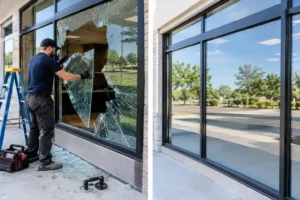
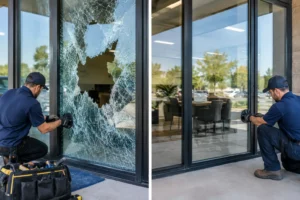
For a hinged, pivot, or storefront glass door, the repair may involve adjusting or replacing hinges, pivots, closers, patch fittings, door stops, or strike hardware. The glass must be supported correctly while those components are serviced. If there is edge damage, a crack, or unsafe movement in the panel, replacement may be the safer option.
Shower door alignment requires the same precision, with added attention to water containment. The door must clear the threshold and fixed panel while maintaining the correct seal. A door that rubs can chip at the edge. A door with too much gap can allow water onto the bathroom floor, creating a slip risk and potential water damage.
When the Problem Needs Immediate Attention
Some alignment problems can wait for a scheduled appointment. Others should be treated as urgent. Act quickly when the door will not lock, will not close, has broken or cracked glass, has come loose from a hinge or track, or leaves a business or residence exposed to weather and unauthorized entry.
Commercial entrances deserve particular attention. A misaligned glass door can create an unsafe path for customers and employees, interrupt operations, and affect building security. Property managers should also address recurring door trouble promptly rather than waiting for a complete failure between tenants or during a busy period.
Quick Glass Repairs provides licensed and insured glass service for residential and commercial doors, with same-day availability when scheduling allows and 24/7 emergency response for urgent glass problems. Clear communication matters just as much as the repair itself: you should know what failed, what is being repaired or replaced, and what to expect next.
Preventing Future Door Problems
Once the door is operating properly, a little attention can protect the repair. Keep sliding tracks free of grit and leaves. Do not hang heavy items from handles or pull a door shut by yanking the lock. Check weatherstripping periodically, especially after severe weather, and report new scraping, rattling, or latch resistance early.
For managed properties and commercial locations, regular checks are practical. A door used hundreds of times each day will show wear sooner than a patio door used occasionally. Addressing a loose closer or dragging roller before it fails helps avoid a security issue and an unexpected interruption.
A glass door should feel dependable every time it opens and closes. If yours is resisting, sagging, leaking, or failing to lock, do not keep forcing it. A precise alignment repair can protect the glass, restore security, and make the entrance work the way it should.