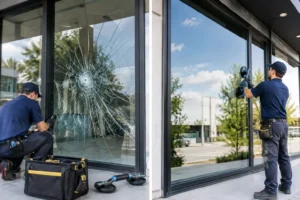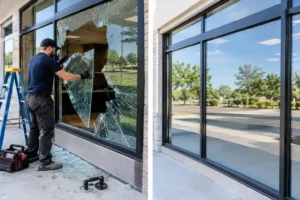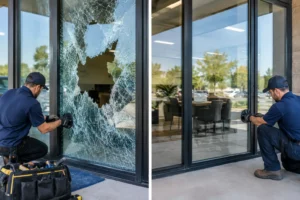


A broken window, glass door, or storefront panel changes the condition of a property immediately. Sharp fragments create an injury risk. An open frame can invite break-ins, rain damage, pests, and expensive heating or cooling loss. Emergency boarding is the fast, practical step that closes that opening while the correct replacement glass is measured, ordered, and installed.
For a homeowner, that may mean securing a shattered patio door before nightfall. For a property manager or business owner, it may mean protecting tenants, inventory, and a public-facing entrance without losing more operating time than necessary. The right response is not simply putting any material over the hole. It is making the area safe, securing the opening properly, and creating a clear path to permanent glass repair.
What Emergency Boarding Does – and Does Not Do
Emergency boarding is a temporary protective service for an opening with broken, missing, or severely damaged glass. A trained glazing technician removes or stabilizes loose hazardous glass, evaluates the frame and surrounding hardware, then installs a sturdy temporary barrier sized and fastened for the opening.
Its purpose is immediate protection. Proper boarding helps prevent unauthorized access, keeps out rain and wind, reduces exposure to debris, and lets you safely use or secure the affected area. On a commercial property, it also helps limit liability around a damaged entrance or window while replacement work is arranged.
Boarding is not the permanent repair. It does not restore the visibility, insulation, appearance, or normal operation of a window or door. If a double-pane insulated glass unit has failed, if a sliding door panel is shattered, or if a storefront system has been compromised, the final solution still requires the correct glass and precise installation. That distinction matters: a good temporary closure protects you now without creating a bigger repair problem later.
First Steps After Glass Breaks
Before anyone begins cleanup, make sure the immediate danger is controlled. If someone is injured, seek medical help. If the damage appears connected to a break-in, vandalism, or another crime, contact law enforcement before disturbing the scene whenever possible.
Keep children, pets, tenants, and customers away from the affected area. Do not touch cracked panes that remain in the frame or try to catch glass that is loosening. Tempered glass can fall suddenly into many small pieces, while standard annealed glass can leave sharp, jagged sections attached to the sash or door frame.
If conditions are safe, move nearby furniture, electronics, merchandise, and textiles away from the opening. Rain can travel farther into a room than expected, especially during a DMV thunderstorm. A towel at the interior threshold may help with minor moisture, but do not rely on tape, cardboard, plastic sheeting, or a spare piece of plywood as a long-term security fix. Improvised coverings often leave sharp edges exposed, pull loose in wind, or damage the frame when attached incorrectly.
Take a few clear photos from a safe distance. They can document the damage for a landlord, property manager, or insurance carrier and help a glass professional understand the opening before arrival. Then arrange professional help as soon as possible.
When You Need Emergency Boarding Right Away
Not every cracked pane requires after-hours service. A small crack in an intact interior window may be stable long enough to schedule a repair. But certain conditions call for prompt action because waiting leaves the property exposed.
Emergency service is usually the right choice when there is a full opening to the outside, broken glass near a frequently used path, a damaged entry door that cannot lock, or a storefront panel that puts customers at risk. It is also appropriate when weather is moving in, when the opening is on a ground floor or otherwise accessible, or when a damaged door or window affects required access to a residence or business.
For multifamily properties, speed is especially important. A broken common-area door, lobby glass panel, or ground-level apartment window can affect several residents at once. Property managers need a vendor who can communicate clearly, secure the site, document the work, and coordinate the permanent repair without leaving staff to chase updates.
How Professional Emergency Boarding Protects the Property
A professional response starts with the glass, not the board. Loose pieces must be handled carefully, and the technician needs to assess whether the frame, glazing stops, locks, rollers, hinges, or surrounding structure were damaged at the same time. A door that was forced open, for example, may have a frame or locking issue that needs attention after the opening is secured.
The temporary barrier should be measured to cover the vulnerable area without unnecessarily damaging trim, siding, brick, or the window system itself. Fastening methods depend on the opening and building materials. The goal is a secure fit that resists normal weather and deters easy entry while remaining removable for the final installation.
This is one reason specialized glass service matters. The final glass may need to match a particular thickness, tint, safety rating, insulated unit configuration, or commercial framing system. Quick Glass Repairs can secure the opening first, then take accurate measurements and explain whether the next step is glass-only replacement, a new door panel, hardware work, or a more complete repair.
What Happens After the Board-Up
Once the property is safe, the permanent repair process can begin. A technician will identify the type of glass and determine whether a standard replacement is available quickly or whether custom fabrication is needed. Many residential and commercial openings use insulated glass units, tempered safety glass, laminated security glass, or custom-sized panels. Availability varies, so an honest timeline is better than a rushed installation with the wrong product.
For a broken insulated window, replacing only the failed glass unit may be possible if the frame remains sound. That can preserve the existing window frame while restoring clarity and energy performance. If the sash, frame, seals, or operating hardware are damaged, replacement options may make more sense.
With doors, the decision often depends on how the glass is held in place and whether the door still operates correctly. A sliding glass door with a shattered panel may need new safety glass, but damaged rollers or a bent track should also be addressed. A commercial entrance may require coordinated work around operating hours, tenant access, and safety requirements.
Ask for a clear estimate that identifies the recommended scope, expected material timeline, and any warranty information. Licensed and insured workmanship is not a detail to overlook when the repair affects security, weather protection, and the safe use of a door or window.
How to Make the Visit Faster and Safer
A few details can help an emergency glass technician prepare. When calling, share the property type, whether the damaged opening is a window, entry door, sliding door, shower enclosure, or commercial glass system, and whether the opening is accessible from ground level. Mention active leaks, exposed sharp glass, damage to locks or frames, and whether the site must remain open to customers or residents.
If you can safely provide approximate dimensions, do so, but do not delay service to measure precisely. Photos are helpful when they can be taken without approaching broken glass. For commercial properties, let the technician know about loading access, building entry procedures, after-hours contacts, and any areas that need to remain clear for the public.
After the emergency work is complete, keep the temporary barrier in place until the scheduled glass installation. Do not cut openings into it, remove fasteners, or attempt to reinstall damaged glass yourself. If the board becomes loose, wet, or damaged, call for service again rather than taking chances with the security of the property.
Emergency Boarding for Homes and Businesses in the DMV
Broken glass rarely happens at a convenient time. Whether it is a storm-damaged bedroom window in Alexandria, a shattered glass door at a retail location, or a damaged office entry in Washington, DC, the priority stays the same: protect people first, secure the property next, and complete the permanent repair correctly.
A fast response should still be a careful one. Choose a glass professional who explains what is being secured, arrives prepared, keeps the work area as clean as possible, and gives you a realistic plan for replacement. A properly boarded opening lets you regain control of a stressful situation – and gives the final repair the time and attention it deserves.