
A window can look intact from across the room while its insulated glass unit has already failed. That is why the top signs of failed glazing deserve attention before a small visibility or comfort issue turns into a security problem, water damage, or an expensive energy loss.
Glazing is more than the pane you see. In windows, doors, storefronts, and shower enclosures, it includes the glass assembly, seals, spacers, setting materials, and the system that holds glass safely in place. When any of those components fail, the result can range from a foggy double-pane window to loose glass that needs immediate professional attention.
What Failed Glazing Means
Many modern residential and commercial windows use insulated glass units, often called double-pane or triple-pane glass. Two or more panes are separated by a spacer and sealed around the perimeter. The sealed air space improves insulation and helps keep moisture out.
A failed seal allows outside air and humidity into that space. Once moisture enters, it cannot be wiped away because it sits between the panes. Other glazing failures involve cracked glass, deteriorated perimeter sealant, damaged glazing beads, or glass that no longer sits securely in its frame.
Some problems can wait for a scheduled estimate. Others should be handled the same day. The difference comes down to safety, exposure to weather, and whether the opening remains secure.
Top Signs of Failed Glazing to Watch For
Fog or moisture between glass panes
Cloudiness, haze, water droplets, or a milky appearance between panes are the most recognizable signs of an insulated glass seal failure. Try cleaning both sides of the window first. If the haze remains trapped inside the unit, the problem is not surface dirt or ordinary condensation.
This issue commonly appears in older windows, but age is not the only cause. Strong sun exposure, repeated temperature swings, building movement, and a poor original seal can all shorten the life of an insulated glass unit. In the DC, Virginia, and Maryland area, humid summers and cold winter nights can put extra stress on these seals.
Fogged glass is often repairable by replacing the failed insulated glass unit rather than replacing the entire window. That depends on the condition of the frame, sash, hardware, and surrounding materials.
Condensation on the room-side glass
Condensation on the inside surface of a window does not automatically mean the glazing has failed. It can simply indicate high indoor humidity, especially after showers, cooking, or during a cold spell. However, frequent condensation that pools on the sill can damage paint, wood trim, drywall, and nearby flooring.
If it happens in one window while comparable windows remain clear, inspect that opening for drafts, failed weatherstripping, poor operation, or gaps around the frame. Persistent moisture should be addressed before mold or rot develops around the opening.
Noticeable drafts and cold or hot spots
Stand near the glass on a windy day or during extreme temperatures. If that part of the room feels consistently colder in winter or hotter in summer, failed glazing may be contributing to the problem. A damaged seal reduces the insulating performance of an insulated glass unit, even before fog becomes obvious.
Drafts can also come from worn weatherstripping, a warped sash, poor installation, or gaps between the frame and wall. The right repair depends on the source. Replacing glass will not solve a frame or installation problem, and adding caulk will not restore a failed insulated glass seal.
Cracks, chips, or impact damage
A crack at the corner of a pane, a chip near an edge, or a small impact mark can weaken the glass far beyond what it appears to be. Temperature changes and normal door or window movement may cause that damage to spread without warning.
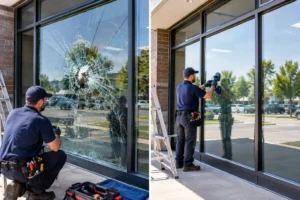
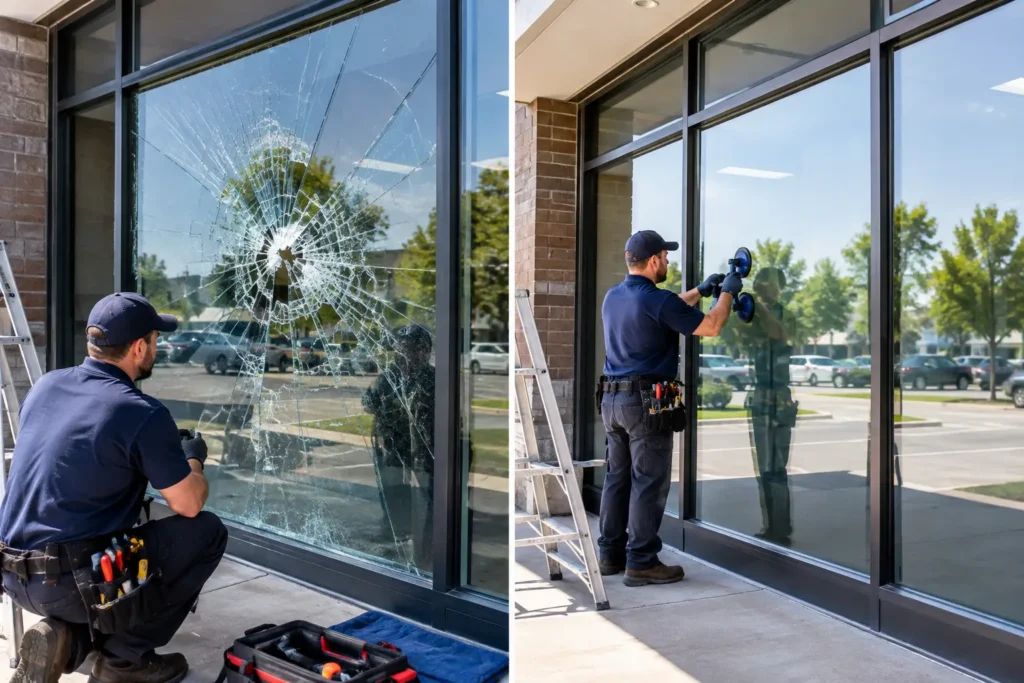
Do not assume a crack is cosmetic because it is small. On an entry door, sliding glass door, storefront, or low-level window, damaged glass can create a direct security concern. If the pane is cracked through, shattered, loose, or leaving the property exposed, protect people from the area and arrange emergency glass service.
Loose glass, rattling panes, or failing trim
Glass should sit firmly in its frame. Rattling when a door closes, movement when gentle pressure is applied, missing glazing stops, brittle sealant, or trim pulling away from the opening are warning signs that the glass may no longer be properly retained.
This is not a do-it-yourself adjustment. Glass under tension can break suddenly, and incorrect materials can make the problem worse. A glazing professional can determine whether the issue is a failed sealant joint, damaged stop, worn gasket, frame movement, or an improperly sized replacement pane.
Water stains around the frame
Peeling paint, swollen wood, stained drywall, soft trim, or discoloration below a window may point to water intrusion. Failed glazing can be part of the cause, particularly when perimeter seals around the glass have deteriorated. But water may also be entering from exterior cladding, flashing, roofing, or a gap around the window frame.
That distinction matters. Replacing the glass alone will not stop water that is entering around the unit from the exterior wall. A careful inspection helps avoid paying for the wrong repair while the underlying leak continues.
A distorted or discolored view
If glass looks wavy, bowed, rainbow-like, etched, or permanently stained, the damage may be related to seal failure, heat stress, moisture between panes, or deterioration of special coatings. This is especially noticeable on large picture windows, glass doors, and commercial storefront systems where appearance affects the entire property.
Distortion does not always create an immediate hazard, but it can signal that a unit is nearing the end of its service life. For property managers and business owners, early replacement can prevent a more disruptive failure during operating hours.
When Failed Glazing Becomes Urgent
A fogged window usually allows time to schedule a repair. Broken, unstable, or exposed glass does not. Take immediate action when glass is shattered, a door will not secure, a ground-floor opening is exposed, glass is visibly loose, or water is entering rapidly during a storm.
Keep children, pets, customers, and employees away from broken glass. Do not press tape directly onto cracked or shattered panes, and do not attempt to remove large pieces yourself. If you need to cover an opening temporarily, do so only when it can be done safely and without placing anyone near unstable glass.
For a retail space, office, multifamily building, or home, fast repair is about more than appearance. A compromised opening can affect personal safety, weather protection, privacy, burglary prevention, and the ability to maintain a comfortable indoor environment.
Repair or Replacement? It Depends on the Whole System
The best solution is not always full window replacement. If the frame is sound and the window operates properly, replacing only the failed insulated glass unit can restore clarity and insulation with less disruption. This is often a practical option for fogged double-pane windows, damaged patio door glass, and certain commercial glass assemblies.
Full replacement may make more sense when the frame is rotted, severely warped, leaking around the opening, difficult to operate, or no longer compatible with an appropriate replacement unit. Older windows may also have multiple issues at once, including failed seals, broken balances, damaged screens, and worn locks.
Accurate measuring is essential. Glass thickness, safety-glass requirements, tint, low-emissivity coatings, grid patterns, and spacer color all affect the replacement. A close visual match is not enough if the new unit does not fit or perform correctly.
Protect the Opening Before Damage Spreads
Waiting on failed glazing can cost more than a replacement pane. Moisture can damage surrounding finishes. Drafts can drive up heating and cooling use. Cracked or loose glass can become an urgent safety issue at exactly the wrong time.
If you see fog trapped between panes, spreading cracks, deteriorated seals, or movement in the glass, get the opening assessed before the problem grows. Quick Glass Repairs provides licensed and insured glazing service, clear estimates, and rapid help when damaged glass cannot wait. A properly repaired opening should leave your property secure, weather-protected, and ready to work the way it should.