

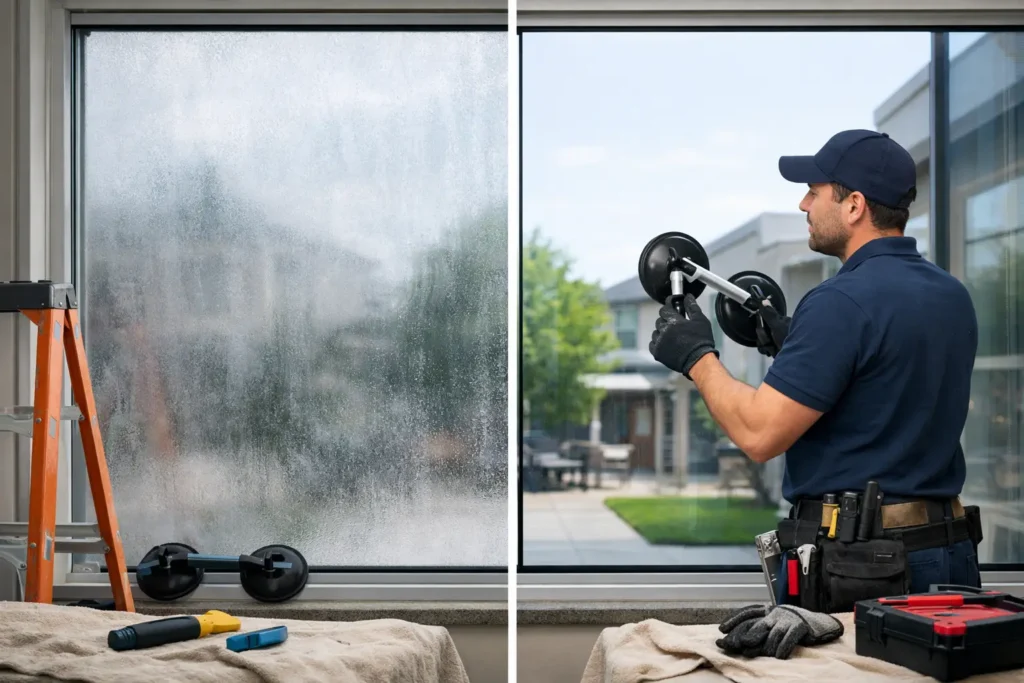
A clear view can turn milky almost overnight, especially when morning sun hits the glass at an angle. If you are asking, why is my window glass cloudy, the first question is where the haze sits: on the room side, the exterior side, or trapped between two panes. That detail tells you whether a thorough cleaning may solve the problem or whether the insulated glass seal has failed.
Cloudy glass is not always an emergency, but it should not be ignored. Some causes are cosmetic. Others point to moisture intrusion, declining energy performance, or glass components that need professional replacement. Knowing the difference helps you act quickly without paying for work you do not need.
Why Is My Window Glass Cloudy? Start With the Location
Stand close to the window and look at the haze from different angles. Wipe the interior surface with a clean microfiber cloth, then inspect the outside if it is safe to do so. If the cloudiness moves, smears, or comes off on the cloth, it is surface buildup. If it remains sealed inside the glass, cleaning will not reach it.
Double-pane and triple-pane windows are built as insulated glass units. The panes are separated by a spacer and sealed around the perimeter, creating an airspace that improves comfort and efficiency. When that perimeter seal breaks down, outside air and moisture can enter the space between panes. The resulting fog, haze, or streaking is a failed insulated glass unit, often called a failed window seal.
A failed seal does not usually mean the entire window frame must be replaced. In many cases, a glazing professional can replace the fogged glass unit while keeping the existing frame and trim in place. Whether that is the right route depends on the window’s condition, age, operation, and availability of a matching replacement unit.
Cloudiness on the Inside Surface
Interior haze is usually the simplest problem to fix. Kitchens, bathrooms, fireplaces, candles, pets, and everyday household activity can leave a film on glass. In a bathroom, the residue may be a mix of moisture, soap particles, hair spray, and mineral deposits. In a kitchen, it may be grease that is nearly invisible until sunlight exposes it.
Use a microfiber cloth and a glass cleaner that does not leave a heavy residue. For stubborn film, a small amount of mild dish soap in warm water can work well. Dry the glass fully with a separate clean cloth. Avoid abrasive pads, razor blades, and harsh powders, particularly on coated or specialty glass, because they can scratch the surface or damage protective finishes.
Condensation on the room-side surface is different from permanent cloudiness. It occurs when warm, humid indoor air meets cold glass. A little condensation during a sharp DMV cold snap can happen, particularly in bathrooms or homes with high indoor humidity. Persistent condensation, puddling on the sill, or mold around the frame deserves attention. Improve ventilation, use bath fans, maintain reasonable indoor humidity, and check that the window is closing and locking properly.
Cloudiness on the Exterior Surface
If the haze is outside, it may be hard-water spotting, pollen, dirt, tree sap, or residue from sprinklers and cleaning products. Homes near construction activity, busy roads, or heavily landscaped properties can collect grime faster than expected.
Mineral deposits are especially common where sprinkler water regularly reaches windows. As the water evaporates, it leaves minerals behind. Over time, those spots can become a dull white film that standard glass cleaner barely touches. If the deposits have etched the glass, the surface may look cloudy even after cleaning.
Gentle cleaning is the first step, but do not keep escalating to aggressive chemicals or scraping tools. What looks like stubborn dirt may be etched glass, failed exterior coating, or moisture trapped inside the insulated unit. A professional inspection can prevent accidental damage and identify whether cleaning, restoration, or glass replacement makes the most sense.
Fog Between Panes Means the Window Seal Has Failed
Cloudiness between panes is the clearest sign that the insulated unit has lost its seal. You may see fog that comes and goes with weather conditions, moisture droplets, white haze, or streak-like marks that never wipe away. On sunny days, the window may look almost normal. In humid or cold weather, the problem often becomes much more obvious.
Seals can fail for several reasons. Age is a common factor, but it is not the only one. Constant expansion and contraction from temperature changes put stress on glass assemblies. Direct sun exposure, poor drainage, structural movement, old spacers, impact damage, and installation issues can also contribute. Windows in upper stories, large sun-facing openings, and rooms with heavy moisture may show failure sooner than other units.
The immediate issue is visibility, but there can be a comfort and efficiency cost as well. Once the insulating space is compromised, the unit may no longer perform as designed. Rooms can feel colder near the window in winter and hotter in summer. Your HVAC system may work harder, and the window loses the clean appearance that supports the value of the home or commercial property.
Can You Fix a Fogged Window Without Replacing It?
You may see services that drill into fogged glass, remove moisture, and reseal the opening. Results vary, and this approach does not restore the original factory-sealed insulated unit. It can leave visible marks, and it may not correct degraded internal coatings, spacers, or moisture-absorbing materials inside the unit.
For a lasting repair, replacing the insulated glass unit is often the better option when the frame is in good shape. A properly measured replacement unit is fabricated to fit the existing opening and installed with the correct glazing materials. This restores clear glass and the intended insulated construction without automatically requiring a full window replacement.
Full replacement becomes more reasonable when the frame is rotted, warped, corroded, leaking, difficult to operate, or repeatedly losing seals. It can also be a smart upgrade if several windows are near the end of their service life. The right choice is not always the cheapest upfront option. It is the option that addresses the actual failure and avoids repeated repair costs.
When Cloudy Glass Needs Prompt Attention
A fogged seal can usually be scheduled, but some related conditions call for faster action. Cracked glass, loose panes, broken locks, water entering around the frame, or a window that will not close securely can affect safety and weather protection. In a storefront, office, multifamily property, or ground-level home, damaged glass also creates a security concern.
Do not tape over cracked glass as a long-term solution or keep forcing a window that binds. Keep children and pets away from damaged panes, remove loose glass only if it can be done safely, and protect the opening from rain and unauthorized entry until repair is completed. For active breakage or an unsecured opening, 24/7 emergency glass service can help stabilize the property and restore protection quickly.
What a Professional Glass Inspection Should Cover
A good inspection goes beyond looking at the fog. The technician should confirm whether the haze is on a surface or between panes, examine the frame and glazing, check window operation, and look for signs of water infiltration. Accurate measurements are essential if a replacement insulated unit is needed, especially for tempered glass, grids between glass, low-emissivity coatings, unusual shapes, or custom sizes.
For property managers and commercial owners, matching matters. Replacing one failed panel with mismatched tint, reflectivity, thickness, or grid pattern can make a building look poorly maintained. Clear communication about lead time, temporary protection, installation scheduling, and warranty coverage helps limit disruption for residents, employees, and customers.
Quick Glass Repairs helps homeowners, property managers, and businesses across the DC, Virginia, and Maryland region identify the cause of cloudy glass and make the right repair decision. Licensed and insured glazing work, clear updates, and a precise replacement unit can restore the appearance, comfort, and protection your property needs.
Cloudiness rarely improves on its own when moisture is trapped between panes. If the haze will not wipe away, arrange an inspection before the problem becomes another cold room, a persistent leak, or a window that detracts from an otherwise well-kept property.