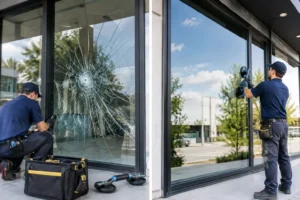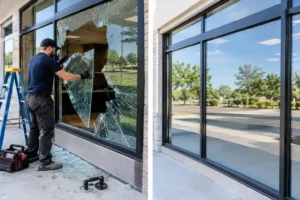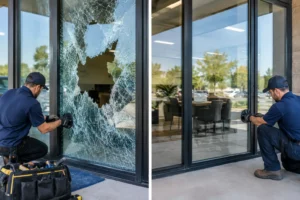

A cracked storefront window can change a normal business day in minutes. It can expose your property to weather, invite unauthorized entry, create a safety hazard for employees and customers, and make a professional space look neglected. A commercial glazing contractor helps bring that situation under control quickly, with the right glass, hardware, protection, and installation method for the building.
For property managers, retail owners, office administrators, and multifamily operators in the DMV, the priority is rarely just replacing a pane of glass. The real goal is securing the opening, protecting people, keeping the property operational, and preventing a small issue from becoming a larger repair.
What a Commercial Glazing Contractor Handles
Commercial glazing covers more than storefront glass. It includes the glass and related components that keep commercial properties secure, functional, and presentable. Depending on the building, the work may involve entry doors, sidelights, interior office partitions, insulated window units, aluminum-framed storefronts, glass railings, mirrors, and custom glass panels.
The right contractor identifies what failed and why. A shattered panel after an impact needs immediate board-up or temporary protection followed by replacement glass. A fogged insulated unit may still be intact, but its failed seal can reduce visibility, hurt curb appeal, and signal declining energy performance. A dragging glass door may be a hardware, alignment, hinge, pivot, closer, or frame issue rather than a glass issue alone.
That distinction matters. Ordering the wrong material or treating only the visible symptom can create delays, repeat visits, and unnecessary expense. Specialized glazing service means looking at the entire system before recommending the repair.
Broken Commercial Glass Should Not Wait
Broken glass is not a maintenance item to leave on a work order for next week. Even a small crack can spread with door movement, temperature changes, vibration, or another impact. Loose fragments around an entrance or walkway create an obvious injury risk. An unsecured opening can also increase exposure to theft, vandalism, water intrusion, and pests.
For retail locations, appearance matters too. Customers notice taped glass, boarded openings, and doors that do not operate properly. For office buildings and apartment communities, damaged glass can affect tenant confidence and lead to complaints that require fast, clear communication.
A prompt response does not always mean permanent replacement can happen within the hour. Some tempered, insulated, laminated, oversized, tinted, or custom panels must be measured and fabricated to order. But a capable contractor can make the area safe, secure the opening, provide an accurate estimate, order the correct materials, and keep you updated until final installation is complete.
Emergency Service Is About Controlling the Risk
After-hours damage often happens at the worst possible time: after a break-in, during a storm, or when a business is closed. Emergency glazing service should focus first on protecting the property and anyone nearby. Technicians should remove unsafe loose glass when conditions allow, secure the opening, and document the next steps for the permanent repair.
If the damage may be connected to a crime or an insurance claim, take photos from a safe distance and follow any instructions from local authorities before cleanup begins. Then arrange professional glass service as soon as possible. Waiting until morning can turn a contained opening into a larger security and weather problem.
Common Signs You Need Commercial Glass Repair
Not every glazing problem begins with shattered glass. Paying attention to early warning signs can help you schedule a repair before the issue disrupts your business or property.
Cloudiness or moisture between panes usually indicates a failed insulated glass seal. The glass may no longer provide the clarity and insulating performance you expect. Water staining around a window frame, air drafts near an entry, or rattling panels can point to seal, frame, or installation problems that should be inspected.
Doors deserve close attention because they receive constant use. A glass entry door that sticks, slams, fails to latch, drags across the floor, or no longer aligns with its lock can become a security and accessibility concern. Do not force it closed or try to adjust heavy commercial door hardware without the right tools. That can crack the glass, damage the frame, or leave the door unusable.
For managed properties, recurring reports about the same door or window are a signal to act. A quick repair may be appropriate when a component is worn, but recurring failures can justify replacing the affected glass, hardware, or system section instead.
Choosing the Right Glass for the Job
Commercial glass is not one-size-fits-all. The required material depends on location, opening size, building use, code requirements, safety concerns, and the existing framing system. A storefront entrance, for example, may need safety glazing that breaks into smaller pieces when impacted. A security-sensitive location may benefit from laminated glass, which is designed to hold together after breakage and can delay forced entry.
Insulated glass units are often used where temperature control and reduced condensation matter. They can improve comfort near windows and help address fogged panes caused by seal failure. However, matching an existing unit may require attention to thickness, spacer color, tint, low-emissivity coating, and grid pattern. A close visual match is especially important on customer-facing storefronts and occupied office spaces.
There are trade-offs. Stronger or specialized glass can cost more and may take longer to fabricate. Standard materials may be available faster, but they may not meet the performance or appearance needs of the opening. A clear estimate should explain the available options, likely timing, and the reason a specific glass type is recommended.
What a Professional Commercial Glazing Visit Should Look Like
A professional process begins with responsive communication. When you call, the contractor should ask practical questions about the property, the type of damage, the opening location, and whether the site is currently secure. Photos can help, but final measurements should be taken in person when accuracy is critical.
At the site, technicians should assess the glass, frame, door hardware, surrounding seals, and safety conditions. They should protect nearby floors and finishes, keep the work area as clean as possible, and explain whether the repair can be completed immediately or requires custom fabrication.
For a scheduled replacement, precise measurements are essential. Commercial openings can have variations that are not obvious from a distance, especially in older buildings or aluminum storefront systems. The installation should fit correctly without forcing the glass into place, damaging the frame, or leaving gaps that allow water and air intrusion.
Once the work is complete, the contractor should test doors and moving components, remove debris, and explain any care instructions or warranty coverage. This level of follow-through matters when your tenants, staff, or customers depend on the space every day.
Reduce Downtime With a Clear Repair Plan
The fastest way to manage commercial glass damage is to have a simple response plan before an emergency occurs. Keep a record of the glass types and door hardware used at your property when possible. Let managers and staff know who can authorize emergency work. For retail and office spaces, decide how entrances can be redirected if a door or storefront opening is temporarily out of service.
It also helps to address small issues before they become urgent. Replace failing seals, repair doors that no longer latch properly, and inspect high-traffic entrances before seasonal weather or busy periods put more strain on them. Preventive service is not always necessary for every property, but it is often less disruptive than an unexpected closure.
Quick Glass Repairs provides licensed and insured commercial glazing service, free estimates, warranty-backed workmanship, and 24/7 emergency response for businesses and property managers throughout the DC, Virginia, and Maryland area. Whether the need is an emergency board-up, a replacement storefront panel, or a door that will not close correctly, the focus should be on getting the property safe and operational without unnecessary delays.
Broken or failing glass rarely improves on its own. Acting early protects the people who use your building, preserves the appearance of your property, and gives you more control over the repair instead of letting an urgent problem set the schedule.