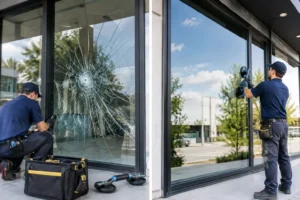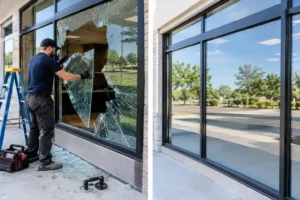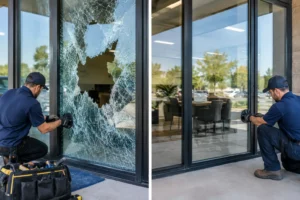
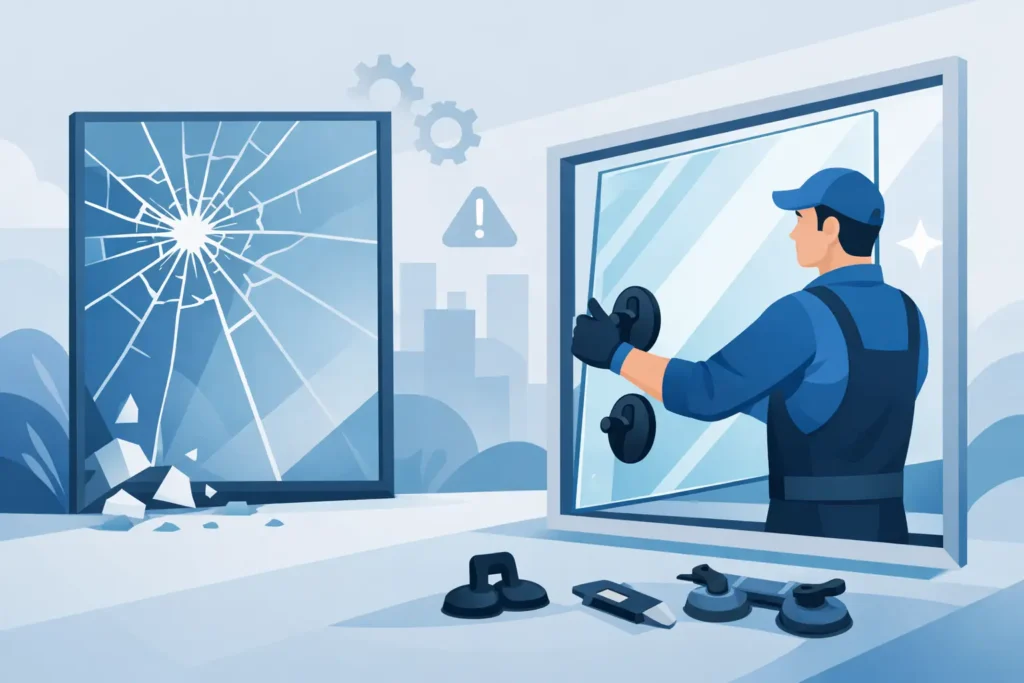
A shower door that suddenly breaks into hundreds of small pieces is alarming, but it is also a clear sign that tempered safety glass replacement cannot wait. The same applies to shattered patio-door panels, glass entry doors, sidelites, storefront doors, and certain window locations. Once safety glass fails, the priority is protecting people, securing the opening, and installing the right replacement – not simply putting any available pane in its place.
Tempered glass is designed to reduce injury risk when it breaks. Instead of forming large, sharp shards, it fractures into small, pebble-like pieces. That safer break pattern does not make the situation harmless. Loose fragments can still cut skin, an open door or window can create a security problem, and exposure to rain, wind, or extreme temperatures can quickly affect a home or business.
Why Tempered Glass Breaks Differently
Tempered glass starts as standard glass that has been heated and rapidly cooled. That process creates internal stress that makes the pane substantially stronger than ordinary annealed glass. It also means that, when the glass breaks, the stored stress releases at once and the entire pane can fracture.
A hard impact is one cause, but it is not the only one. A door slammed against an object, a rock thrown by landscaping equipment, or a person falling into a shower enclosure can break tempered glass immediately. In other cases, the original cause is less obvious. Edge damage, improper installation, pressure from a misaligned frame, or a manufacturing defect can lead to a delayed break that appears spontaneous.
For property owners, the key point is simple: a tempered pane cannot be patched after it shatters. It needs a properly measured, correctly specified replacement.
Where Safety Glass Is Commonly Required
Safety glazing is used where ordinary glass creates a higher risk of human impact. Local building requirements and the details of the opening determine what is required, but tempered glass is commonly found in shower doors and enclosures, sliding glass doors, glass entry doors, sidelites near doors, low windows in certain locations, stair and landing areas, and commercial doors.
Not every broken pane requires tempered glass, and not every safety-glass application uses the exact same product. Laminated safety glass may be the better choice for some storefronts, security-sensitive openings, or specialized systems. Insulated glass units can also contain tempered glass on one or both sides, depending on the location and code requirements.
That is why a professional assessment matters. Replacing a broken panel with standard glass because it is cheaper or easier to source can create a safety issue and may not meet applicable requirements. The replacement has to match the opening, the system, and the intended use.
What to Do When Safety Glass Breaks
Do not handle the cleanup barefoot, in sandals, or with unprotected hands. Keep children, pets, customers, and employees away from the area. If the broken glass is in a door, shower enclosure, or a location that affects access, block off the space until it can be made safe.
If loose pieces remain in the frame, avoid pulling them out unless they are creating an immediate hazard and you can do so safely. Tempered glass may look like small pellets, but fragments can remain in tracks, hinges, seals, and surrounding flooring. A professional crew can remove the broken material, inspect the frame and hardware, and prepare the opening without damaging components that may still be serviceable.
For an exterior opening, temporary protection is often the first step. A secure board-up or temporary barrier helps reduce exposure to weather, pests, and unauthorized entry while the correct glass is measured and ordered. This is especially important for ground-level homes, vacant units, retail spaces, and multifamily properties.
The Tempered Safety Glass Replacement Process
A reliable replacement starts with more than measuring width and height. The glass contractor should identify the glass type, thickness, tint, coating, edge finish, hardware cutouts, and whether the pane belongs to an insulated unit. On doors and shower systems, the condition of hinges, rollers, tracks, handles, gaskets, and framing also matters.
Measuring for the actual opening
Glass is not a material where close enough is good enough. A pane that is too tight can be stressed by the frame. One that is too small may not seat correctly, seal properly, or operate safely. Precise measurements account for the opening, expansion space, setting blocks, glazing channels, and the particular system being repaired.
For custom shower doors and frameless glass, the process can be even more exacting. Hinge locations, notches, drilled holes, and polished edges are fabricated before the glass is tempered. Once tempered, the glass cannot be cut, drilled, or reshaped. Ordering the correct specifications the first time prevents costly delays.
Matching performance, not just appearance
A replacement should look right, but performance is just as important. A patio door panel may need an insulated unit to help maintain indoor comfort. A storefront door may need safety glass with a particular thickness to work correctly with existing hardware. A bathroom enclosure may need clear, frosted, patterned, or low-iron glass with the proper edge treatment.
If the original pane was fogged before it broke, that often points to a failed insulated-glass seal. Replacing the affected glass unit can restore visibility and improve efficiency without automatically replacing the full window frame. However, if the frame is warped, water-damaged, or no longer holds the glass securely, a broader repair may be the better long-term decision.
Installing without creating a new problem
Proper installation protects the new glass from unnecessary stress. The pane must be set squarely, supported correctly, sealed where required, and tested for smooth operation. On a sliding door, that may include checking rollers and track alignment. On a shower door, it means confirming hinge tension, door clearance, and stable mounting. On commercial openings, it may involve restoring door function quickly so customers and staff can use the entrance safely.
Quick Glass Repairs approaches this work as a safety and system repair, not a quick glass swap. Licensed and insured technicians can identify the condition of the surrounding components, explain the available options clearly, and complete the work with attention to secure installation and clean cleanup.
Repair or Replace the Whole Door or Window?
A shattered tempered pane does not always mean the entire door or window must be replaced. In many cases, replacing only the glass is the most practical and cost-effective option, particularly when the frame, hardware, and seals are in good condition.
Full replacement may make more sense when the frame is deteriorated, the door no longer locks properly, the window has repeated seal failures, or replacement glass is no longer compatible with an older system. Property managers may also choose a larger upgrade when several units have the same aging glass or hardware issue.
The right answer depends on what caused the break and what condition the surrounding system is in. A clear estimate should separate immediate safety work from optional upgrades, so you can make a decision based on the actual condition of the opening rather than pressure or guesswork.
Why Fast Service Matters in the DMV
Broken safety glass creates different risks depending on where it happens. At a home, it can leave a family without a secure patio door or expose a bathroom to dangerous debris. At a retail business, a damaged glass door can interrupt operations and affect the first impression customers have of the property. At an apartment community, delayed repairs can become a safety concern for residents and a maintenance burden for management.
Fast response does not mean rushing the details. It means communicating clearly, arriving prepared, securing the opening when needed, and moving the replacement process forward without unnecessary delays. Same-day service is especially valuable for active breakage situations, while custom panels and specialty units may require fabrication time before final installation.
If you are dealing with broken tempered glass, start by making the area safe and getting a professional assessment promptly. The right replacement restores more than a clear view – it restores safe access, dependable protection, and confidence in the space again.