
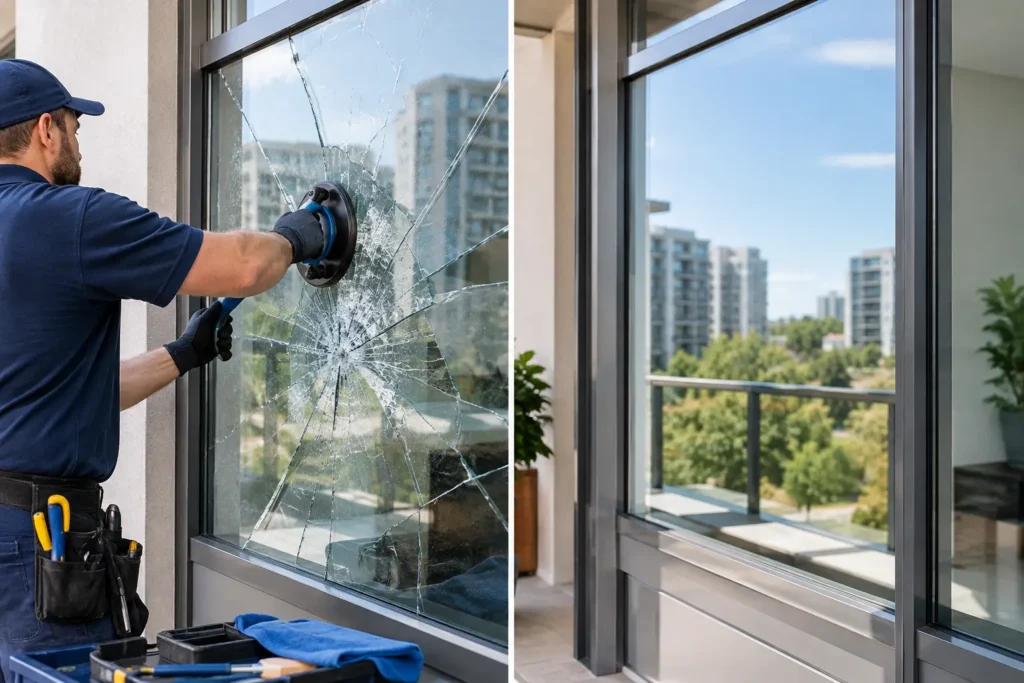
A cracked bedroom window, shattered patio door, or fogged double-pane pane can turn an ordinary apartment problem into a safety and security issue fast. This guide to apartment glass damage explains what to do in the first few minutes, how to protect the unit, and when the repair should move from a maintenance request to an urgent professional response.
The priority is simple: keep people away from the damaged area, prevent further breakage, and report the problem promptly. Glass damage rarely improves on its own. A small crack can spread with temperature changes, a loose pane can fall, and an opening in a door or window can expose the apartment to weather, pests, and unwanted entry.
Treat broken apartment glass as a safety issue first
If glass has shattered, keep children, pets, tenants, and visitors out of the area. Do not walk barefoot near broken glass or try to catch a hanging piece. Put on closed-toe shoes and heavy work gloves before moving any larger fragments that can be safely reached.
If the broken glass is in an exterior window, balcony door, entry door, or ground-level opening, secure the area without placing yourself at risk. Close off the room if possible. Keep curtains or blinds away from sharp edges, and avoid forcing a damaged window or sliding door closed. A frame under stress can cause more glass to break.
For an active break-in, immediate threat, or serious injury, call emergency services first. For a broken exterior pane that leaves the apartment unsecured, contact the landlord, property manager, or building’s emergency maintenance line right away. Document the time of your call and request a clear plan for temporary board-up or glass replacement.
What counts as apartment glass damage?
Not every problem looks like a dramatic shattered pane. Damage can be obvious, such as a hole in a glass door, but it can also show up as cloudiness between panes or a window that no longer closes correctly. The cause affects both urgency and the best repair method.
Cracked or chipped window glass
A crack may begin at an edge, near a lock, or after an impact. Even when the pane stays intact, cracked glass is weakened. In the DMV, seasonal temperature swings can make a small crack travel across the pane quickly. Do not tape over a crack and assume the problem is solved. Tape may help contain loose pieces temporarily, but it does not restore the glass’s strength or weather seal.
Shattered doors and patio glass
A broken sliding glass door or entry door demands a faster response than a hairline crack in a non-operable window. These openings affect security and can leave the apartment exposed to rain, cold air, and intruders. Glass doors may use tempered safety glass, which breaks into many small pieces, or laminated glass, which can remain held together after impact. Both still require professional assessment and proper cleanup.
Fogged double-pane windows
Fogging or moisture trapped between panes usually means the insulated glass unit’s seal has failed. It may not be an emergency, but it is more than a cosmetic issue. The window loses insulating performance, and persistent moisture can make the view permanently hazy. In many cases, the glass unit can be replaced while retaining the existing frame, provided the frame is still sound.
Loose glass, damaged frames, and failed hardware
Sometimes the glass is intact but the surrounding system is not. Loose glazing, bent tracks, damaged stops, worn rollers, or a frame that will not latch can make a window or door unsafe to operate. This is common with older sliding doors and heavily used apartment windows. Forcing the unit can crack the glass or pull it farther out of alignment.
Who pays for apartment glass repair?
Responsibility depends on the lease, the cause of damage, local requirements, and the condition of the building. In general, landlords are responsible for maintaining safe, weather-tight windows and doors when damage results from age, failed seals, defective materials, or normal wear. A tenant may be charged when damage was caused by misuse, negligence, or an accident involving the tenant or guest.
That is the general rule, not a substitute for reading the lease. Do not arrange a permanent repair without authorization unless the lease or the property manager instructs you to do so, especially in a managed apartment community. The owner may need to approve matching glass, building access procedures, or a specific vendor.
If you are a renter, take clear photos from several angles before cleanup when safe to do so. Photograph the glass, frame, lock, floor area, and any likely cause, such as a fallen branch or water intrusion. Send a written report to management and save copies of messages, work orders, and receipts. Good documentation protects everyone if there is a question later about timing or responsibility.
Landlords and property managers should respond with the same urgency they would give a failed exterior lock. A broken ground-floor window or glass entry door is not a routine cosmetic item. It can create liability, compromise a resident’s sense of safety, and lead to more expensive damage if rain enters the unit.
What to do while waiting for repair
Temporary protection should reduce risk, not become a dangerous DIY project. If the opening is accessible from outside or faces bad weather, a professional board-up or temporary securing service is usually the right move. Proper temporary protection needs to be stable, weather-aware, and installed without causing additional damage to the frame.
Avoid using cardboard, thin plastic, or loose tape as an exterior solution. These materials can tear, trap moisture, and leave the opening vulnerable. Also avoid drilling into frames or attempting to remove large panes from an upper-floor window. Glass is heavy, edges are unpredictable, and a mistake can cause injury or damage the building envelope.
For minor interior issues, such as a small crack in a non-exterior mirror, restrict access and report it. Mirrors can be repaired or replaced depending on the crack pattern, location, mounting method, and whether the backing has been affected. A cracked mirror in a bathroom or hallway still deserves quick attention because people tend to stand close to it.
Repair or replacement: what makes sense?
A qualified glazing professional will look beyond the broken pane. The question is not only whether new glass can fit the opening. The installer should assess the frame, seals, hardware, safety-glass requirements, and the condition of the surrounding wall or door system.
Single-pane glass can sometimes be replaced directly if the frame and glazing channels remain intact. Double-pane units with internal fogging usually need a new insulated glass unit. If the frame is warped, rotted, badly corroded, or no longer holds the glass securely, a larger window or door replacement may be the safer long-term choice.
Matching matters in apartment buildings. A replacement that is technically functional but visibly different can create problems with property standards, condo rules, or the appearance of a multi-unit facade. This is especially relevant for tinted panes, grids between glass, custom shower enclosures, and large sliding doors. Accurate measurements and the correct glass type prevent costly do-overs.
There are trade-offs. Emergency securing can often happen the same day, while specialty insulated glass or custom tempered panels may need to be ordered. A temporary solution restores safety quickly; the final installation restores appearance, insulation, and full operation. Clear communication about those two stages helps residents and managers plan without surprises.
Choosing a professional for apartment glass damage
The right contractor should be able to explain the problem in plain language, identify whether safety glass is required, and give a realistic timeline for both temporary and permanent work. Ask whether the company is licensed and insured, whether the work is covered by a warranty, and how the team will protect the apartment during installation.
For occupied units, professionalism matters as much as the pane itself. Residents need a scheduled arrival window, respectful technicians, contained work areas, careful debris removal, and updates if custom glass must be ordered. Property managers need documentation, responsive communication, and a repair that holds up under daily use.
Quick Glass Repairs serves apartment residents and property managers throughout the DC, Virginia, and Maryland region with emergency response, same-day repair availability, and specialized residential and commercial glazing work. Whether the issue is broken window glass, a failed insulated unit, a damaged sliding door, or a cracked mirror, the goal is to make the space safe and functional without dragging out the disruption.
A guide to apartment glass damage: when to act now
Act immediately when glass is shattered, an exterior opening cannot be secured, a door will not lock, a pane is loose, or weather is entering the apartment. Report fogging, minor cracks, difficult operation, and failed seals quickly as well, before they become a larger repair.
A damaged pane does not need to become a drawn-out apartment headache. Keep people clear, document the condition, notify the responsible party, and bring in a qualified glass professional when safety or security is on the line. The fastest path back to normal is a repair that is properly measured, securely installed, and finished cleanly the first time.