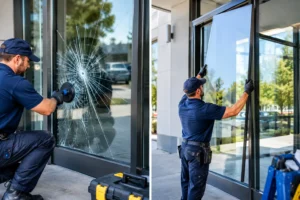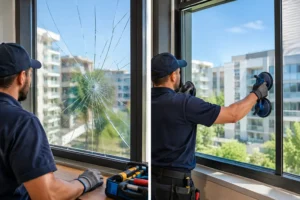

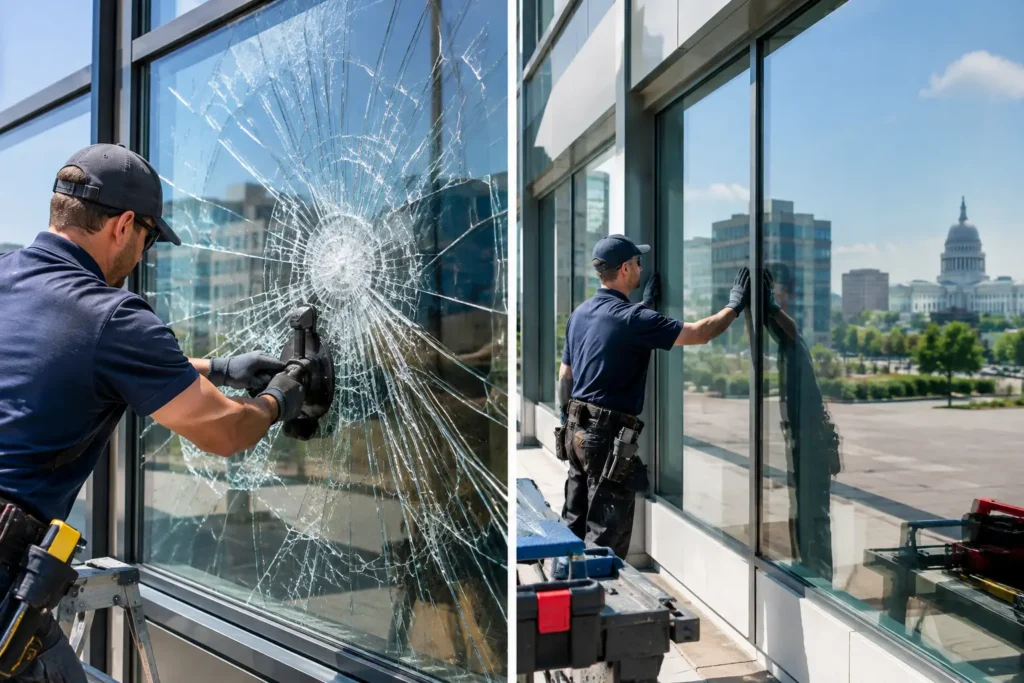
A cracked glass entry door at 8 a.m. can turn into a security problem, a safety hazard, and a bad first impression before your team has finished its first meeting. Fogged conference-room panels, dragging glass doors, and broken insulated units create a different kind of disruption: they make a well-run office look neglected and can affect comfort, privacy, and energy costs.
DC office glazing is not one-size-fits-all work. An office may need an emergency repair after a break-in, a replacement insulated glass unit for a failed window seal, a new tempered-glass door panel, or a planned upgrade for aging interior glass. The right response depends on the glass system, the level of damage, and how quickly the property needs to return to normal operation.
When Office Glass Needs Immediate Attention
Broken glass should be treated as an active property issue, not a cosmetic repair to schedule when things slow down. A fractured exterior window or door can expose an office to rain, wind, unauthorized entry, and additional damage. Loose fragments around an entrance, lobby, or hallway can also put employees, visitors, and cleaning crews at risk.
For an exterior break, the first priority is to keep people clear of the area. Do not try to press cracked glass back into place or remove large pieces without proper protection. If the opening affects building security or weather protection, temporary securing or board-up service may be needed while the correct replacement glass is measured and ordered.
Interior damage deserves prompt attention, too. Tempered glass can fail suddenly, and a damaged glass partition or door can interrupt access to meeting rooms, suites, and common areas. A professional glazing contractor can identify whether the panel is tempered, laminated, insulated, fire-rated, or part of a specialty system before recommending the repair.
DC Office Glazing Problems That Are Easy to Miss
Not every glazing problem begins with a dramatic break. Some start with condensation between panes, a white haze that will not wipe away, or a room that stays noticeably hotter or colder than the rest of the office. These signs often point to a failed seal in an insulated glass unit.
When the seal around a double-pane or insulated unit fails, moisture can enter the space between the panes. The glass may still be intact, but its appearance and insulating performance are compromised. In many cases, the full window frame does not need replacement. Replacing the insulated glass unit can restore clarity and efficiency while avoiding the cost and disruption of a larger window project.
Door hardware is another common source of trouble. A glass entry door that drags, does not latch, closes too quickly, or leaves a gap can create a security concern even if the glass itself is undamaged. The best repair may involve glass replacement, hardware adjustment, new pivots, closer work, or a combination of services. Diagnosis matters because replacing glass alone will not solve a door alignment issue.
Choosing the Right Glass for the Location
Commercial glass has to do more than look clean. It must suit the opening, the traffic level, the building use, and applicable safety requirements. A panel beside a door, in a lobby, or in a high-traffic corridor may require safety glazing such as tempered or laminated glass. These products break differently and are designed to reduce the danger from sharp shards.
Tempered glass is widely used in office doors, sidelites, partitions, and storefront systems because it is stronger than standard annealed glass and breaks into small pieces when it fails. Laminated glass holds together with an interlayer when broken, which can be valuable where added security, retention, or noise reduction is a priority. Neither is automatically the best answer for every opening.
For exterior windows, insulated glass units are often the practical choice because they help manage heat transfer and reduce condensation concerns. Tinted, low-emissivity, decorative, frosted, and patterned options can also support privacy and appearance. A street-facing office may prioritize visibility and security, while a medical office or law firm may need privacy in interior rooms without making the space feel closed in.
The key is matching the replacement to the existing system and the job the glass needs to perform. Glass thickness, panel dimensions, edge work, framing, hardware compatibility, and safety requirements all affect what can be installed correctly.
Repair, Replacement, or Upgrade?
A clear assessment prevents unnecessary expense. Small surface scratches may be manageable in limited situations, but cracks, chips near an edge, shattered panels, and failed insulated seals usually call for replacement. Trying to stretch the life of compromised commercial glass can lead to a larger break, water intrusion, recurring service calls, or an avoidable security problem.
Replacement is often the fastest way to restore a damaged panel to its proper condition. It is especially practical when the existing frame, storefront system, or door is sound. Accurate field measurements and a review of the glass type are essential. A panel that is even slightly off can delay installation, affect door operation, or leave gaps that undermine the system.
An upgrade makes sense when the office is already changing its layout, renovating a customer-facing area, or experiencing repeated issues with older glass. Frosted conference-room panels can create privacy without blocking daylight. New insulated units can improve appearance where seal failure has made windows cloudy. Updated glass doors and partitions can make an office feel brighter and more organized, but they should be selected with cleaning, traffic, acoustics, and privacy in mind.
Keep Downtime and Disruption Under Control
For property managers and business owners, the fastest repair is not always the one with the shortest installation time. It is the one planned well enough to avoid surprises. Before work begins, the glazing team should confirm access conditions, parking or loading needs, elevator use if applicable, the work area, operating hours, and any security procedures required by the building.
A professional commercial glazing project should also account for the people using the space. Technicians should protect nearby flooring and furniture, contain debris, keep work areas organized, and communicate clearly when an entrance, hallway, or room will be temporarily unavailable. For occupied offices, early morning, evening, or lower-traffic scheduling may reduce disruption. That depends on the repair and building rules, but it is worth discussing before materials are ordered.
Emergency situations require a different pace. When a panel is broken, the immediate objective is safe stabilization and protection of the opening. The permanent glass replacement may require fabrication time, particularly for insulated, tempered, laminated, oversized, tinted, or custom-finished glass. Clear updates matter here. You should know what has been secured, what material is being ordered, and what to expect next.
What to Expect From a Commercial Glazing Contractor
Good office glazing work starts with questions, not guesses. A contractor should inspect the glass, frame, hardware, and surrounding conditions, then explain the issue in plain language. You should receive a clear estimate that identifies the scope of work and the type of repair or replacement being proposed.
For a broken exterior door panel, that may include making the area safe, confirming the required safety glass, measuring the opening, ordering the correct panel, and returning for installation. For fogged office windows, it may mean confirming seal failure and measuring the insulated units while preserving the existing frames. For a planned partition project, it should include a discussion of privacy, door swing, hardware, and how the finished system will function day to day.
Quick Glass Repairs provides licensed and insured commercial glazing service with free estimates, responsive communication, and 24/7 emergency support for urgent glass problems. That combination matters when a damaged office entry or window cannot wait for a standard contractor schedule.
A Simple Response Plan for Building Teams
When office glass is damaged, designate one person to document the issue and communicate with the glazing contractor. Photos from a safe distance, the location of the panel, whether the damage is interior or exterior, and whether the opening affects security can speed up the first conversation.
Keep employees and visitors away from the area, especially if there are loose pieces or a compromised door. If the damage involves an exterior opening, address protection immediately rather than waiting for normal business hours. Then focus on the permanent solution: correct glass type, accurate sizing, clean installation, and reliable operation.
A repaired pane should do more than fill an opening. It should restore the safety, security, comfort, and professional appearance your office depends on. If glass damage is affecting your workplace, act early and get a clear assessment before a manageable repair becomes a bigger interruption.