
A draft around the sash, glass that rattles in its frame, or crumbling putty at the edge of an older window is more than a cosmetic issue. If you are asking, do windows need reglazing, the answer may be yes – but the right repair depends on what has actually failed. Traditional glazing compound, modern glazing beads, insulated-glass seals, and the window frame itself do very different jobs.
Waiting can turn a manageable repair into water damage, broken glass, higher energy use, or a window that no longer protects the property. A professional glazing inspection identifies the source of the problem so you can repair what is needed without paying to replace what is still sound.
What reglazing a window actually means
In the traditional sense, reglazing means removing old, cracked, or missing glazing compound from a single-pane window. The compound is the hardened putty-like material around the perimeter of the glass. It holds the pane securely in the sash and closes the narrow gap where air and water could enter.
This repair is common on older wood windows, historic homes, and some storefront or divided-light windows. A technician carefully removes the failed material, checks the glass and sash, installs or resets the pane if needed, applies fresh glazing compound, and finishes the area so it is ready for paint or weather protection.
People also use “reglazing” to describe several other window repairs. On newer vinyl, aluminum, or fiberglass windows, the glass may be secured with a removable vinyl or rubber glazing bead rather than putty. On double-pane windows, a foggy appearance usually points to a failed insulated-glass seal. That is not corrected with exterior putty. The sealed glass unit typically needs replacement while the existing frame may remain in place.
Signs your windows may need reglazing
The clearest sign is visible deterioration around the glass. Glazing compound that is cracked, separated from the sash, missing in spots, or soft and crumbling has reached the end of its useful life. You may also see loose glass, hear it rattle when the window moves, or notice daylight at the glass edge.
Water stains or peeling paint on the sash deserve prompt attention. Failed glazing can let rain reach exposed wood, where it may cause rot that spreads beyond the immediate glass opening. In the DMV, repeated freeze-thaw cycles, humid summers, and driving rain can speed up that damage.
Other warning signs can be less obvious. A persistent draft near one particular window may come from failed glazing, worn weatherstripping, an out-of-square sash, or gaps around the entire frame. Condensation on the room-side surface can reflect indoor humidity, while moisture or haze trapped between double panes usually means the insulated seal has failed. These symptoms call for different solutions, which is why a quick visual guess is not always enough.
Broken glazing is a safety and security concern
Glass should sit firmly in the sash. When glazing fails, the pane can shift, crack under stress, or become easier to dislodge. On ground-floor windows, doors with glass panels, and commercial properties, that creates an immediate security concern. If glass is cracked, loose, or missing, protect the area from people and pets and arrange prompt service.
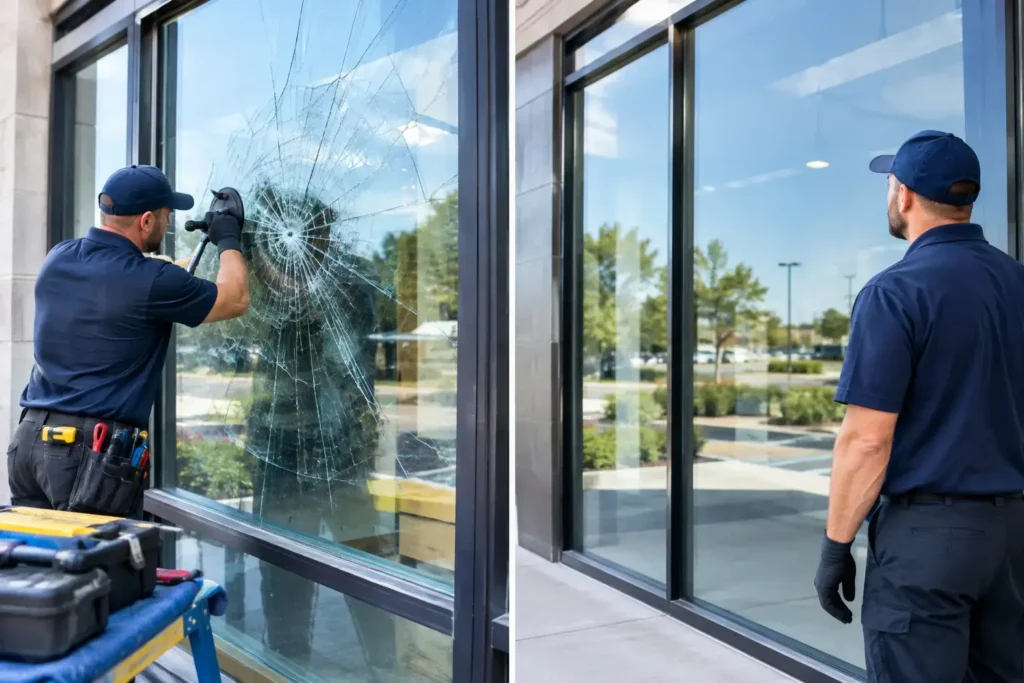
For a break-in, storm damage, or an opening that cannot be secured, temporary board-up or emergency glass service may be the right first step. The priority is restoring a safe barrier, then completing the permanent repair with correctly sized glass and secure installation.
When reglazing is the right repair
Reglazing makes sense when the window glass is intact and the sash is structurally sound, but the material securing the pane has failed. It can extend the useful life of a quality wood window and preserve the character of older homes where a full replacement would be unnecessary or undesirable.
It is often a practical choice for a single damaged pane, especially if neighboring windows are in good condition. Proper preparation matters. Old compound must be removed without damaging the glass or sash, loose paint should be addressed, and any minor wood damage needs correction before fresh glazing is applied. Putting new compound over wet, rotten, or unstable material only delays the real repair.
A window may need more than reglazing if the sash is severely rotted, the frame has shifted, the glass is broken, or multiple components have failed. In those cases, replacing the sash, glass unit, or complete window can provide a better long-term result. The goal is not to sell a larger job. It is to restore security, weather resistance, and reliable operation with the repair that fits the condition of the window.
Foggy double-pane windows need a different fix
A common source of confusion is fog between panes of glass. Double-pane and triple-pane windows use sealed insulated glass units filled with dry air or gas. Once that perimeter seal fails, moisture can enter the space between the panes. The resulting haze, streaks, or mineral buildup cannot be wiped away from either side.
Exterior reglazing compound will not repair a failed insulated unit. In many cases, the glass unit can be measured, ordered, and replaced without removing the full window frame. This is often less disruptive than a full window replacement and restores clarity and insulating performance when the frame and operating hardware remain in good shape.
Do not ignore fogged glass simply because the window is still closed and unbroken. The failed seal affects appearance and can reduce thermal performance. For rental properties, condos, offices, and retail spaces, it can also make an otherwise well-maintained property look neglected.
Why professional assessment saves time and money
Window glazing looks simple from a distance, but a lasting repair depends on accurate diagnosis and precise installation. Glass thickness, pane size, sash condition, drainage paths, glazing method, and building exposure all affect the right approach. A poor repair can leave the glass under pressure, trap water against wood, or create gaps that leak again after the next heavy rain.
Professional service also helps when matching glass is a concern. Older homes may need a particular thickness or appearance. Commercial windows may require safety glass or a system-specific replacement method. A glazing specialist can identify whether the issue is traditional putty, a damaged bead, broken glass, a failed insulated unit, or a larger frame problem before work begins.
Quick Glass Repairs provides clear estimates and fast, licensed and insured glazing service for homeowners, property managers, and businesses. For urgent broken or unsecured glass, acting quickly helps limit exposure to weather, theft, and accidental injury. For scheduled repairs, clear communication about measurements, ordering, and installation keeps the process straightforward.
How to protect windows after reglazing
Once a window has been properly repaired, basic maintenance can help it last. Keep paint and exterior finishes in good condition, because paint protects wood sashes from moisture. Clean drainage channels and window tracks so water has a path out instead of collecting around the glass. Check exterior seals periodically, particularly after severe weather.
Avoid scraping aggressively at the glass edge or using high-pressure washing directly against glazing and seals. If you spot fresh cracking, separation, or water staining, address it early. Small failures are usually easier to correct before the sash or surrounding trim starts to deteriorate.
A window should not be loose, fogged, drafty, or visibly breaking down at the glass edge. Whether the answer is traditional reglazing, insulated-glass replacement, or a more complete repair, timely attention keeps a small opening from becoming a bigger property problem.