A fogged double-pane window is more than a view problem. It can signal a failed insulated glass seal, allowing outside heat, cold, and moisture to work against your home or business every day. The most useful energy efficient glazing trends are not flashy add-ons. They are practical improvements that reduce drafts, manage harsh sunlight, improve comfort near windows, and help property owners make smart repair-or-replace decisions.
For homes and commercial properties across the DMV, glazing choices matter because the weather asks a lot of every window and glass door. Humid summers, cold snaps, direct afternoon sun, and sudden storms can expose weak seals, aging glass, and poorly fitted systems fast.
Energy Efficient Glazing Trends That Matter
The trend is moving away from treating glass as a simple clear barrier. Modern glazing is expected to control heat movement, limit ultraviolet exposure, reduce condensation risk, and still provide the daylight and appearance people want.
That does not mean every property needs a full window replacement. In many cases, replacing a broken pane, failed insulated glass unit, worn seal, or damaged door glass can restore a significant portion of the system’s performance. The right answer depends on the condition of the frame, the glass configuration, the source of the problem, and how long the owner plans to keep the property.
Low-E glass is becoming the baseline
Low-emissivity, or Low-E, glass has a thin coating designed to manage radiant heat. In plain terms, it helps reduce unwanted heat transfer through the glass while still allowing natural light indoors.
For a south- or west-facing room that becomes uncomfortably hot in summer, the right Low-E coating can help limit solar heat gain. In winter, it can help retain indoor warmth. This is why Low-E glass is now a common choice for replacement insulated glass units, patio doors, storefront systems, and new window installations.
The trade-off is that not all Low-E coatings perform the same way. A coating chosen for maximum heat control may slightly change the appearance of the glass or reduce the amount of visible light entering a room. A qualified glazing professional should match the glass to the building orientation, room use, and existing window system rather than treating Low-E as a one-size-fits-all product.
Double-pane upgrades are more targeted
Double-pane insulated glass remains a strong solution for many DMV properties, but the current trend is precision replacement. Instead of replacing an entire window when only the sealed glass unit has failed, owners are increasingly evaluating whether the sash and frame are still sound.
When a window looks cloudy between panes, has moisture trapped inside, or feels unusually cold near the glass, the insulated unit may have lost its seal. Replacing that failed unit can restore clarity and insulation without automatically requiring a full-frame project.
This approach can save time and reduce disruption, especially in condominiums, apartments, offices, and properties with custom-sized openings. However, it is not the right fix for frames with rot, severe corrosion, water damage, or operational problems. If the surrounding structure is compromised, replacing glass alone may only delay a larger repair.
Warm-edge spacers and better seals are doing quiet work
Some of the biggest efficiency gains are hidden around the perimeter of the glass. Insulated units use spacers to separate the panes and seal the airspace between them. Older spacer systems can contribute to heat loss and condensation around the edge of the glass.
Warm-edge spacer technology helps reduce that edge-of-glass heat transfer. Combined with quality sealants and careful fabrication, it supports more consistent temperatures across the unit and can lower the chance of interior condensation under demanding conditions.
Installation matters just as much as the glass specification. A premium insulated unit will not perform as intended if it is improperly set, poorly sealed, or installed in a damaged frame. Precise measurements, correct glazing materials, and a clean final seal are where specialized glass work protects the investment.
Managing Sun Without Losing the View
Large windows, glass entry doors, and storefronts bring in daylight and create an open look. They can also create glare, fading, and uncomfortable hot spots. Property owners are increasingly looking for glass that solves those problems without turning rooms dark.
Solar-control glazing for hard-working exposures
Solar-control glass is especially useful where the sun is intense for long periods – often on west-facing elevations, upper-floor units, glass-heavy living rooms, retail fronts, and office spaces. It can reduce solar heat gain while preserving a bright interior.
This is not only about air conditioning costs. Better solar control can make the area next to the window usable again. A conference table, retail display, reading chair, or workspace should not be avoided because the glass turns it into the hottest spot in the room each afternoon.
Before choosing tinted or highly reflective glass, consider appearance requirements. Condos, historic neighborhoods, commercial leases, and homeowner associations may have restrictions. Matching replacement glass to nearby units is also important, since noticeable color variation can affect the look of a façade.
UV protection helps preserve interiors
Sunlight can fade flooring, fabrics, artwork, and merchandise over time. Many high-performance glazing options help filter ultraviolet rays, but glass alone is not a complete answer. Visible light and heat can still contribute to fading, depending on the materials inside and the amount of direct sun.
For rooms with valuable finishes or products near the glass, a coordinated approach may include the right glazing along with shades, interior layout changes, or exterior shading. The goal is practical protection, not an expensive upgrade that creates new problems with glare or darkness.
Comfort, Condensation, and Glass Door Performance
Efficiency is often discussed in terms of utility bills, but daily comfort is usually what people notice first. Cold glass in winter, hot glass in summer, and condensation on interior surfaces are signs worth addressing.
Condensation is not always proof that the glass is defective. Indoor humidity, weak airflow, cooking, shower use, and sudden temperature changes all play a role. But if moisture is trapped between panes, that is a different issue. It usually means the insulated glass seal has failed and the unit needs professional evaluation.
Sliding glass doors deserve special attention because their size and moving components create multiple opportunities for air leakage and water intrusion. Modern energy-efficient door glass can help, but worn rollers, damaged weatherstripping, failed seals, and misaligned panels can undermine its benefits. Repairing the complete system is often more effective than focusing on the glass alone.
Commercial Glazing Is Prioritizing Performance and Downtime
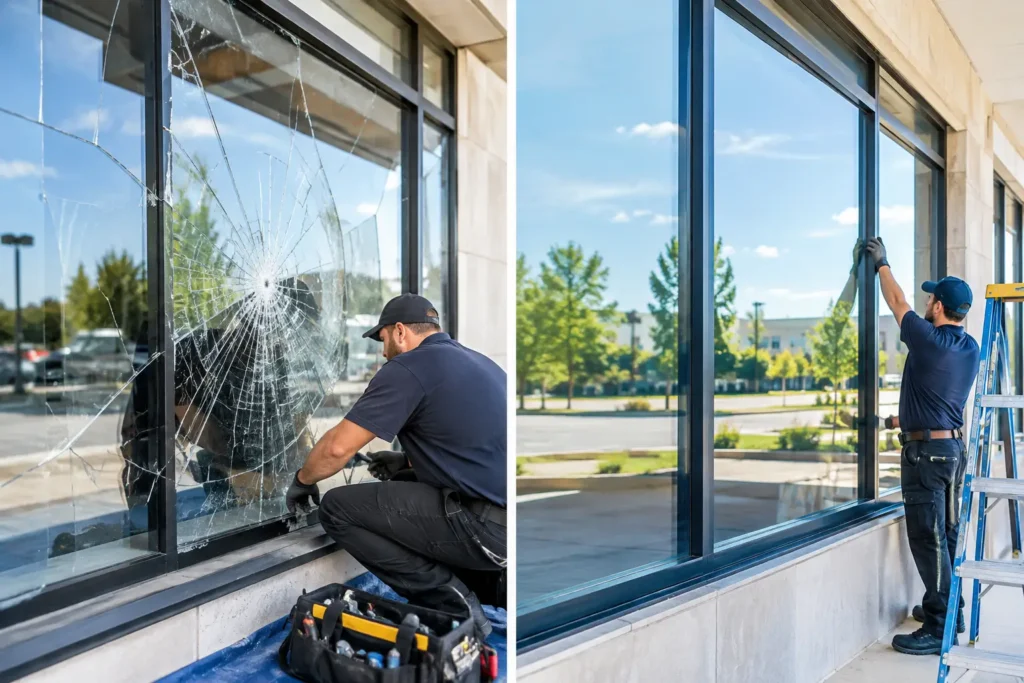
For offices, retail properties, and multifamily buildings, glazing upgrades must balance energy performance with security, appearance, and business continuity. A cracked storefront pane or failed insulated unit can affect more than comfort. It can expose a space to weather, create a safety concern, and make the property look neglected.
Commercial decision-makers are increasingly planning replacements around tenant schedules, customer traffic, and access needs. That means choosing durable, properly specified glass and working with a contractor who can communicate clearly about measuring, ordering, installation timing, and temporary protection if glass is damaged.
When glass breaks, efficiency planning comes second to immediate safety and security. The opening should be secured quickly, then the replacement can be specified to match the building’s thermal, visual, and operational needs.
How to Decide Between Repair and Upgrade
Start with the actual symptom. A single broken pane after an impact event calls for a different solution than recurring condensation, widespread fogging, or rooms that are consistently difficult to heat and cool.
A repair is often sensible when the frame is in good condition and the issue is limited to damaged glass, a failed insulated unit, worn glazing, or a localized seal problem. An upgrade becomes more compelling when multiple units are failing, frames are deteriorated, drafts persist after repair, or the property’s needs have changed.
Ask for clear information about the proposed glass: whether it is single or insulated glass, whether it includes a Low-E coating, how it will match existing units, and what warranty applies. You do not need to become a glazing expert. You do need an answer that explains what is being repaired, why it failed, and what the replacement is expected to improve.
For property owners who need fast, specialized help, Quick Glass Repairs can inspect damaged or fogged glass, provide a free estimate, and recommend a practical repair or replacement path. Licensed and insured workmanship, careful installation, and responsive updates make a real difference when a window or door is leaving your property exposed.
A clearer view is welcome, but the better outcome is a glass system that feels quieter, more comfortable, and ready for the next DMV season.