A cold draft near the living room window, glass that sweats on winter mornings, or a storefront that feels hot by midafternoon can make the single versus double glazing decision very real. The right choice affects comfort, utility costs, outside noise, condensation, security, and how quickly a broken or fogged window needs attention.
For most homes and commercial properties in the DC, Maryland, and Northern Virginia area, double glazing offers clear everyday advantages. But that does not mean every single-pane window requires a full replacement. The condition of the frame, the purpose of the room, the property’s design, and the type of damage all matter.
Single Versus Double Glazing: The Basic Difference
Single glazing has one sheet of glass set in a frame. It is common in older homes, some interior windows, sheds, enclosed porches, and older commercial buildings. Its construction is simple, and replacement glass can sometimes be straightforward when the frame remains sound.
Double glazing, also called an insulated glass unit or IGU, uses two panes of glass separated by a spacer. The sealed space between the panes contains dry air or insulating gas. This construction slows heat transfer and helps the interior side of the glass stay closer to the indoor temperature.
That gap is the key difference. A single pane has very little insulation value. Double-pane glass creates a thermal barrier that reduces heat loss during cold weather and helps limit heat gain during hot, sunny periods. In a region with humid summers, cold snaps, and sharp temperature swings, that difference can be noticeable.
Why Double Glazing Is Usually the Better Upgrade
Double glazing is not just about lowering the thermostat. It can improve how a room feels throughout the day. Windows near beds, desks, seating areas, and entry doors are often where people notice the benefit first because the glass surface does not feel as cold in winter or as hot in direct summer sun.
Better energy performance
A double-pane unit reduces the rate at which heat moves through the window. That can help HVAC equipment run less often, particularly when windows receive strong afternoon sun or face exposed areas of the property. The final energy result depends on the window frame, installation quality, glass coatings, air leaks, shading, and the rest of the building envelope, but double glazing is a practical improvement over standard single-pane glass.
Low-E coatings can increase that advantage. These nearly invisible coatings help manage solar heat and infrared energy without making the room dark. They are useful for many replacement projects, though the best coating depends on window orientation and whether controlling summer heat or retaining winter warmth is the larger concern.
Less condensation on interior glass
Condensation forms when warm, humid indoor air meets a cold surface. Single-pane windows get cold quickly in winter, so moisture often collects on the room-facing side of the glass. A little occasional condensation may be manageable, but persistent moisture can damage wood sashes, stain trim, encourage mold growth, and signal that indoor humidity needs attention.
Double glazing keeps the inside pane warmer, reducing the likelihood of condensation. It cannot eliminate it in every situation. High indoor humidity, poor ventilation, crowded rooms, and severe outdoor temperatures can still create moisture. But the window is less likely to be the coldest surface in the room.
Quieter rooms, with an important caveat
Two panes can reduce outside sound, especially compared with a thin single pane. The improvement is helpful near busy streets, active commercial areas, and neighborhoods with frequent foot traffic. Still, glass alone does not solve every noise problem.
For meaningful sound control, the glass thickness, spacing between panes, window seals, frame condition, and gaps around the opening all matter. Laminated glass or specially designed acoustic glass may be a better option where noise is a major concern. A poorly sealed double-pane window can allow more sound through than a properly installed system should.
Improved comfort and protection
Double glazing can make windows feel more substantial, but pane count is not the same thing as security. A standard double-pane unit is not automatically break-in resistant. Security depends on the glass type, locking hardware, frame strength, and installation.
For entry doors, sidelights, ground-floor windows, and commercial openings, tempered or laminated safety glass may be appropriate. Tempered glass breaks into small fragments, while laminated glass stays held together by an interlayer after impact. The right choice should reflect the location, code requirements, and level of protection needed.
When Single Glazing Still Makes Sense
Single-pane glass is not always the wrong answer. If you are repairing an interior glass panel, a non-conditioned porch, a shed, a decorative cabinet, or a historic window where preserving the original sash is the priority, single glazing may be the practical choice.
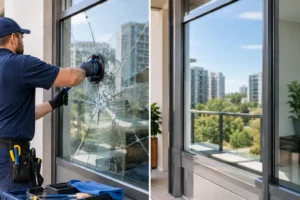
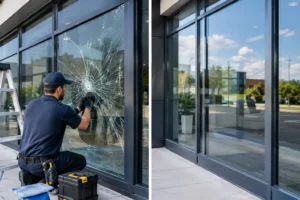
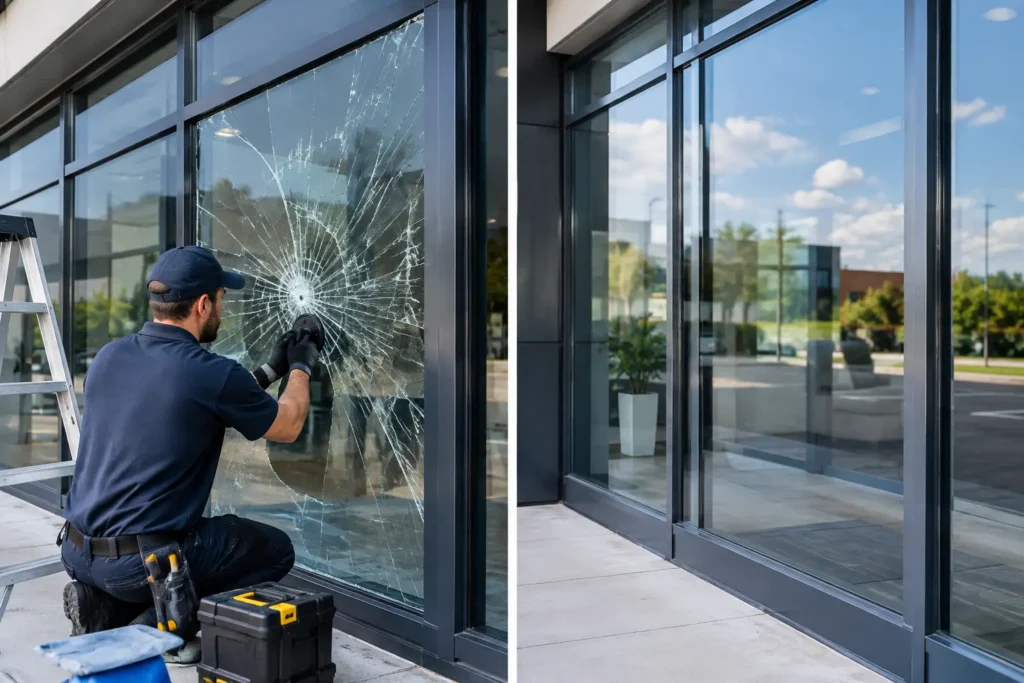
It can also be the more affordable immediate repair when a single pane breaks and the window is otherwise in good working order. Leaving it boarded up or cracked, however, is not a cost-saving solution. Broken glass exposes a property to weather, moisture, pests, injury risks, and security concerns. A fast professional repair restores the opening while you decide whether a larger upgrade is worthwhile.
Historic properties require added care. Replacing original divided-light windows with modern units can alter the building’s character and may not be permitted in certain districts. In those cases, carefully matched glass, restoration work, or storm-window strategies may offer a better balance between preservation and performance.
The Cost Question: Repair, Glass Replacement, or New Windows?
The most expensive option is not always the best option. A broken pane in an otherwise solid window may only need glass replacement. If a double-pane window is fogged between the panes, the insulated glass seal has likely failed. The frame can sometimes stay in place while the failed insulated glass unit is measured, fabricated, and replaced.
That distinction matters. Fogging inside the glass is different from interior surface condensation. Wiping the window will not remove moisture trapped between panes. It also will not restore the unit’s insulating performance. Replacing the insulated glass unit is often a targeted way to improve appearance and function without replacing the complete window assembly.
Full window replacement becomes more reasonable when the frame is warped, rotted, corroded, leaking around the edges, difficult to operate, or unable to hold new glass securely. It may also make sense when several aging single-pane windows are driving comfort problems across the property.
A precise assessment should look at the complete opening, not just the damaged glass. The size and shape of the unit, glass thickness, safety-glass requirements, grids, coatings, frame condition, access, and custom fabrication needs all affect the final scope and price.
Warning Signs You Should Not Ignore
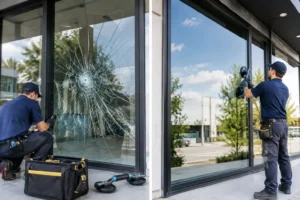
A cracked pane, shattered door glass, or broken storefront panel needs prompt attention for obvious safety and security reasons. Other signs can be easier to postpone but often become more costly over time. These include fogging between double panes, loose glass, rattling sashes, water stains around the frame, cold drafts, damaged glazing putty, and windows that no longer lock correctly.
For commercial properties, damaged glass also affects customer confidence and daily operations. A cracked entrance door or compromised storefront can create a hazard for visitors and employees, expose inventory, and leave a business looking unattended. Securing the opening quickly and completing a proper replacement helps limit downtime.
Choosing the Right Glass for the Opening
The best choice is based on how the opening is used. A bathroom window may need privacy glass and better moisture control. A large sun-facing living-room window may benefit from insulated Low-E glass. A patio door needs glass designed for the door system and its safety requirements. A street-level retail door may call for a more durable safety-glass solution.
Measurements must be exact, particularly with insulated units, custom-shaped glass, sliding doors, and frameless systems. Small errors can lead to poor fit, seal failure, operational problems, or repeat damage. Professional glazing work also includes checking the surrounding frame, setting materials, seals, hardware, and finishing details that protect the new glass after installation.
Quick Glass Repairs helps homeowners, property managers, and businesses identify whether the practical answer is a same-day safety repair, insulated glass replacement, or a larger upgrade. Licensed and insured workmanship, clear communication, and a warranty matter because window glass is only as dependable as the installation around it.
If your glass is broken, fogged, drafty, or difficult to operate, do not wait for the next storm or temperature swing to make the decision for you. Start with a clear evaluation of the opening, then choose the repair or glazing upgrade that protects the property and makes the space more comfortable every day.