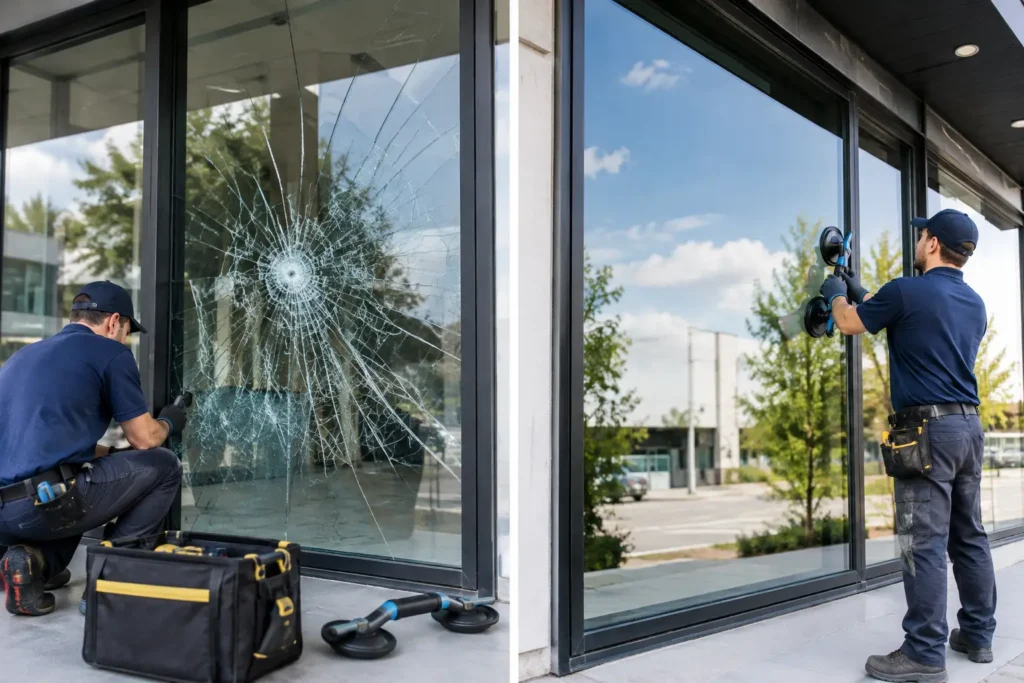
A door that suddenly sticks, scrapes the threshold, or will not latch is doing more than causing daily frustration. It may be leaving your home, apartment, storefront, or office less secure and more exposed to outside air and moisture. Knowing how to diagnose door alignment helps you identify what has changed, communicate clearly with a repair professional, and avoid forcing a door until a minor issue becomes frame, hardware, or glass damage.
The goal is not to dismantle the door. Start with a safe visual and functional check, then look for patterns. Where the gap changes, where the door rubs, and whether the latch lines up can point to the underlying problem.
Start with safety and a simple operating test
Open and close the door slowly several times. Do not lift it by the handle, slam it, or force the lock if it resists. A door with glass panels deserves added care: twisting or forcing a sagging glass door can put stress on the glass, glazing, and surrounding frame.
Watch the door as it moves. Does it scrape only near the floor? Does the top corner catch the jamb? Does it close but spring back open? Does it need to be lifted before the latch will engage? Each symptom narrows the diagnosis.
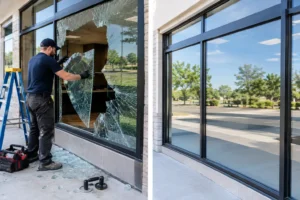
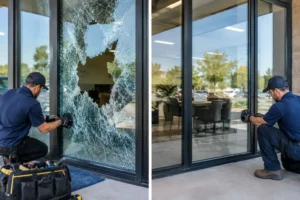
If the door is cracked, the glass is broken, the frame is visibly split, or the door will not lock after a security incident, treat it as an urgent repair issue. Secure the area, keep people away from damaged glass, and arrange professional service rather than trying to realign a compromised door yourself.
Check the reveal around the door
The reveal is the visible gap between the door and its frame. With the door closed, inspect the gap along the top, both sides, and bottom. It should look reasonably consistent. A tape measure can help, but your eyes will often reveal an obvious change.
A narrow or rubbing gap at the top on the latch side commonly means the door has sagged. A tight gap on the hinge side may point to a shifted jamb, swollen door edge, or hinge issue. A wide gap at the bottom or one side can allow drafts, water, insects, and unwanted visibility through the opening.
For exterior doors in the DC, Maryland, and Northern Virginia area, seasonal humidity can complicate the picture. Wood doors may expand during damp weather and seem normal again when conditions are dry. That does not automatically mean the door needs replacement. However, repeat swelling, peeling finish, soft wood, or water staining may signal moisture intrusion that needs to be addressed along with alignment.
Look for contact marks
Close the door gently and inspect the places where it meets the frame, threshold, or weatherstripping. Fresh paint rubs, scraped finishes, compressed weatherstripping, shiny metal, or sawdust-like wood debris are useful clues.
If the door drags across the threshold, look underneath and along the bottom edge. A low door can be caused by loose hinges, a settling frame, or a warped slab. If the contact happens only at one corner, the issue is more likely alignment than an overall threshold-height problem.
Inspect hinges before adjusting anything
Loose hinge screws are one of the most common reasons a hinged door falls out of alignment. With the door open, look at every hinge leaf and screw. Screws should sit firmly in place, and the hinge should not visibly pull away from the door or jamb.
Test for movement carefully. Hold the door near the handle side and lift very slightly. If you see movement at a hinge, loose screws or worn screw holes may be contributing to the sag. Do not continue lifting if the door is heavy, has large glass panels, or feels unstable.
Tightening a visibly loose screw can be a reasonable small fix when the door is otherwise sound. But a screw that spins without tightening, a bent hinge, or a hinge pulling from damaged wood needs more than a quick turn of a screwdriver. Longer screws or hole repairs may be appropriate in some situations, but the correct repair depends on the frame construction and the door weight. Improvised fasteners can split a jamb or pull hardware out of position.
Test the latch, strike plate, and lock
A door can look nearly level but still fail at the latch. Close it slowly while watching whether the latch enters the strike plate cleanly. If it hits above, below, or beside the opening, the door and frame are no longer meeting in the right position.
You can confirm the contact point by applying a small amount of washable chalk or lipstick to the latch bolt, then closing the door gently. The mark left on the strike plate shows where the latch is hitting. Wipe it off afterward.
A latch that lands too low often accompanies a sagging door. A latch that hits too high can result from movement in the frame, a swollen door, or incorrect hardware positioning. Do not file the strike plate opening as the first response. That may hide the symptom while the door continues to move, and it can weaken a secure closure if overdone.
If the deadbolt does not turn smoothly when the door is closed but works when the door is open, alignment is likely part of the problem. Forcing a key or lock can damage the cylinder or leave you unable to secure the property.
Separate door movement from frame movement
The door is not always the part that moved. Building settlement, repeated slamming, moisture, and aging fasteners can shift a door frame over time. Examine the jamb and surrounding trim for cracks, separating caulk, gaps, or areas that appear out of square.
A level can provide more detail, but it is not the only test. Compare the reveal from top to bottom, check whether the frame has visible damage, and note whether the problem appeared gradually or after a particular event. A door that began sticking immediately after heavy rain may have a moisture-related cause. A door that became difficult to lock after a building shift, break-in attempt, or impact may require closer inspection of the frame and hardware.
For commercial glass entry doors, do not attempt to adjust pivots, closers, or concealed hardware without the right training. These systems are heavy and tensioned. Incorrect adjustments can cause sudden movement, poor closing, damaged glass, or a door that no longer meets safely with the frame.
How to diagnose sliding glass door alignment
Sliding doors need a different approach. Their common alignment symptoms include scraping tracks, requiring excessive force, leaving a gap when closed, or failing to engage the lock. Start by checking the track for visible debris, small stones, damaged weatherstripping, or objects caught near the rollers.
Clean loose debris with a vacuum and soft brush, then test the panel again. Avoid using heavy oil-based lubricants that attract more dirt and create a sticky track over time. If the door still drags, appears lower on one side, or has visible roller damage, the rollers or adjustment mechanism may need service.
Look at the vertical meeting edge where the sliding panel closes against the fixed panel or jamb. A consistent gap is expected; a large uneven gap is not. If the lock does not align with its keeper, do not force it. A sliding glass door that cannot lock properly is a security concern, especially at a ground-level entrance.
Know when a quick adjustment is not enough
Some alignment problems are straightforward. Tightening secure screws, clearing a track, or replacing worn weatherstripping can restore normal operation. Others point to a larger problem: deteriorated framing, a warped door, damaged glass, failed rollers, broken pivots, or moisture entering the wall around the opening.
Call for professional repair when you notice broken or stressed glass, a door that will not secure, significant frame movement, repeated misalignment after prior adjustments, or a heavy door that requires lifting or force to operate. The trade-off is simple: a small repair may cost less and take less time when handled early, while waiting can turn it into a security, weather, and replacement issue.
Quick Glass Repairs provides responsive door and glass repair for homes and commercial properties, including glass entry doors and sliding glass doors. A professional assessment can identify whether the fix is hardware adjustment, frame repair, roller service, glass replacement, or a more complete door solution.
A properly aligned door should close with controlled pressure, latch without lifting, lock without a struggle, and maintain even gaps that protect the building. If yours does not, stop forcing it and get the cause checked before the problem has a chance to spread.