
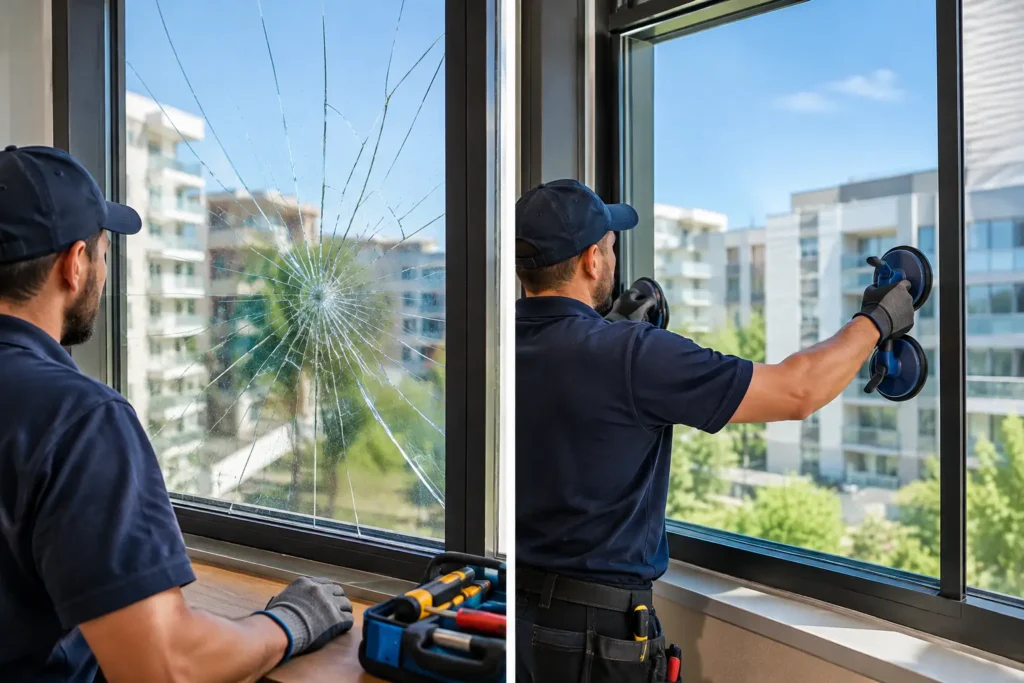
A cracked pane after a storm, a window that will not lock, or double-pane glass that has turned cloudy is more than an inconvenience in an apartment. This guide to apartment window repairs explains what to do first, who may be responsible, and when fast professional help is the safest choice. In the DMV, a damaged window can quickly expose a unit to rain, cold air, pests, theft, and unwanted noise.
The key is to act quickly without creating a larger problem with the lease, the building, or the repair itself. Renters should document the damage and contact management promptly. Property managers should secure the opening, communicate clearly with residents, and arrange qualified glazing service before a minor defect turns into a safety or water-damage issue.
Start With Safety and Security
If glass is broken, keep people and pets away from the area. Do not press on cracked glass, and do not attempt to pull loose shards from the frame with bare hands. Wear closed-toe shoes and gloves if you must clear a safe path, but leave unstable glass in place until a professional can remove it correctly.
A window that is fully shattered, open to the outdoors, or no longer locks deserves immediate attention. Close off the room when possible, move furniture away from the opening, and notify the landlord, management office, or emergency maintenance contact. If there is an active security concern or someone has forced entry, contact local authorities first.
Temporary covering can reduce exposure, but it is not a repair. Plastic sheeting and tape may keep out a little wind or rain for a short time, yet they do not restore security, insulation, or proper operation. Never tape directly across cracked glass in a way that makes later removal more dangerous, and do not use plywood, screws, or expanding foam without written authorization. Those fixes can damage the frame, exterior finish, or surrounding wall and may create a lease dispute.
Know Which Apartment Window Problem You Have
Not every window issue requires the same service. Identifying the symptom helps residents report the problem clearly and helps property managers schedule the right repair.
Broken or cracked glass
A crack can spread with temperature swings, frame movement, or a door slammed nearby. Even a small crack weakens the pane and can allow moisture inside. For insulated double-pane windows, the glass unit may need replacement while the existing frame remains in place. That is often faster and less disruptive than replacing the entire window.
Fogged glass between panes
Cloudiness, streaks, or moisture trapped between panes usually means the insulated glass seal has failed. Wiping the inside and outside surfaces will not remove it because the problem is inside the sealed unit. Failed seals reduce clarity and can weaken the window’s insulating performance, especially during humid summers and cold winters.
A window that sticks, will not stay open, or will not lock
Operational problems can come from worn balances, damaged tracks, warped sash components, loose hardware, paint buildup, or frame movement. A window that will not lock is a security issue. A window that will not open can become a ventilation and emergency-egress concern, depending on its location. Avoid forcing it. Excess pressure can crack the glass or turn a hardware repair into a full replacement.
Drafts, water around the frame, or visible gaps
Air leaks may be caused by worn weatherstripping, failed caulk, damaged seals, or a larger installation issue. Water is more urgent. Moisture can damage drywall, flooring, insulation, and framing long before the stain becomes obvious. Photograph the area, note whether the leak occurs during wind-driven rain or every storm, and report it right away.
A Guide to Apartment Window Repairs and Responsibility
In most apartments, the owner or property manager is responsible for maintaining windows, frames, locks, and weather protection. Renters are generally responsible for reporting damage quickly, taking reasonable steps to prevent further damage, and following lease procedures. But responsibility can depend on the cause.
If a window was damaged by a maintenance failure, age, weather event, or attempted break-in, management will commonly coordinate the repair. If damage resulted from resident negligence, an unauthorized alteration, or an accident inside the unit, the lease may place some or all costs on the resident. Do not assume either outcome. Read the maintenance and damage provisions in the lease, then ask for the repair process in writing.
Property managers should avoid vague promises such as “we will get to it soon” when glass is compromised. Residents need a clear plan: whether the opening will be secured the same day, when measurements will be taken, whether custom glass must be ordered, and what access is needed. Good communication prevents frustration and limits exposure to complaints or further property damage.
For condos and co-ops, the division of responsibility can be more complicated. The unit owner may be responsible for interior components, while an association controls exterior windows, approved materials, or installation standards. Check governing documents before authorizing replacement. Matching the existing window style and meeting building requirements matters as much as completing the work quickly.
Document the Damage Before Repairs Begin
Photos and a short written record protect everyone. Take pictures from several angles, including the glass, frame, lock, sill, and any water damage. If there is a leak, capture the condition during or immediately after rain. Record the date, time, weather conditions, and whether the window still opens, closes, and locks.
Send the report through the property’s preferred maintenance channel, then keep a copy. For urgent issues, call as well. A written request creates a useful timeline, but a phone call can get broken glass and unsecured openings addressed faster.
Property managers should document the resident report, condition on arrival, temporary protection used, and completed work. This record helps distinguish a sudden glass break from a recurring water intrusion or hardware problem. It also gives residents confidence that the issue is being handled rather than simply covered up.
When Repair Is Enough and When Replacement Makes Sense
The right answer depends on the condition of the glass, sash, frame, and hardware. Replacing only the insulated glass unit can be a smart solution when the frame is sound but the pane is cracked or fogged. Replacing hardware may restore a window that sticks or fails to lock. New weatherstripping or sealant can address minor drafts when the window itself is otherwise in good condition.
Full window replacement is more appropriate when the frame is rotted, badly warped, severely corroded, repeatedly leaking, or no longer able to hold glass securely. It may also make sense when several windows have failed and the property needs a long-term energy or appearance upgrade. The trade-off is cost and lead time: a targeted repair is often quicker, while replacement can deliver broader performance improvements when the existing system is at the end of its service life.
For occupied apartments, accurate measurement matters. Glass thickness, tint, safety-glass requirements, grille patterns, spacer color, and frame profile can all affect the replacement. A specialized glass contractor can inspect the window, explain whether a glass-only repair is possible, and provide a clear estimate before work begins.
Why Professional Glass Service Matters
Apartment window work affects more than appearance. Glass must be sized correctly, installed with compatible materials, sealed against weather, and supported safely in the frame. Improper installation can lead to rattling, leaks, premature seal failure, or glass breakage.
This is especially true for tempered safety glass, insulated units, large panes, upper-floor windows, and windows near doors, tubs, or walking areas. These locations can have specific safety requirements. A licensed and insured glazing professional brings the right materials and handling practices to the job, while warranties provide accountability after installation.
For a broken or unsecured apartment window, Quick Glass Repairs can help property managers and authorized residents across the DMV with rapid, safety-focused service. Same-day availability may be possible for urgent repairs, while custom glass orders can be measured and managed with clear updates from estimate through installation.
What to Ask Before Approving Work
Whether you are a renter with owner authorization or a property manager arranging service, ask what is being repaired, what must be replaced, and why. Confirm whether the estimate includes glass removal, disposal, frame or hardware work, sealing, cleanup, and warranty coverage. If insulated glass is being replaced, ask whether the contractor will match the existing unit’s appearance and performance as closely as possible.
Also ask about scheduling. An emergency board-up or temporary secure covering may happen first, followed by a return visit once custom glass arrives. That is normal for nonstandard sizes or specialty units. What matters is that the apartment is made safe and weather-tight while the final repair is underway.
A damaged apartment window should never become a waiting game. Report it, document it, secure the area, and insist on a repair plan that protects the people and property behind the glass.