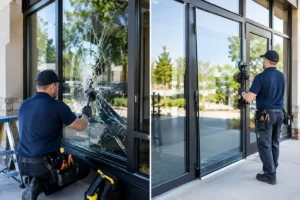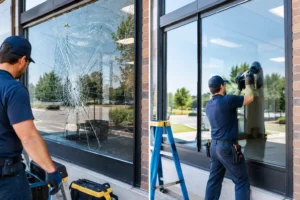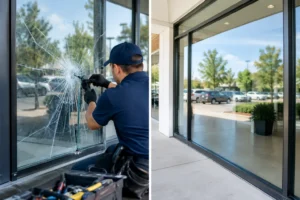

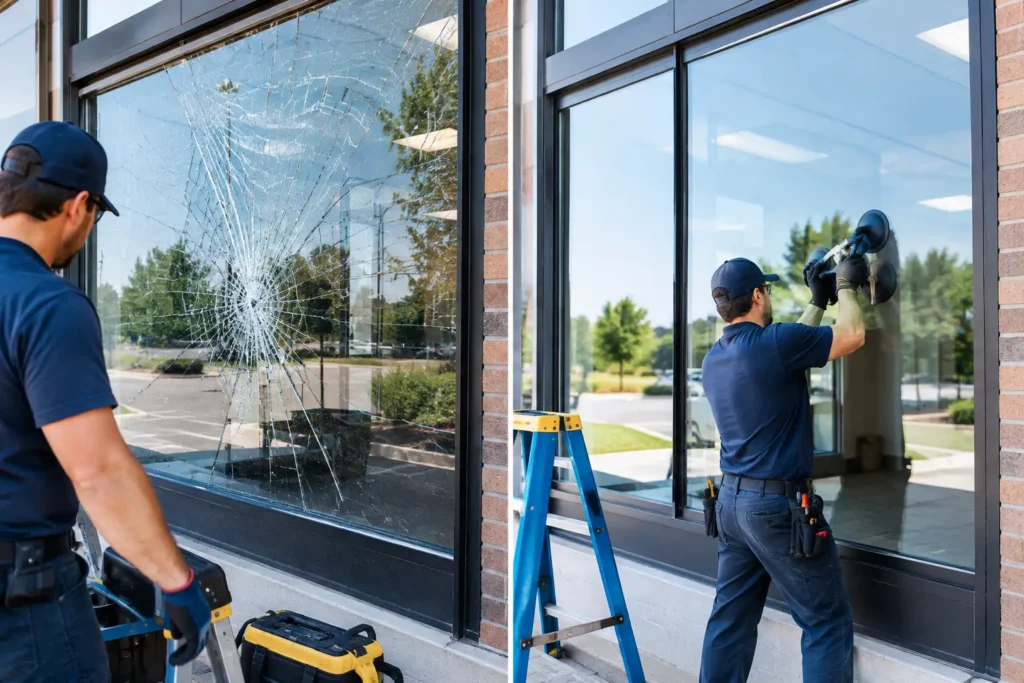
A shattered storefront panel, cracked patio door, or broken bedroom window changes the safety of a property in seconds. Knowing how to prepare for emergency glazing before a storm, break-in, accident, or equipment failure puts you in control of the first critical hours. The goal is not to perform a permanent repair yourself. It is to protect people, secure the opening, preserve useful information, and help a qualified glass technician restore the property without delay.
Start With Safety, Not Cleanup
Broken glass can remain unstable long after the initial impact. Fragments may be lodged in the frame, scattered several feet from the opening, or hidden in carpet, landscaping, and door tracks. Keep children, pets, customers, and employees away from the area immediately.
If the opening affects a door, lock off that entrance and use another route. For a commercial property, mark the area clearly and direct visitors away from it. If glass has fallen near a sidewalk or shared hallway, take reasonable steps to prevent access while you arrange service.
Do not press on cracked glass to see whether it will hold. A pane that looks mostly intact may collapse when touched, especially after an impact or sudden temperature change. Avoid leaning ladders, furniture, or plywood directly against fractured glass as well. This can turn a contained crack into a larger break.
If someone has been injured, address the medical emergency first. For a suspected break-in or deliberate damage, contact law enforcement before disturbing the scene. Security and evidence come before repair speed in that situation.
Know When Emergency Glazing Is Needed
Not every glass issue requires a middle-of-the-night response. A fogged insulated window, for example, is usually a scheduled repair issue unless the glass itself is damaged or the opening no longer protects the building. A small crack in an interior mirror may also be able to wait if it is stable and away from traffic.
Emergency glazing is the right response when damage creates an immediate safety, security, or weather-exposure risk. That includes a fully shattered window, a broken exterior door panel, a compromised storefront, an unsecured sliding glass door, or a damaged glass partition in a busy commercial space. In the DMV, a sudden downpour, strong winds, summer humidity, or winter cold can quickly make an open window or door more costly than it first appears.
It also depends on the glass location. A cracked upper-floor window might be less accessible to intruders, but falling glass creates a serious risk below. A broken ground-level window may not be large, yet it can compromise security. Consider the whole condition of the opening, not just the size of the break.
Create a Simple Emergency Glass Plan
Preparation is easiest when the details are documented before anything breaks. Homeowners should keep basic property information available in a phone note or household file. Property managers and business owners should make it part of their site emergency procedures.
Record which windows and doors use specialty glass, such as insulated double-pane units, tempered safety glass, laminated security glass, frameless shower enclosures, or commercial storefront systems. You do not need to know every technical specification. Clear photos of the inside and outside of each opening, including labels etched into the glass when visible, can help identify what is needed.
For commercial locations, note the after-hours contacts who can approve work, provide access, and make decisions if the primary manager is unavailable. A delay often occurs not because a repair cannot be made, but because no one can authorize entry or approve a temporary board-up.
Keep a current list of trusted service contacts, including a glazing contractor that provides 24/7 emergency response. Confirm whether the company performs temporary securing as well as permanent replacement. A safe board-up or protective covering may be the fastest way to secure a property while custom glass is measured, ordered, or fabricated.
Keep Basic Supplies for Temporary Protection
A prepared property does not need a full contractor’s workshop. It needs a few safe, practical supplies for controlling access until professional help arrives. Store them where they are easy to reach but inaccessible to children.
Useful supplies include:
- Heavy work gloves and closed-toe shoes
- Safety glasses
- A broom, dustpan, and sturdy container for loose fragments
- Painter’s tape for marking the area, not for stabilizing broken panes
- Plastic sheeting or a tarp for short-term weather protection
- Duct tape and a utility knife for securing protective sheeting to surrounding trim
- Caution tape or cones for commercial and multifamily common areas
- Flashlights and spare batteries in case the damage occurs during a power outage
These supplies are for temporary protection, not a substitute for proper repair. Avoid using thin cardboard, household tape across a damaged pane, or lightweight plastic that can tear loose in wind. Never attempt to replace a large pane or tempered door panel without the right equipment and training. Improvised work can cause injury, damage the frame, and make the final repair more complicated.
Document the Damage Before It Changes
Once the area is safe, take photos and short videos from a distance. Capture the full opening, close-ups of the damage, any glass markings, and the surrounding frame. For a business, also photograph any damage to displays, inventory, flooring, or equipment near the break.
Measurements can speed up the first conversation, but treat them as estimates. Measure the visible glass area and the overall opening if you can do so without touching broken glass. A professional technician will take final measurements because glass thickness, glazing stops, frame depth, safety-glass requirements, and hardware all affect the correct replacement.
Write down what happened and when. Was it storm damage, a door impact, vandalism, a failed door closer, or an unknown cause? This gives the glazing team useful context. It may also help with building records, landlord communication, or insurance documentation.
Prepare for the Technician’s Arrival
Fast service works best when the work area is accessible. Move furniture, displays, vehicles, and personal items away from the opening if it is safe to do so. Make sure pets are secured and that the technician has a clear path from the entrance to the damaged glass.
For a residential repair, decide who can approve the work and be present if access is required. Renters should contact the property owner or manager promptly, especially when the repair involves an exterior opening, common area, or building-standard glass.
For commercial properties, have access codes, keys, loading instructions, and any building rules ready. If the affected opening is part of a storefront or glass entry system, tell the technician whether the business must open at a certain time. That helps prioritize a temporary solution that protects the property while minimizing downtime.
Be ready to explain whether the opening needs to be weather-tight, secure against entry, operational for customers, or all three. A broken fixed window and a broken door that serves as the only accessible entrance require different temporary measures.
Ask the Right Questions During an Emergency Glass Repair
A professional glazing provider should explain what can be completed immediately and what may require a follow-up visit. Standard glass sizes can sometimes be replaced the same day. Custom insulated units, specialty tinted glass, large commercial panels, or unusual door systems may need to be ordered after the opening is secured.
Ask whether the proposed temporary protection is safe, how long it is expected to remain in place, and what the permanent repair will involve. Confirm whether the replacement glass will match required safety standards and whether the work is covered by a warranty. You should also receive clear communication about scheduling, materials, and next steps.
Licensed and insured glazing service matters here. Broken glass is not just an appearance issue. The repair must fit correctly, protect against weather, support secure operation, and meet the needs of the specific window, door, shower enclosure, or commercial system.
Reduce the Odds of the Next Emergency
Some glass breaks are unavoidable, but recurring problems usually leave clues. A sliding glass door that sticks may be placing stress on the panel. A commercial door that slams could be dealing with a hardware or alignment problem. Loose glazing, damaged seals, frame movement, and neglected door rollers can all contribute to future failures.
Schedule repair before a minor issue becomes an urgent one. Replace compromised glass, address fogged or failed insulated units when energy performance matters, and have difficult doors or windows inspected before severe weather arrives. For storefronts and other high-traffic properties, review security lighting, closing procedures, and the condition of exposed glass on a regular basis.
When glass breaks, calm preparation protects the people and property that matter most. Secure the area, capture the details, and call for qualified help quickly. A prompt professional response can turn a dangerous opening into a protected, properly repaired part of your home or business again.