
A front door with the wrong glass can create a problem you notice every day. Maybe the entry feels exposed after dark, the afternoon sun overheats the foyer, or a once-clear insulated panel has turned cloudy between the panes. Choosing glass for front doors is not just a design decision. It affects privacy, home security, comfort, curb appeal, and how well the door holds up through DMV summers, winter cold snaps, and driving rain.
The best choice depends on what sits around your entry, how much direct sun it receives, whether the glass is in the door or sidelights, and what level of visibility feels comfortable. Start with the performance you need, then choose a style that supports it.
Choosing Glass for Front Doors Starts With Privacy
Clear glass gives an entryway the most daylight and the clearest view outside. It can make a narrow hall or enclosed foyer feel much more open. It also leaves the interior visible from the street, which may not work for a front door facing a sidewalk, neighboring homes, or a busy parking area.
Obscure glass is often the practical middle ground. Frosted, rain, reed, glue-chip, and textured patterns diffuse the view while still admitting light. The level of privacy varies widely by pattern. A lightly textured panel may blur details only at a distance, while a fully frosted or heavily patterned panel makes faces and interior furnishings difficult to see.
For many homes, privacy does not have to mean covering every inch of glass. A decorative glass insert with a more opaque center and clearer border can preserve daylight without putting the whole foyer on display. Another approach is using obscured sidelights beside a solid or partially glazed door. Consider the view in both directions before deciding. What looks private from inside during the day can look different when indoor lights are on at night.
Security Is About More Than the Glass Pattern
Glass near a lock naturally raises a security question: could someone break the panel and reach in? This is where the type of safety glass and the door’s overall construction matter more than appearance alone.
Tempered glass is heat-treated so it is stronger than ordinary annealed glass and breaks into small, less jagged pieces if it fails. It is commonly required for glass in or near doors because it reduces the injury hazard. Laminated glass uses two sheets of glass bonded to a durable interlayer. When struck hard enough to crack, it tends to remain held together rather than opening immediately. That added delay can be valuable for entry-door security and for homes exposed to loud streets or frequent storm debris.
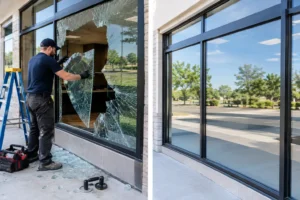
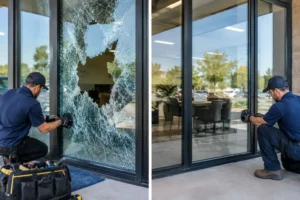
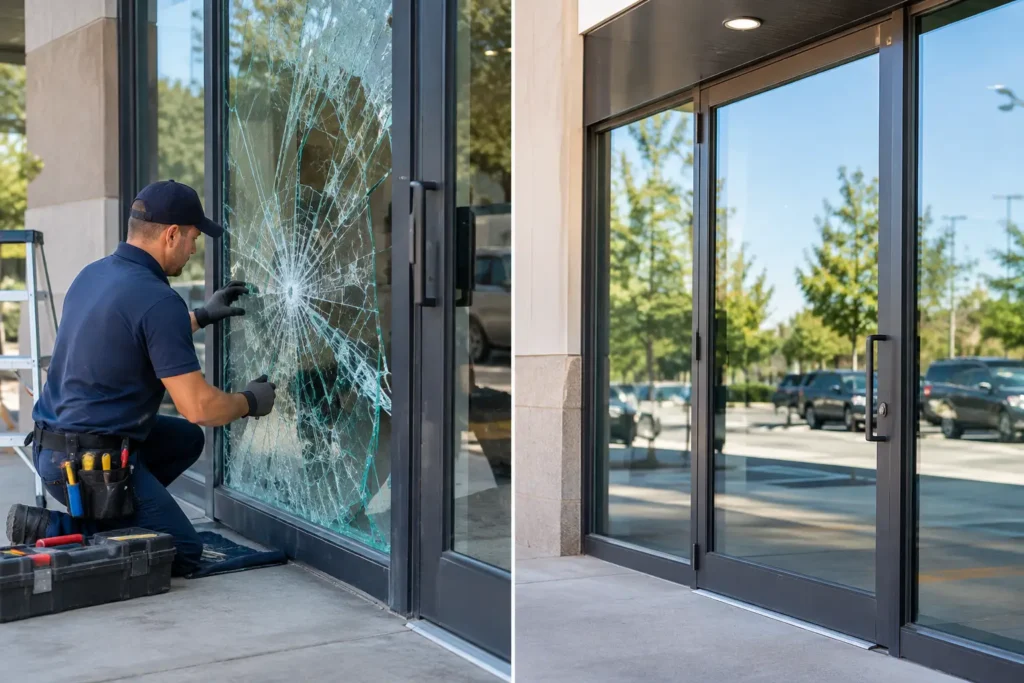
Laminated glass is not a replacement for a quality deadbolt, reinforced strike plate, sound door frame, and correct installation. It is one part of a secure entry system. If your current glass is broken, loose, or rattling in its frame, do not wait for a planned renovation. Damaged door glass can leave sharp edges, weaken the opening, and create an immediate security issue.
Ask What Your Existing Door Can Support
Not every door can accept every glass unit. Wood, fiberglass, steel, and aluminum doors have different panel sizes, glazing stops, screw locations, and structural limits. An oversized or poorly fitted replacement can affect weather sealing and, in some cases, the door’s strength or warranty.
A glazing professional should measure the actual visible glass, the opening, the depth available for the unit, and the condition of the surrounding door. This is especially important when replacing a failed insulated glass unit rather than the entire door. In many cases, the fogged or cracked glass can be replaced while preserving a door that is otherwise in good condition.
Choose Energy Performance for the Exposure
A beautiful front-door insert loses its appeal if the entry becomes uncomfortable or your HVAC system has to work harder to offset it. Single-pane glass provides the least insulation. Modern insulated glass units use two panes separated by a sealed airspace, substantially improving thermal performance and reducing condensation risk.
For front doors that receive long periods of direct sun, low-emissivity, or Low-E, glass is worth discussing. This nearly invisible coating helps manage heat transfer. Depending on the product, it can limit unwanted solar heat while allowing useful daylight into the home. In the DC, Maryland, and Northern Virginia area, that balance matters because homes need relief from both summer heat and winter heat loss.
The right glass is exposure-specific. A north-facing covered entry may prioritize light and a warmer appearance. A west-facing door with no porch cover may need stronger solar control. If your entry feels cold near the glass in winter or uncomfortably hot on sunny afternoons, describe that problem during the estimate. It points the recommendation toward performance, not just looks.
Do Not Ignore the Seal and Spacer
Insulated glass only performs well while its perimeter seal remains intact. When that seal fails, humid air can enter the space between panes and create the familiar cloudy or fogged appearance. Cleaning the surface will not remove moisture trapped inside the unit.
A failed seal is usually an efficiency and appearance concern before it becomes an emergency, but the condition can worsen over time. If there is also cracking, water intrusion around the frame, loose glazing, or a door that no longer closes correctly, schedule an inspection promptly. Precise sizing and proper setting blocks are as important as selecting the replacement glass itself.
Match the Glass Style to the House, Not a Trend
Front-door glass should look intentional from the curb. Traditional homes often suit divided-light grids, beveled details, or classic textured patterns. A mid-century or contemporary home may look better with clean rectangular panes, simple privacy glass, or a large uninterrupted lite. The goal is not to make the door disappear. It is to choose a design that belongs with the home’s windows, trim, hardware, and exterior lines.
Be cautious with elaborate decorative inserts if you expect to sell soon or if the surrounding architecture is restrained. Distinctive designs can be appealing, but they are more personal than simple clear, obscure, or lightly patterned glass. Neutral designs tend to offer broader appeal and are easier to coordinate if exterior paint or hardware changes later.
Glass grids deserve a closer look, too. Grids between the panes are easy to clean and protected from damage, but they create a different visual depth than true divided lites. Exterior or interior applied grids can offer a more traditional look, though they add surfaces to maintain. There is no universal winner. Choose based on the style you want and the amount of upkeep you are willing to accept.
Think About Sightlines From Inside the Home
Stand inside your entry before committing to a layout. Look toward the street, driveway, walkway, neighboring windows, and the spot where visitors typically stand. A narrow vertical glass panel can provide enough visibility to identify a guest without opening the door. A larger panel may be better if the entry is dark or if you want to watch for deliveries and children arriving home.
Sidelights and transoms can add daylight without cutting a large opening into the door slab. They also change the visual width and height of the entry, which can be useful for a small porch or a formal facade. Because these components are fixed, homeowners sometimes overlook them when replacing door glass. If one sidelight is fogged, cracked, or mismatched, addressing the full entry composition can produce a cleaner result than replacing only the most visibly damaged piece.
Avoid These Costly Shortcuts
The least expensive glass is not always the lowest-cost decision. Reusing worn gaskets, forcing a unit into an opening that was measured loosely, or choosing non-safety glass for a door location can lead to leaks, breakage, drafts, and another repair call. A door glass unit needs correct clearances, compatible glazing materials, and a weather-tight finish.
It also pays to distinguish between a cosmetic issue and a condition that needs immediate action. A small edge chip may be stable, but a crack that travels across the panel, a shattered lite, or glass that has separated from the frame calls for fast professional service. Secure the area, keep children and pets away from loose fragments, and avoid slamming the door until the opening can be inspected.
Get a Recommendation Based on Your Actual Entry
Photos help, but an on-site measurement provides the clearest path to a proper replacement or upgrade. A professional can identify whether you need a new insulated unit, tempered or laminated safety glass, new glazing components, or a broader door repair. You should also receive clear information about the expected glass type, privacy level, energy features, timing, and warranty before work begins.
For homeowners and property managers, the practical choice is glass that makes the entry brighter and more attractive without sacrificing safety, privacy, or weather protection. If cracked, broken, or fogged door glass is already affecting your home, Quick Glass Repairs can inspect the opening, explain the options plainly, and provide a free estimate. A well-fitted glass panel should give you light and confidence every time you come home.