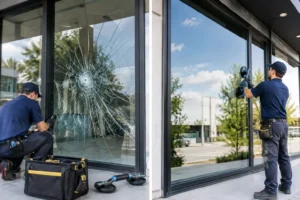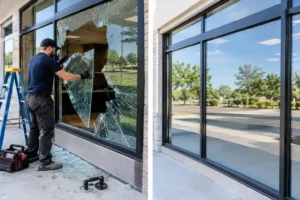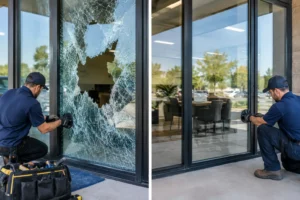
A cracked glass entry door can turn a normal workday into a security problem in minutes. It can leave employees exposed to sharp edges, give customers the wrong first impression, invite water into the building, and create an easy point of entry after hours. This commercial door glass guide explains what business owners and property managers should look for, how to respond when glass fails, and how to make a practical replacement decision without delaying a needed repair.
Commercial door glass is not a one-size-fits-all product. The right choice depends on where the door sits, how the building is used, the existing frame and hardware, local code requirements, and the level of security your property needs. A street-facing retail entrance has different demands than an interior office door or a multifamily building lobby.
Start With the Immediate Risk
When door glass breaks, treat the area as unsafe until it has been secured. Keep people away from the opening, remove loose glass only if it can be done safely, and block access to the door if the remaining panel is unstable. Do not tape over a heavily cracked pane and assume the problem is handled. Tape may help contain small cracks temporarily, but it does not restore the door’s strength, weather resistance, or security.
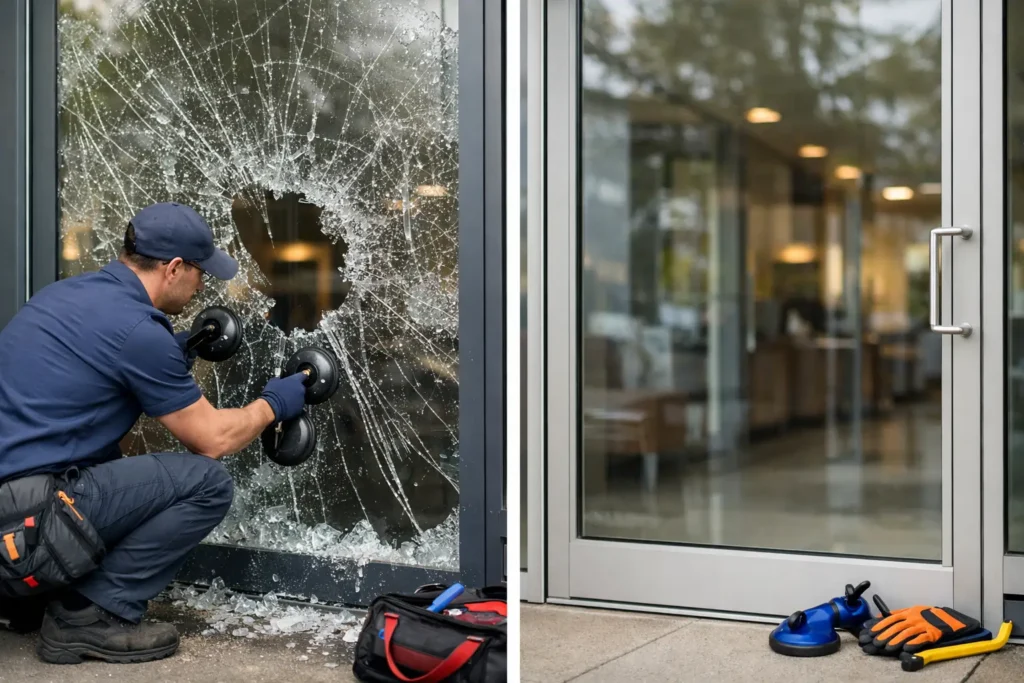
For a storefront, office, restaurant, or apartment community, the first priority is usually securing the opening. A professional glazing team can assess the frame, remove dangerous fragments, install a temporary board-up when needed, and measure for the correct replacement glass. This matters because an incorrect thickness or improperly installed panel can compromise the door’s operation and create another failure point.
If the damage resulted from attempted forced entry, document the condition before cleanup when possible. Photos can help with property records and insurance documentation. Then focus on getting the entrance secure. Waiting overnight with a compromised door can expose inventory, equipment, tenants, and staff.
The Main Types of Commercial Door Glass
Tempered Safety Glass
Tempered glass is heat-treated to be stronger than standard annealed glass. When it breaks, it is designed to fracture into many small, blunt-edged pieces rather than large sharp shards. It is commonly used in full-glass doors, sidelights, and other areas where people may come into contact with the glass.
Tempered glass is a practical choice for many commercial entrances, but it has a trade-off: once it breaks, the entire panel usually releases at once. A shattered tempered panel needs prompt replacement and temporary security measures. It is not designed to hold together after impact.
Laminated Safety Glass
Laminated glass uses two or more layers of glass bonded with a durable interlayer. When damaged, the glass may crack but often remains held together by that interlayer. This can reduce the chance of an immediate open hole in the entrance and can offer better resistance to forced entry than a single tempered panel.
For ground-level doors, high-traffic storefronts, and locations where security is a major concern, laminated glass may be worth considering. It is not indestructible, and severe impacts can still damage it, but the retained panel can buy valuable time while repairs are arranged.
Insulated Glass Units
Some commercial doors use insulated glass units, often called double-pane glass. These units have two panes separated by a sealed airspace. They can improve comfort near the entry and reduce heat transfer, which matters for offices, lobbies, and customer-facing spaces with large areas of glass.
When the perimeter seal fails, moisture can enter between the panes. The result is fogging, haze, or visible condensation that cannot be cleaned from either side. The door may still close, but its appearance and insulating performance are reduced. In many cases, the insulated unit can be replaced without replacing the entire door system.
Fire-Rated Glass
Doors in stairwells, corridors, and rated wall assemblies may require fire-rated glazing. This is a specialized product and must match the door assembly’s rating, frame, hardware, and applicable code requirements. Replacing fire-rated glass with ordinary safety glass can create a serious compliance issue.
If a glass door has a fire label or is part of an exit route, do not guess at the replacement type. Have a qualified professional identify the existing system before ordering glass.
How to Choose the Right Replacement
The best replacement starts with the complete door assembly, not just the broken panel. A technician should confirm the opening size, glass thickness, edge finish, frame channel, stops, gaskets, and hardware clearances. Glass that is slightly too thick, too thin, or improperly blocked can stress the panel and interfere with the door’s swing or latch.
Security needs should guide the glass selection. A protected interior office door may only require the appropriate safety glass. A street-level entrance that faces repeated vandalism or security concerns may benefit from laminated glass, upgraded framing, or a review of nearby locks and access controls. The glass alone cannot secure an entrance if the closer, panic hardware, hinges, or frame are damaged.
Appearance also matters. Clear glass keeps an entry bright and visible, while tinted, frosted, patterned, or decorative films can improve privacy and branding. For medical offices, conference rooms, and multifamily lobbies, privacy can be useful without making the entry feel closed off. Just make sure visibility requirements, egress needs, and safety markings are considered before changing the design.
Energy performance is another factor. If the door is exposed to harsh afternoon sun, cold winter winds, or constant HVAC loss from a busy lobby, an insulated unit or suitable coating may help. The right option depends on the frame and door system. Putting high-performance glass into a poorly sealed or damaged frame will not solve every comfort issue.
Code, Safety, and Accessibility Details Matter
Commercial entry doors often fall under safety-glazing rules because people can walk into, lean against, or push on the glass. Required markings, proper glass type, and installation details are not minor paperwork issues. They help reduce injury risk when an impact occurs.
Doors used for emergency egress have additional concerns. The door must open as intended, hardware must remain functional, and replacement work cannot block required exit paths. If the door includes a closer, continuous hinge, panic bar, or access-control equipment, the glass repair should be coordinated around those components.
Local requirements can vary by jurisdiction and building type across the DMV. Historic properties, mixed-use buildings, health care facilities, schools, and multifamily communities may have added restrictions. A licensed and insured glazing contractor can help identify the replacement requirements before work begins, especially when the door is part of a rated or code-sensitive assembly.
Common Warning Signs Before Glass Fails
Not every door glass problem begins with a dramatic break. Small edge chips, spreading cracks, loose glass stops, deteriorated gaskets, cloudy insulated units, and rattling panels all deserve attention. So does a door that suddenly drags, slams, or no longer latches cleanly. Those symptoms may point to a frame, closer, hinge, or alignment issue that is placing stress on the glass.
Pay close attention to damage near corners and edges. Glass is most vulnerable there, particularly if a metal frame has shifted or hardware is out of adjustment. A small edge crack can grow quickly with repeated door movement, temperature changes, or vibration.
Property managers should include entrance glass in routine walk-throughs, especially after storms, tenant move-outs, construction nearby, or security incidents. Early repairs are usually simpler than emergency replacement after a panel fails completely.
What a Professional Repair Visit Should Include
A proper commercial glass repair is more than installing a new pane. The technician should inspect the opening, confirm the correct glass specification, protect nearby floors and entrances, remove broken material safely, and check that the door operates correctly once the glass is installed.
For urgent damage, communication is part of the service. You need to know whether the opening can be secured the same day, whether specialty glass must be ordered, and what temporary protection will be used in the meantime. Clear updates help business owners plan around customer access, employees, deliveries, and building security.
Quick Glass Repairs provides 24/7 emergency response and same-day repair availability for commercial glass problems throughout the DC, Virginia, and Maryland region. For scheduled replacements, a free estimate can clarify whether the issue is limited to the glass or involves the frame, seals, or door hardware as well.
Keep the Entrance Working After Replacement
After new glass is installed, avoid using the door as a moving cart stop or allowing heavy objects to strike its edges. Make sure door closers are adjusted so the door does not slam, and repair worn sweeps or gaskets that let water collect in the frame. If the entrance receives heavy daily traffic, periodic hardware adjustments can protect both the door and its glass.
A commercial entrance is one of the first things customers and employees see, but its real job is protection. When glass is cracked, fogged, loose, or broken, act before a manageable repair becomes a safety or security emergency. The right glass, installed precisely and checked with the full door system in mind, keeps your property open for business and protected after closing time.