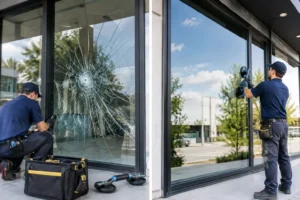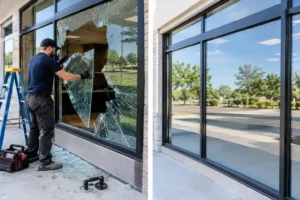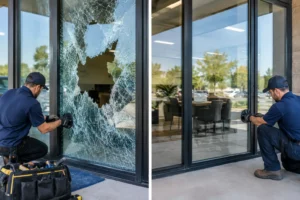
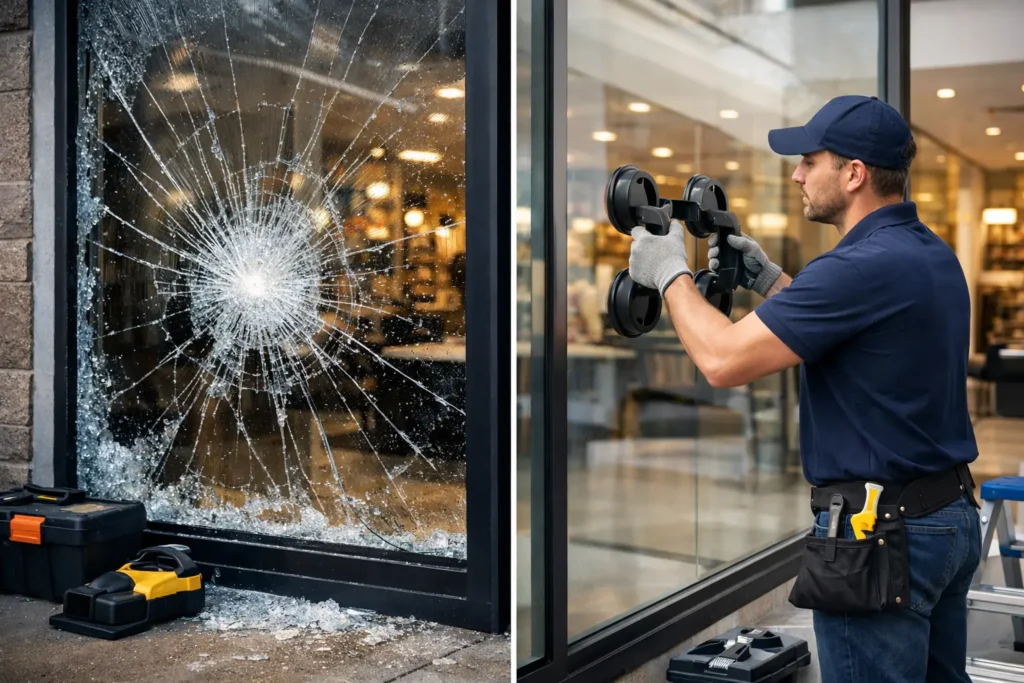
A broken glass panel does more than spoil the look of a door or window. It can leave a home exposed to weather, create a security risk, interrupt business operations, and put people near the opening at risk. When choosing replacement safety glass, the laminated versus tempered glass decision matters because these two products fail very differently – and are designed to solve different problems.
Tempered glass is built to break safely. Laminated glass is built to stay together after impact. Neither is automatically the better choice. The right one depends on where the glass is installed, what hazard it needs to address, local code requirements, and whether your priority is injury prevention, forced-entry resistance, noise control, or keeping an opening covered after breakage.
What Makes Tempered Glass Different?
Tempered glass begins as standard glass, then receives a controlled heating and rapid-cooling process. That treatment creates tension within the glass that makes it significantly stronger than ordinary annealed glass of the same thickness.
Its defining feature appears when it breaks. Tempered glass shatters into many small, blunt-edged pieces instead of large, sharp shards. That reduces the chance of serious lacerations for someone who falls into the glass, bumps it, or is standing nearby when it fails.
For that reason, tempered glass is commonly required in locations where human impact is likely. Typical examples include shower doors and enclosures, glass near doors, sidelights, patio doors, low windows near walking areas, and certain glass railings. Building codes determine the exact requirements based on the size, height, location, and accessibility of the panel.
There is one trade-off that catches property owners off guard: once tempered glass breaks, the entire pane usually releases at once. The opening may be clear within seconds. A shattered patio door or storefront panel can leave a property exposed until a professional can secure and replace it.
Where Tempered Glass Is Often the Practical Choice
Tempered glass is an excellent fit when the primary concern is accidental impact and safe breakage. It is a common choice for shower glass because a shower enclosure needs clarity, strength, and a safer fracture pattern in a tight space where bare feet and wet surfaces are involved.
It also works well for many interior glass applications, including cabinet inserts, tabletops, and partition panels, depending on the design. For exterior doors and windows, it may be required by code in hazard-prone locations. A qualified glazing professional should verify the correct safety glazing designation before ordering replacement glass, especially when the original panel has a visible safety-glass stamp.
How Laminated Glass Works
Laminated glass is made from two or more sheets of glass bonded together with a clear plastic interlayer, typically polyvinyl butyral, or PVB. When the panel is struck hard enough to break, the glass may crack in a spiderweb pattern, but many of the fragments remain adhered to that interlayer.
The panel is damaged, and it still needs prompt replacement. But it is far more likely to remain in the frame rather than falling away immediately. That difference is the main reason laminated glass is selected for security-sensitive, high-risk, and weather-exposed applications.
A burglar can break laminated glass, but breaking it does not necessarily create an easy opening. The interlayer adds a barrier that takes more time and effort to penetrate. It also helps retain broken fragments, which can reduce the immediate hazard around the opening.
Laminated glass can provide additional everyday benefits. Depending on its construction, it may reduce outside noise better than a comparable single pane. It can also block a substantial amount of ultraviolet light, helping protect flooring, furniture, artwork, and displays from fading. Those advantages make it worth considering for street-facing homes, offices, retail spaces, and rooms with strong sun exposure.
Where Laminated Glass Makes Sense
Laminated glass is often chosen for entry door glass, sidelights, ground-floor windows, large storefront systems, glass near public walkways, and applications where holding the pane together after impact is valuable. It is also used in some overhead and specialty glazing systems where glass retention is a central safety concern.
For a home, laminated glass can be a smart upgrade near a front entrance or at a vulnerable rear door. For a commercial property, it can help keep a damaged storefront more contained following an impact or attempted break-in. It does not make a building invulnerable, but it can buy valuable time and reduce the immediate mess and exposure.
Laminated Versus Tempered Glass: The Real Safety Difference
Both products are classified as safety glazing, but they protect people and property in different ways.
Tempered glass protects primarily through its break pattern. It is designed to reduce dangerous sharp fragments after a panel fails. Laminated glass protects primarily through retention. It is designed to keep cracked glass and broken pieces together within the opening.
Think about a shower door. If someone slips into the glass, the goal is usually for the panel to fracture into small pieces rather than long, sharp shards. Tempered glass is the standard solution for that type of impact hazard.
Now think about a first-floor storefront window facing a sidewalk. If it is struck after business hours, the goal may be to prevent glass from scattering across the entry and keep the opening partially closed until repairs are completed. Laminated glass is often better aligned with that need.
Some projects use both technologies. Laminated tempered glass combines tempered panes with an interlayer, offering the breakage characteristics of tempered glass along with the retention benefits of lamination. This is not necessary for every project, and it costs more, but it can be appropriate for specialized security, overhead, or high-performance applications.
Strength, Security, and Cost Are Not the Same Thing
Property owners sometimes hear that tempered glass is stronger and assume it is the more secure option. Tempered glass does have greater resistance to certain impacts than standard glass. But once its surface is penetrated or its edge is damaged, it can shatter completely.
Laminated glass may crack under impact without creating an immediate pass-through opening. That makes it more useful when delay, retention, and deterrence are the priority. The best security solution can also involve the frame, locks, door hardware, glazing method, lighting, and alarm system. Glass alone is only one part of the opening’s overall performance.
Cost also depends on more than the glass type. Panel dimensions, thickness, tint, insulation, low-emissivity coatings, custom fabrication, hardware, and installation difficulty all affect the final price. Laminated glass is often more expensive than basic tempered glass, but the added cost may be justified in a vulnerable location or a noise-heavy setting.
If you are replacing insulated glass in a window or door, the decision gets more specific. A double-pane unit may include tempered glass, laminated glass, or a combination of specialty components. Matching the existing unit’s thickness and performance is critical so it fits the frame correctly and preserves the intended energy efficiency.
Do Not Guess After a Glass Break
A glass label or etched corner mark may identify tempered safety glass. Laminated glass is sometimes identifiable by looking at the exposed edge, where the interlayer can be seen between glass sheets. Still, visual inspection is not enough to make a replacement decision, particularly if the panel is in a code-regulated location.
The original glass may have been selected for a reason that is not obvious after it breaks. A door sidelight, a low window beside a stair landing, a shower enclosure, or a commercial entrance may require a specific safety glass type. Replacing it with ordinary glass because it appears similar can create a safety issue and may fail inspection requirements.
If glass has cracked, shattered, or pulled loose from its frame, keep people away from the area. Do not press on cracked laminated glass or attempt to sweep large broken pieces without proper protection. Secure the opening if it can be done safely, then arrange professional service quickly. For a damaged exterior opening in the DMV, Quick Glass Repairs can assess the glass type, secure the area, and provide a properly fitted replacement with licensed and insured workmanship.
Choosing the Right Glass for Your Property
Choose tempered glass when safe breakage after accidental human impact is the central concern. Choose laminated glass when you need broken glass to stay together longer, want an added layer of forced-entry resistance, or value improved sound and UV performance. Choose a combined or specialty solution when the location, code, and risk level call for it.
The best replacement is not simply the strongest-looking pane. It is the glass that fits the opening, meets the safety requirement, and protects the people who use the space every day. When a pane breaks, acting quickly protects the property. Choosing the correct replacement protects what happens next.