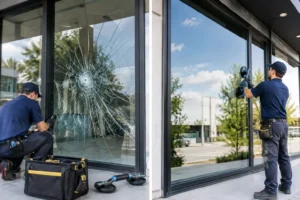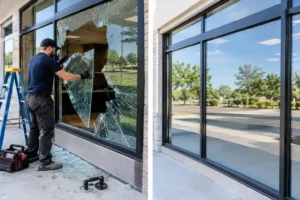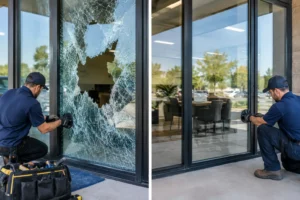
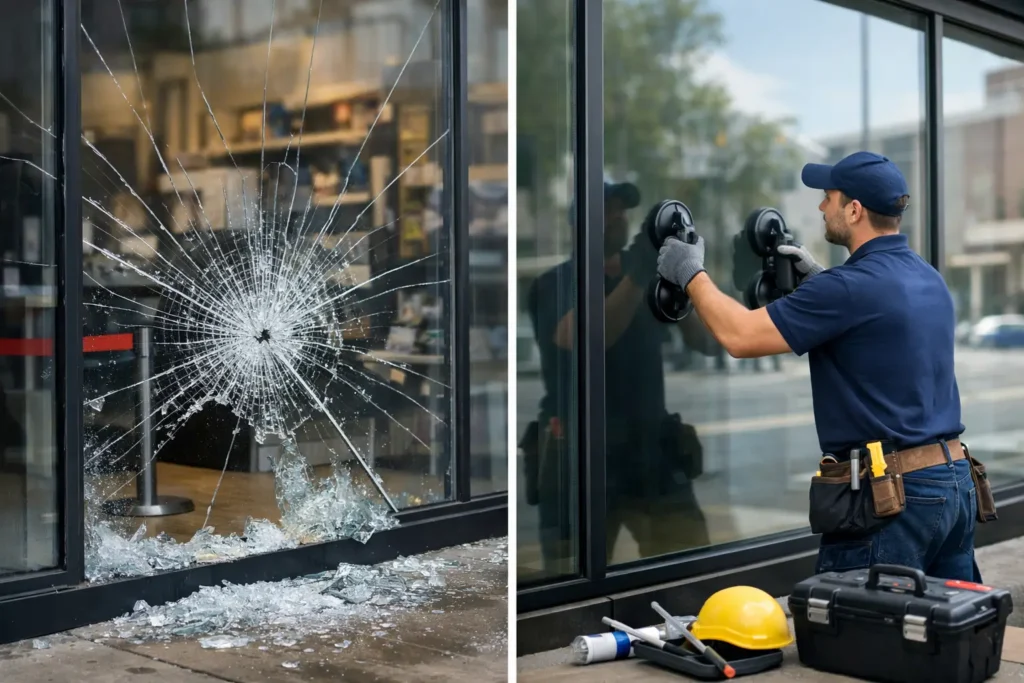
A storefront breakage example often starts with a call no business owner wants to make: a glass entry door has been shattered overnight, or a large front window is cracked after an impact. By morning, the opening is exposed, broken glass may be near the entrance, and customers are due to arrive. The priority is not just replacing a pane. It is making the property safe, secure, and presentable again without creating more disruption for staff or visitors.
For a retail shop, office, restaurant, or multifamily property, damaged storefront glass can quickly become a security problem, a weather problem, and a liability problem. A fast, professional response helps limit all three.
A Storefront Breakage Example From First Call to Final Repair
Imagine a neighborhood retail store in Northern Virginia. After closing, someone throws an object through the insulated glass panel beside the front door. The impact leaves a wide hole at the bottom of the panel, loose fragments remain in the frame, and the business cannot safely open the next day without immediate work.
The owner photographs the damage from a safe distance, keeps employees away from the opening, and contacts a commercial glass professional. During the initial conversation, the contractor confirms the location, approximate size of the glass, type of opening, visible safety concerns, and whether the business needs to open the following morning. Those details determine whether an emergency board-up, temporary glazing solution, or direct replacement is possible.
A qualified technician arrives with the goal of securing the opening first. They clear loose glass carefully, inspect the aluminum framing and door hardware for damage, and install a properly fitted temporary board or other appropriate protective barrier when replacement glass is not immediately available. The board-up should be secure and cleanly installed, not a loose piece of plywood that creates a new safety or appearance issue.
Once the space is protected, the technician measures the opening precisely. This matters because storefront systems may use tempered safety glass, laminated safety glass, insulated glass units, tinted glass, or other specialty configurations. Ordering the wrong thickness, finish, or glass type can delay the final repair and affect the building’s appearance, performance, or code requirements.
When the correct glass is ready, the crew returns for final installation. They remove the temporary protection, inspect the frame again, install the new glazing with the right setting blocks, gaskets, sealants, and pressure components, then clean the work area. The goal is a secure fit, a weather-resistant seal, and a storefront that looks like it belongs with the rest of the facade.
Why Broken Storefront Glass Requires Fast Action
A cracked storefront panel may look manageable at first, especially if the glass is still held in place. That assumption can be costly. Tempered glass can fail suddenly after an impact, while a crack in laminated or insulated glass can spread as temperatures change. In the DC, Maryland, and Northern Virginia area, a damaged opening can also let in rain, wind, insects, dust, and cold or humid air.
Security is the more immediate concern. A compromised window or door creates an easier access point after hours. Even if the opening is small, it can invite further damage or theft. For businesses with merchandise near the front of the store, the exposure is obvious. For offices and professional buildings, the concern may be sensitive equipment, records, or the ability to secure the premises before employees leave.
There is also a customer-facing impact. A jagged or boarded storefront can make visitors question whether the business is open, safe, or properly maintained. Temporary protection is sometimes necessary, but it should be followed by a prompt plan for glass replacement. The right repair restores both security and confidence.
What a Professional Storefront Glass Repair Should Address
Replacing broken glass is only part of the job. The source and extent of the damage deserve attention as well. A technician should look at the glass, framing, door operation, seals, and surrounding panels before treating the repair as complete.
If an impact damaged the aluminum frame, simply inserting a new pane may not produce a secure seal. Bent stops, damaged gaskets, or loose glazing channels can allow water intrusion and premature failure. If the break occurred in or around a glass entrance door, the closer, pivots, panic hardware, and alignment may need inspection too. A door that drags or does not latch properly is still a security concern, even with new glass installed.
Glass selection is another decision that depends on the opening. Tempered glass is common in locations where safety glazing is required because it breaks into small pieces rather than sharp shards. Laminated glass can provide additional hold-together performance after impact, which may be useful for certain security-sensitive storefronts. Insulated glass can improve temperature control and reduce condensation in appropriate framed systems.
There are trade-offs. A specialty glass option may offer stronger performance but take longer to fabricate or cost more than a standard replacement. A reliable contractor will explain what is needed for a safe repair, what is recommended for better long-term performance, and when a temporary solution is the practical choice.
What Business Owners Should Do Before Help Arrives
Do not attempt to sweep or handle large broken pieces without proper protective equipment. Keep customers, employees, tenants, and delivery personnel away from the damaged area. If the break affects a door, use another controlled entrance if one is available and safe.
Take a few photos for your property records, but do not get close enough to disturb unstable glass. If theft or vandalism is involved, contact local law enforcement before the area is cleaned whenever appropriate. Then document the condition of nearby frames, doors, merchandise, and interior surfaces.
If weather is entering the building, move inventory, furniture, electronics, and paperwork away from the opening. Avoid taping plastic directly over jagged glass if it requires reaching through or around dangerous fragments. A professional emergency board-up is usually safer and more secure.
For property managers, clear communication makes the situation easier to control. Let tenants or occupants know which entrance is closed, where they should enter instead, and when they can expect updates. A responsive glazing contractor can provide measurements, material status, scheduling information, and a clear scope of work so no one is left guessing.
Preventing the Next Storefront Breakage Problem
Not every broken storefront can be prevented. Storm debris, accidents, and deliberate damage happen. Still, routine attention can reduce avoidable failures and make recovery faster when an incident occurs.
Check storefront doors for dragging, loose handles, failed closers, and latch problems. Inspect glass for edge chips, cracks, cloudiness between panes, loose gaskets, or water staining around the frame. These conditions do not always mean the glass will fail immediately, but they deserve professional evaluation before a small defect becomes an emergency.
Businesses in high-traffic locations may also consider whether their existing glass provides the right balance of appearance, safety, and security. A basic pane may be appropriate in one location, while a laminated or upgraded safety-glass configuration makes more sense near a busy entrance or a vulnerable street-facing panel. The answer depends on the frame system, building requirements, exposure, and budget.
Keep a current record of your storefront glass sizes, glass type, and contractor contact information. That small amount of preparation can save time after a break. When a technician knows the opening dimensions and likely glass specification, replacement planning can begin sooner.
Get the Opening Secured, Then Get It Right
Broken storefront glass should not force a business to choose between safety and staying open. The immediate job is to remove the hazard and secure the property. The lasting job is to install the correct glass with careful measurements, compatible materials, and workmanship that holds up.
Quick Glass Repairs provides emergency commercial glass response, board-up support, and precise storefront glass replacement for businesses and property managers across the DMV. If your entrance, storefront panel, or commercial glass door has been damaged, do not wait with an exposed opening. Get it secured now, then schedule the repair that returns your property to safe, professional condition.