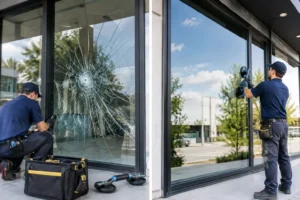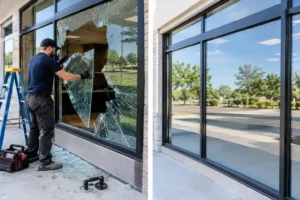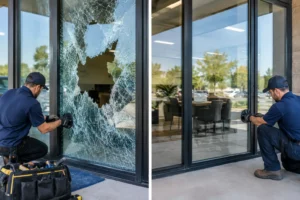
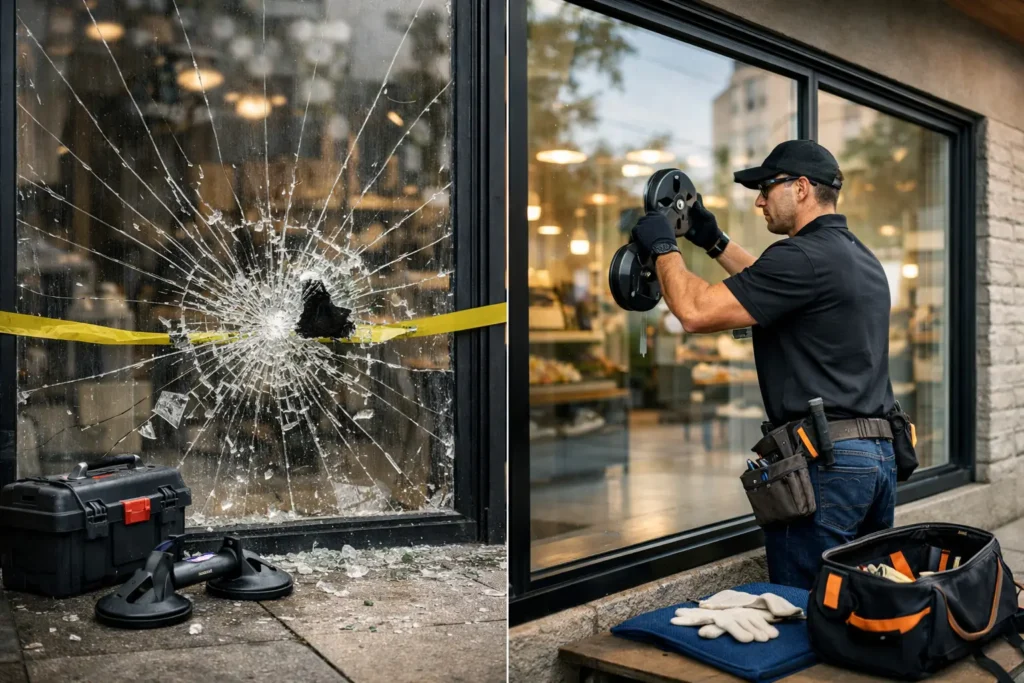
A shattered storefront window creates more than a cleanup problem. It leaves your inventory visible, your entry vulnerable, your staff uneasy, and your business exposed to weather and trespassing. The right storefront security options protect the glass itself, strengthen the opening around it, and give you a clear plan when damage happens after hours.
For retail shops, offices, restaurants, and multifamily properties across the DMV, the best approach is rarely one product. A busy street-facing boutique may need impact-resistant glazing and monitored cameras. A vacant commercial suite may need temporary board-up service after a break-in, followed by a permanent glass upgrade. The goal is the same: restore a secure, professional entrance without keeping your doors closed longer than necessary.
Start With the Risks at Your Storefront
Storefront glass has a difficult job. It needs to create visibility, welcome customers, meet building requirements, and stand up to daily traffic. It can also become the most exposed part of a commercial property when someone attempts a break-in, a delivery cart strikes the door, or storm debris hits the glass.
Before choosing a security measure, consider what is actually at risk. Is the biggest concern smash-and-grab theft? Repeated vandalism? An exposed side door after closing? Employee safety during a threat? Or the disruption of replacing a large glass panel after an accident? A storefront on a high-traffic corridor has different needs than a professional office behind controlled building access.
Also look beyond the pane. Weak door hardware, a bent aluminum frame, an unlocked rear entry, or a poorly lit entrance can undermine even high-quality security glass. Good security planning treats the storefront as a complete system, not just a sheet of glass.
Storefront Security Options for Glass and Doors
Tempered safety glass
Tempered glass is a common choice for commercial doors and storefront systems because it is stronger than standard annealed glass. When it breaks, it typically crumbles into small, less jagged pieces instead of large sharp shards. That reduces injury risk for customers and employees.
Tempered glass is a safety upgrade, but it is not designed to stop a determined forced entry. A hard impact can still break it. It works best where code compliance, everyday durability, and safer breakage are the main priorities.
Laminated security glass
Laminated glass uses two or more panes bonded with a durable interlayer. When struck, the glass may crack, but the interlayer helps hold the broken pieces together. This makes it harder and slower for someone to create an opening through the storefront.
That delay matters. A break-in often depends on speed. Glass that remains in the frame can discourage an intruder, buy time for an alarm response, and reduce the immediate risk of merchandise being grabbed through a broken opening. Laminated glass can also provide useful benefits such as reduced outside noise and added UV filtering, depending on the product selected.
The trade-off is cost and weight. Laminated units may require the right framing, glazing method, and professional installation to perform as intended. It is not a material to choose by appearance alone.
Security window film
Security film is applied to existing glass and is designed to help retain broken glass after impact. For businesses with serviceable storefront glazing, it can be a more budget-conscious improvement than full glass replacement. It is often considered when a property needs a faster security improvement but is not ready to replace all of its storefront panels.
Film does not make ordinary glass unbreakable, and product quality varies. Its performance also depends on how it is anchored at the frame. A qualified installer can help determine whether film is appropriate for your glass type, frame condition, and security goals. If the glass is already chipped, cracked, fogged, or loose in the frame, replacement is usually the better first step.
Insulated glass with security considerations
Many commercial properties rely on insulated glass units for energy efficiency and occupant comfort. If these units become fogged between panes, cracked, or compromised at the seal, they can affect the building’s appearance and performance. When replacing failed insulated glass, ask whether a laminated pane or other safety-glazing configuration is available for that location.
This is often the practical time to upgrade. You are already addressing a failed unit, so comparing standard replacement glass with a more security-focused option can prevent paying for labor twice later.
Reinforced door hardware and frames
A secure glass door still needs secure hardware. Commercial-grade closers, continuous hinges, properly adjusted panic hardware, deadlatches where permitted, and protected lock cylinders all contribute to a stronger entrance. The aluminum storefront frame should also be inspected after an impact. A frame that is bent, pulled loose, or out of alignment can keep a new glass panel from seating safely.
Door security needs to support emergency egress. Never add bars, locks, or aftermarket devices that interfere with required exit operation. For a customer-facing business, the safest option is one that protects the property after hours without creating a hazard during an emergency.
Add Layers That Support the Glass
Glass upgrades work best alongside practical site security. Bright exterior lighting makes it harder for someone to work unnoticed near an entry. Cameras can deter opportunistic activity and provide useful records after an incident. Alarm contacts on doors and glass-break sensors can alert the right people quickly when the storefront is disturbed.
For some businesses, interior security grilles or rolling shutters provide another after-hours barrier. They can be effective for high-value inventory, but they change the look of the storefront and may affect leasing requirements, local rules, or customer perception. An open, polished storefront during business hours still matters. Choose systems that fit how customers experience the space, not just what happens after closing.
Keep the area around the entry clear as well. Do not leave ladders, heavy planters, loose displays, or other objects that could be used to strike the glass. Train closing staff to check locks, verify that doors latch fully, and report damaged hardware before it becomes a larger problem.
What to Do After Storefront Glass Breaks
Do not leave a damaged opening exposed while waiting for a regular appointment. Keep employees and customers away from loose glass, avoid touching glass still held in the frame, and move valuable inventory out of immediate view if it can be done safely. Photograph the damage for your records, but do not delay securing the opening.
Emergency board-up is the immediate answer when replacement glass is not available on site or when measurements and fabrication are required. A properly secured temporary closure helps prevent weather intrusion, unauthorized entry, and additional damage. It also lets you assess the frame, door operation, and surrounding glass before permanent repairs begin.
The permanent repair should match the storefront system, not just fill the opening. That means confirming the glass type, thickness, tint, safety rating, frame condition, and hardware alignment. A panel that looks close but is improperly specified can create code issues, poor fit, premature breakage, or a visible mismatch across the storefront.
Quick Glass Repairs provides 24/7 emergency response and same-day availability for commercial glass problems when timing matters. Licensed and insured technicians can secure damaged storefronts, explain replacement choices clearly, and complete the repair with attention to the glass, frame, and door function around it.
Choose Security Based on Your Business, Not Fear
The strongest storefront setup is the one that addresses your actual exposure without making your property feel closed off or neglected. A small office may be well served by properly maintained tempered glass, secure locks, lighting, and an emergency repair plan. A retailer with high-value products near the window may justify laminated glass, alarm integration, cameras, and an interior barrier.
Start with the condition of the glass and hardware you already have. If anything is cracked, loose, fogged, difficult to lock, or damaged from an attempted entry, address it now. A fast, precise repair is often the first and most useful layer of storefront security.