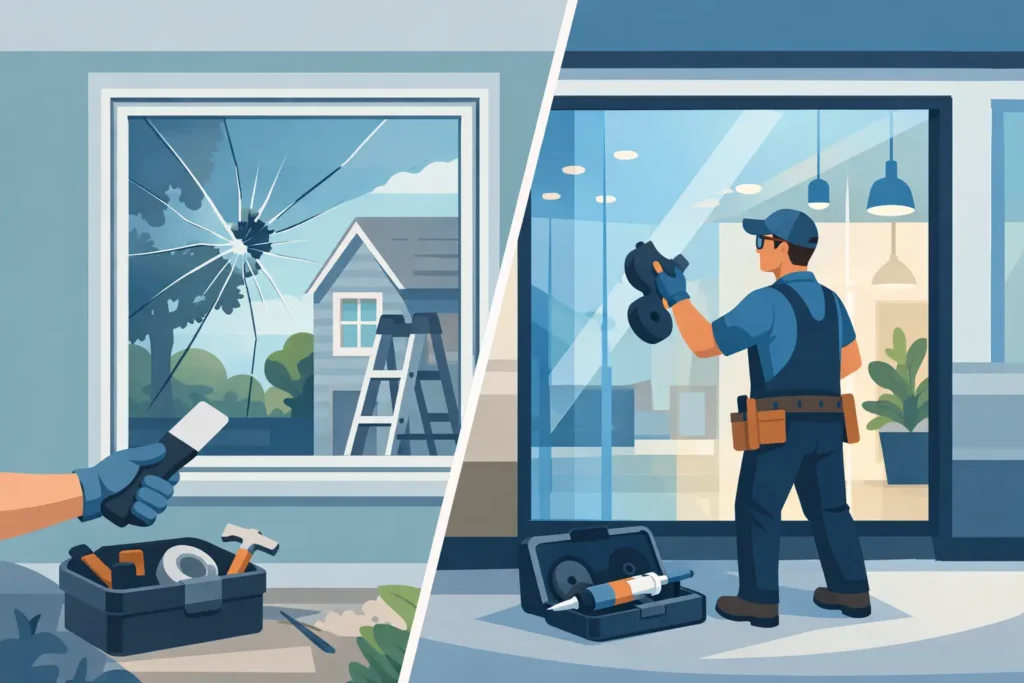
A cracked pane before a storm, cloudy glass blocking a view, or a window that will not lock is more than an inconvenience. The question of repair versus replace windows comes down to what failed, how far the damage has spread, and whether the opening can still protect your home or business. The right decision can restore safety quickly without paying for work you do not need. The wrong delay can leave your property exposed to weather, intruders, moisture, and rising energy costs.
For many DMV property owners, a targeted glass repair is the fastest, most cost-effective answer. In other cases, replacing the full window is the smarter long-term investment. Here is how to tell the difference.
When Window Repair Is the Right Move
Window repair makes sense when the problem is limited to the glass, hardware, seal, or a small part of an otherwise sound window. If the frame is stable, the sash operates correctly, and there is no major water damage, there is often no reason to remove the entire unit.
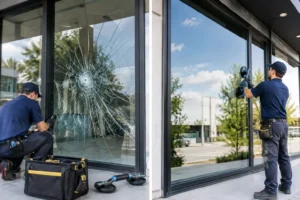
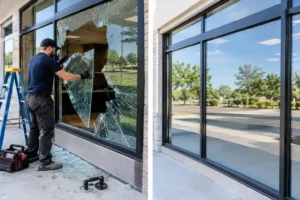
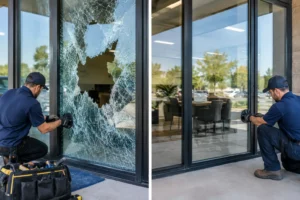
A single crack or broken pane is the clearest example. Broken glass needs prompt attention because sharp edges and an unsecured opening create immediate safety and security concerns. But a broken pane does not automatically mean a new window. A glazing professional can often replace the damaged glass, restore the seal, and leave the existing frame in place.
Foggy double-pane windows are another common repair situation. When condensation appears between panes, the insulated glass unit has lost its seal. The haze will not wipe off from either side because the moisture is trapped inside. If the window frame and sash are in good condition, replacing the insulated glass unit can restore clarity and insulating performance without the cost and disruption of a complete window replacement.
Repair may also be the practical choice when a window sticks, will not stay open, rattles, or does not lock. Worn balances, damaged locks, loose glazing, and minor alignment issues can often be corrected. These are small problems until they compromise security or make an emergency exit difficult to use.
Signs You Should Replace the Entire Window
Full replacement is usually warranted when damage affects the window’s structure, not just the glass. A new pane cannot correct a frame that is rotting, warped, severely corroded, or pulling away from the wall.
Wood rot is a serious warning sign. Soft areas, flaking paint, persistent moisture stains, or crumbling sections around the sill can mean water has entered the frame or surrounding wall. Covering the damage with a new pane may make the window look better briefly, but the underlying problem can continue spreading.
Replacement is also worth considering when windows are consistently drafty despite intact glass and weatherstripping. Older single-pane units, poorly fitting sashes, or frames that have shifted out of square can allow conditioned air to escape. In a DC-area summer or winter, that loss can be felt in uncomfortable rooms and higher utility bills.
Windows nearing the end of their useful life often show several problems at once: failed seals, difficult operation, recurring leaks, decaying frames, and damaged screens or hardware. Repairing each item individually can become a cycle of service calls. A well-selected replacement window may offer better performance, a tighter seal, updated safety features, and a product warranty.
Repair Versus Replace Windows: Start With the Frame
The frame is the deciding factor in many repair versus replace windows decisions. Glass can be replaced with precision. A failed insulated glass unit can often be changed. Hardware can be repaired. But when the frame has lost structural integrity, repair options become limited.
During an assessment, look for visible cracks in vinyl, rust or distortion in metal, rot in wood, and gaps where the frame meets the exterior wall. Open and close the window slowly. Does it bind, sag, or refuse to lock? Check for water staining on the interior trim and peeling paint around the sill. These clues help identify whether the problem is contained or part of a larger moisture or structural issue.
The age of the window matters, but age alone is not a replacement verdict. A well-maintained older window with a failed seal may be an excellent candidate for glass replacement. A newer window that has warped, leaked repeatedly, or sustained significant impact damage may require a more extensive solution.
Consider Safety and Security Before Cost
The least expensive option is not always the best value. If glass is shattered, a lock is broken, or a storefront opening is unsecured, safety comes first. Do not leave broken glass taped over, covered with cardboard, or exposed overnight if you can avoid it. Temporary measures may keep out some weather, but they do not provide reliable security or a lasting seal.
For homes, damaged windows can create risks for children, pets, and anyone moving near the opening. For retail spaces, offices, and multifamily properties, unsecured glass can disrupt operations and make a poor impression on tenants or customers. Emergency board-up or same-day glass service can protect the property while the correct glass or replacement unit is prepared.
Quick Glass Repairs provides 24/7 emergency response for urgent residential and commercial glass problems, with licensed and insured workmanship and clear updates throughout the process. A professional evaluation can separate an urgent safety repair from a larger replacement project, so you can act quickly without guessing.
Energy Efficiency Is a Long-Term Calculation
A fogged window is not only a cosmetic issue. It often signals a failed insulated glass seal, which reduces the window’s ability to slow heat transfer. Replacing that insulated unit may restore much of the window’s performance when the frame remains sound.
Complete replacement becomes more appealing when several windows are inefficient, when old units are single-pane, or when drafts persist around aging frames. Modern replacement options can improve insulation, reduce outside noise, and help maintain more even indoor temperatures. Still, replacing every window is not automatically necessary because one pane fogged or cracked.
Think about the location and function of the window. A failed seal in a rarely used basement room may not carry the same urgency as a damaged bedroom window, an entry-side window with a broken lock, or a large storefront panel. A qualified glazing contractor can explain which repairs will make a meaningful difference and which upgrades can be planned over time.
Match the Solution to the Property
Homeowners often want to preserve the appearance of existing windows, especially in older homes, condos, or townhomes with consistent exterior styles. Glass-only replacement can retain the original frame profile while correcting a broken pane or cloudy insulated unit. It can also be less disruptive than full replacement.
Property managers may prioritize repeatable solutions, tenant safety, and quick scheduling. Repairing isolated glass failures promptly can prevent small issues from becoming vacancy, security, or water-intrusion problems. When several units share the same aging windows and recurring failures, planning a phased replacement can make budgeting and access easier.
Commercial owners have another consideration: downtime. A damaged glass door, office window, or storefront panel needs to be secured quickly, but the final solution should also match the building’s use, code requirements, and appearance. In some cases, replacing only the damaged glass keeps the business operating. In others, an outdated or weakened system calls for replacement to avoid repeated disruption.
What a Professional Assessment Should Cover
A reliable recommendation should not be based on a quick glance at the crack. The technician should inspect the glass, frame, sash, seals, locks, weatherstripping, and visible signs of water intrusion. They should explain whether the problem can be isolated to a pane or insulated glass unit, or whether the window assembly itself has failed.
Ask for the reasoning behind the recommendation. If repair is possible, ask what the repair includes and whether it restores security and weather resistance. If replacement is recommended, ask which part needs replacement: the glass, sash, or complete window. Clear scope, accurate measurements, warranty information, and a free estimate help you compare options fairly.
Do not wait for a small crack to become a broken opening or for a slow leak to damage trim and drywall. Secure the area, keep people away from damaged glass, and arrange an inspection as soon as possible. A fast, precise repair can protect the window you already have. When replacement is the better answer, making that call early can protect the rest of the property too.