

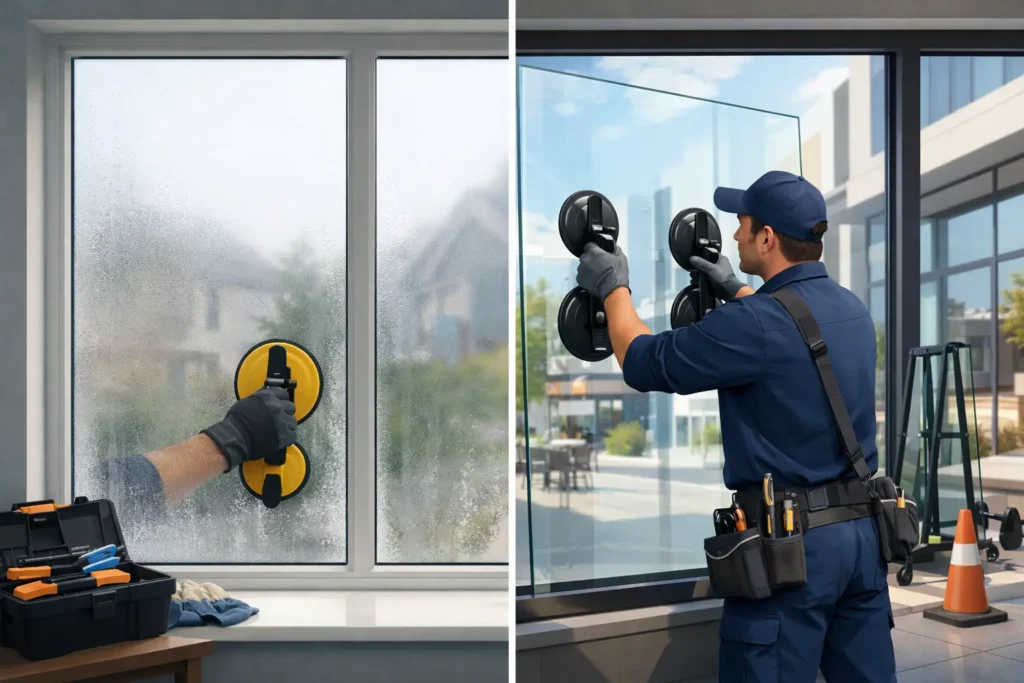
A clear window can turn hazy overnight, especially after a cold DMV morning or a steamy shower. If you are asking why windows fog, the location of that moisture tells the real story. Condensation on the room side often points to indoor humidity. Fog trapped between double-pane glass usually means the insulated window seal has failed and the glass unit needs professional attention.
The difference matters. One kind of fog may clear with better ventilation; the other will not. Knowing which you have helps protect comfort, energy efficiency, and the appearance of your home or property without paying for work you do not need.
Why windows fog: condensation meets cold glass
Fog forms when warm, moisture-filled air touches a cooler glass surface and drops below its dew point. The water vapor in the air changes into tiny droplets, creating the familiar cloudy look.
In winter, heated indoor air carries moisture from cooking, showers, laundry, houseplants, and everyday living. When that warm air reaches a cold windowpane, condensation can form on the interior surface. In summer, the reverse can happen: humid outdoor air can condense on a cool exterior pane when air conditioning lowers the glass temperature.
That basic physics does not automatically mean your windows are defective. Where the fog appears is what separates a normal weather-related condition from a repair issue.
Fog on the inside of the glass
Moisture on the side of the glass you can touch from indoors is usually interior condensation. It is common during sharp temperature changes, but repeated or heavy condensation deserves attention. Water running down the glass can soak wood trim, stain drywall, encourage mold growth, and eventually damage window components.
A brief film that disappears after the sun comes up or after you run a bathroom exhaust fan is typically manageable. Persistent moisture, dripping water, or condensation across several rooms means the indoor humidity level may be too high for the outdoor temperature or your home may have limited airflow near the windows.
Start with practical changes. Use bathroom fans during showers and for a while afterward. Run the kitchen exhaust fan when boiling water or cooking. Make sure supply vents are open and furniture, heavy curtains, or closed blinds are not blocking warm air from reaching the glass. A properly sized dehumidifier can help in basements, bedrooms, and other damp areas.
There is a trade-off. Indoor air that is too dry can be uncomfortable and may affect wood floors or furnishings, while air that is too humid creates condensation risk. The right level depends on outdoor conditions, your home’s insulation, and the performance of the windows.
Fog on the outside of the glass
Exterior fog can look alarming, but it is often a sign that the window is insulating well. High-performance double-pane or triple-pane windows keep indoor heat from reaching the outer glass. On cool, humid mornings, that exterior surface may become cold enough for outdoor moisture to condense on it.
This type of fog normally clears as the temperature rises. It does not indicate a broken seal because the moisture is on the outside surface, where you can wipe it away from outdoors. Unless it remains unusually long or is paired with visible damage, exterior condensation generally requires no repair.
Fog between window panes means a failed seal
If the cloudiness is trapped between panes and cannot be wiped off from either side, the insulated glass unit has likely lost its seal. Double-pane windows are built with two pieces of glass separated by a sealed space. That space may contain dry air or insulating gas, and a desiccant material inside the edge seal helps absorb trace moisture.
Over time, seals can deteriorate. Age, direct sun exposure, major temperature swings, poor installation, shifting frames, and physical impact can all contribute. Once outside air enters the space between panes, moisture can overwhelm the desiccant and leave behind fog, droplets, or mineral deposits.
A failed seal is not the same as broken glass, but it should not be ignored. The window loses part of its insulating value, the view stays cloudy, and moisture may continue to affect the unit. In a home that relies heavily on heating and cooling, several failed units can add to energy loss and make rooms less comfortable near the glass.
Signs the insulated glass unit has failed
Fog between panes is the clearest sign, but the appearance can vary. You may see a white haze around the edges, beads of moisture that come and go, or a rainbow-like film that never fully clears. On older units, permanent streaks or residue may remain even during dry weather.
Check the window at different times of day before assuming it is an interior humidity issue. If the haze remains in the enclosed space regardless of weather and cleaning does nothing, it is time to schedule an assessment.
Can a fogged window be repaired without replacing the whole window?
Often, yes. In many cases, a glazing professional can replace the failed insulated glass unit while keeping the existing frame, sash, and surrounding trim. This is usually the most efficient option when the frame is structurally sound, opens and locks properly, and matches the rest of the property.
Replacing only the glass unit can restore a clear view and improve insulation without the disruption of a full window replacement. It is especially useful for newer windows, condo units, commercial properties, and custom-sized openings where preserving the existing frame makes sense.
Full window replacement may be the better investment when there is rotted wood, warped framing, water intrusion around the opening, damaged hardware, repeated seal failures, or poor overall window performance. A technician should inspect the entire assembly rather than treating every fogged pane as the same problem.
Be cautious about temporary defogging services that drill into the glass. Some methods may improve the appearance for a period, but they do not recreate the original factory-sealed insulating space. If energy performance, clarity, and a durable result matter, replacing the insulated glass unit is usually the more dependable repair.
When fogged windows need fast attention
Most seal failures can be scheduled rather than treated as a middle-of-the-night emergency. Still, fast action is wise when fogging comes with cracked glass, a loose pane, water entering the wall or sill, damaged frames, or a window that no longer closes or locks securely.
For landlords and property managers, a fogged or damaged window can also become a tenant comfort and maintenance issue quickly. A cloudy pane in a storefront, office, or common area affects appearance, while an active leak can create larger repair costs if delayed.
Quick Glass Repairs can inspect fogged insulated glass units and provide a clear recommendation for glass-only replacement or a broader window repair. Licensed and insured technicians focus on precise fit, clean installation, responsive updates, and workmanship backed by warranty protection.
Preventing repeat window condensation
You cannot eliminate condensation in every season, but you can reduce the conditions that cause it. Keep indoor humidity appropriate for the weather, vent moisture at its source, and allow air to circulate across window surfaces. During cold spells, opening blinds or shades slightly can help warm room air reach the glass, though privacy and heat loss considerations may affect what works best in each room.
Also inspect caulking, weatherstripping, and drainage around windows. These parts do not usually cause fog between panes, but they do affect drafts, water management, and how well the full window system performs. If you notice peeling paint, soft trim, staining, or recurring dampness around a window, address it before a small moisture problem spreads.
A fogged window is frustrating because it hides the view and raises questions about what is happening behind the glass. Start by locating the moisture. If it is between panes, do not keep wiping and waiting for it to disappear – a professional glass inspection can give you a direct path back to a clear, comfortable, properly performing window.