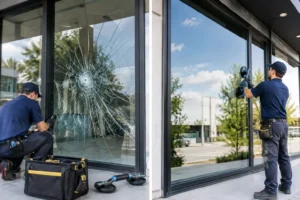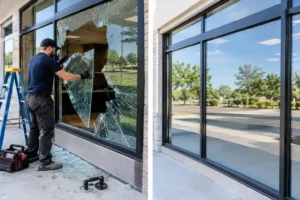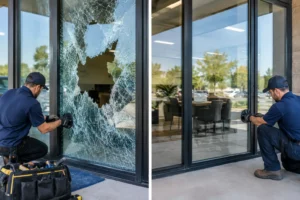


A broken window changes the safety of a property in seconds. Whether a baseball cracked a bedroom pane, a storm damaged a storefront, or an attempted break-in shattered glass near an entry door, the priority is to control the opening without creating another injury. Knowing how to secure broken windows gives you a safer temporary barrier while a qualified glass professional prepares the permanent repair.
Do not treat exposed glass as a project that can wait until the weekend. In the DMV, rain, wind, cold air, insects, and unauthorized access can turn a single broken pane into water damage, higher energy costs, or a more serious security problem.
Start by making the area safe
Keep children, pets, customers, and employees away from the window. Broken glass can travel farther than expected, especially when a window breaks under pressure or a door is slammed nearby. Block off the immediate area and avoid leaning through the opening to inspect damage from outside.
Put on closed-toe shoes, heavy work gloves, and eye protection before getting close. If glass is still loose in the frame, do not tap it, push on it, or try to pull large pieces free with your hands. A cracked pane can release suddenly, and sharp fragments often remain hidden in the frame, sash, sill, carpet, or landscaping.
If the break occurred because of a break-in, preserve the scene first. Avoid cleaning up or touching the damaged area until law enforcement has documented it, if a report is needed. Take clear photos from a safe distance for your insurance claim and for the glass repair estimate.
For a commercial property, place cones, caution tape, or a physical barrier several feet from the opening. A damaged storefront window is both a liability issue and an invitation for additional damage after business hours. Move merchandise, electronics, and sensitive records away from the area if it can be done safely.
How to secure broken windows immediately
The best temporary method depends on the size of the opening, the type of window, current weather, and whether the location must remain secure overnight. The goal is not to create a permanent fix. It is to stop access, reduce weather exposure, and keep loose glass from falling until proper glazing can be installed.
For a small crack with glass still intact
A small crack may look stable, but glass can spread or fail with temperature changes, vibration, or a closing door. Keep the window shut and avoid locking a sash that requires force. If the pane is intact and dry, clear packing tape applied in a crisscross pattern can help hold fragments together temporarily. Tape both sides only if you can reach them safely without stretching outside the opening.
This is a short-term containment measure, not a repair. Tape does not restore the strength, insulation, or security of the glass. It is especially unreliable on double-pane windows, tempered glass, and panes with wide cracks radiating toward the frame.
For a hole or missing section of glass
If there is an opening in the pane, cover it from the inside whenever possible. Heavy-duty plastic sheeting can limit drafts and rain intrusion, while a rigid panel such as plywood can provide better security. Choose a panel that extends beyond the broken area and can be fastened to solid framing, not merely to fragile window trim.
Do not nail directly through a vinyl frame, aluminum frame, or insulated glass edge. This can damage the window system further and make the final repair more expensive. For ground-level windows, entry doors, and accessible commercial glass, a professionally installed emergency board-up is usually the safer choice because it can be secured correctly without harming the surrounding frame.
If you use plastic, pull it taut enough to reduce flapping in the wind, but do not rely on plastic as a security barrier. It is appropriate for temporary weather protection when the property is occupied and monitored. It is not enough for a vacant unit, street-facing storefront, or window that provides easy access to the building.
For a shattered double-pane or tempered window
Many modern windows use insulated glass units with two panes separated by a sealed air space. A broken outer pane can leave the inner pane in place, but the unit is no longer weather-tight or energy efficient. Do not assume the intact layer makes the window safe. The remaining pane may be weakened, and moisture can enter the unit or surrounding wall assembly.
Tempered glass breaks into many small pieces rather than long shards. That reduces some cutting risk, but it creates a cleanup challenge. Keep the area blocked off, collect loose pieces with a broom and dustpan, then use a vacuum on nearby floors, tracks, and soft surfaces. Never sweep fragments into a regular open trash bag. Use a rigid container or wrap the glass securely before disposal according to local requirements.
Avoid temporary fixes that create bigger problems
Duct tape, cardboard, and thin garbage bags may look like quick answers, but they are poor protection against wind, rain, and forced entry. Cardboard absorbs moisture and can collapse. Thin plastic tears easily. Tape applied to dirty, wet, or cold surfaces often releases overnight.
It is also risky to remove a sash, disassemble a sliding door, or force a damaged lock into place without glazing experience. Window systems rely on specific stops, glazing beads, seals, and setting blocks. Losing or damaging these components can prevent the replacement glass from fitting correctly.
Never use a piece of household glass, acrylic sheet, or wood cut to the visible opening as a substitute for the required glazing. The correct replacement must match the opening, thickness, safety-glass requirements, and performance needs of the original system. Entry doors, bathroom windows, windows near stairs, and commercial locations may require safety glass. A mismatched material can create code, safety, and insurance issues.
Protect the building from weather and water
Once the opening is covered, check the interior side of the wall, sill, and floor. Place towels or a shallow catch container below the window if rain is expected. Move furniture, inventory, rugs, and electronics out of the splash zone. If water has already entered, dry the area promptly to limit staining, swelling, and mold growth.
Do not seal every gap so tightly that trapped water cannot drain from the exterior track. Sliding windows and doors commonly have weep holes designed to move water outside. Covering or filling those drainage paths can send water back into the building. A glass technician can assess whether the frame, weatherstripping, or track also needs attention after the pane is replaced.
For properties facing a storm, prioritize openings exposed to prevailing wind and rain. A temporary board-up may be necessary even when the broken glass is on an upper floor, because wind-driven rain can enter through surprisingly small gaps.
Call for professional repair without delay
A secure temporary cover buys time, but it does not resolve the underlying damage. Contact a specialized glass company as soon as the area is safe, particularly when the window is near an entrance, a child’s room, a ground-floor living space, or a public-facing business area.
When you call, be ready to describe the window type, approximate size, number of panes, frame material, and whether the glass is cracked, missing, fogged, or fully shattered. Photos taken from a safe distance can help identify the likely repair path. In many cases, the glass can be replaced without replacing the entire window frame. When frames are bent, rotted, or no longer operate correctly, a broader repair or replacement may make more sense.
Quick Glass Repairs provides 24/7 emergency response and same-day repair availability for homes and commercial properties across Alexandria, Northern Virginia, Washington, DC, and nearby Maryland communities. Licensed and insured technicians can secure the opening, measure precisely, explain the repair options, and complete the work with a warranty-backed solution.
Know when the situation is an emergency
Call for immediate help when the damaged window leaves your property accessible from outside, exposes wiring or electrical equipment to water, involves a glass entry door, or creates a hazard for tenants, employees, or the public. The same is true when a storm is approaching, glass continues falling from the frame, or a storefront cannot safely remain open.
For a minor crack in an upper-level window with no loose glass, scheduling a prompt repair may be sufficient. Even then, do not ignore it. Thermal stress and everyday movement can turn a manageable crack into a full break with little warning.
A broken window does not need to become a long disruption. Secure the area, use only a temporary barrier you can install safely, and arrange qualified repair before weather, moisture, or security concerns gain a foothold.