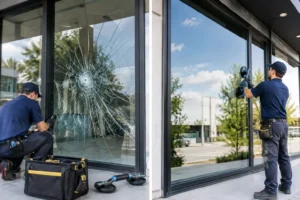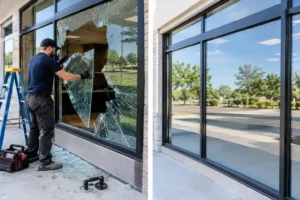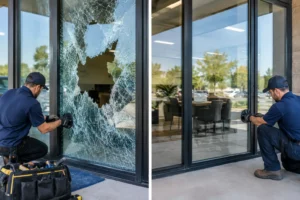


A cracked lobby sidelight, a fogged apartment window, or a storefront door that will not latch can turn into a tenant complaint, a security gap, or a costly after-hours call fast. This property manager glazing checklist helps you identify glass problems while they are still manageable, prioritize urgent work, and document what needs professional repair.
For multifamily, office, retail, and mixed-use properties across the DMV, glazing is not just an appearance item. It affects occupant safety, building access, weather protection, energy use, and how well your property presents to residents, visitors, and prospective tenants.
Start With the Highest-Risk Glass Areas
Walk the property from the outside in. Begin with entrance doors, ground-floor windows, storefronts, common-area glass, and any locations accessible from sidewalks, parking areas, stairwells, or loading zones. These areas carry the greatest security and liability exposure.
Look for cracked, chipped, shattered, or missing glass. Even a small crack can spread with temperature changes, door vibration, or impact. Broken glass should be treated as an immediate safety issue, especially near entries, walkways, playgrounds, or areas used by children and pets. Secure the opening promptly and arrange replacement rather than relying on temporary tape or boards longer than necessary.
Also check whether the glass type matches the location. Doors, sidelights, low windows near walking surfaces, shower enclosures, and other impact-prone areas may require safety glass. Tempered glass is designed to break into small pieces, while laminated glass can help hold fragments together after impact. The right choice depends on the opening, building code requirements, and the level of security needed.
Property Manager Glazing Checklist: Windows and Seals
Windows rarely fail all at once. More often, the warning signs appear gradually: interior condensation, a milky haze between panes, drafts, water stains, or residents reporting rooms that are too hot or too cold.
Check insulated glass units for seal failure
Fog or moisture between double-pane glass usually means the insulated glass unit seal has failed. Cleaning the interior or exterior surface will not fix it because the moisture is trapped between panes. In many cases, the frame can remain in place and the failed glass unit can be replaced, which may be faster and less disruptive than replacing the entire window.
During inspections, note which windows are fogged, how severe the haze is, and whether it affects tenant views, leasing appeal, or daylight. Repeated seal failures on one elevation may point to prolonged sun exposure, aging units, drainage problems, or installation issues.
Look for drafts, water intrusion, and frame movement
Run a visual check around frames for gaps in caulk, damaged glazing compound, loose trim, warped frames, and staining on drywall or sills. After heavy rain, ask maintenance staff and residents whether they have noticed drips, damp carpet, peeling paint, or musty odors near windows.
Not every draft means the glass itself is the problem. Weatherstripping, frame condition, drainage paths, and wall flashing can all be factors. Still, documenting the symptom and location gives a glazing professional a useful starting point and helps prevent a small leak from becoming mold, rot, or interior damage.
Test operation where windows are designed to open
For operable windows, confirm that locks engage, sashes open and close without excessive force, and egress windows are not painted shut or blocked by failed hardware. A window that will not lock is a security concern. A designated egress window that will not open can become a life-safety concern.
Avoid forcing stiff windows. Excessive force can break glass, damage balances, or pull a frame out of alignment. Schedule service when operation begins to deteriorate rather than waiting for a complete failure.
Inspect Glass Doors at Every Entry Point
Glass doors receive more daily wear than almost any other glazing feature. Apartment building entries, office doors, patio sliders, retail entrances, and pool-area doors need a separate check because their condition affects both access and safety.
Inspect door glass for chips at corners and edges, cracks around hardware cutouts, loose gaskets, and movement within the frame. Pay close attention to door closers, pivots, hinges, handles, and panic hardware. A door can have intact glass but still create a security issue if it drags, does not self-close, fails to latch, or leaves a visible gap at the edge.
Sliding glass doors deserve a functional test. Check that they glide without grinding, lock securely, stay on their track, and have no damaged rollers or bent frames. A sliding door that is hard to operate often gets slammed by occupants, which can damage the glass, track, or locking system further.
For commercial entrances, inspect during normal traffic periods when possible. Problems that are not obvious in a quiet walkthrough, such as a door bouncing open in wind or sticking after repeated use, are easier to catch when the building is active.
Review Common Areas, Amenities, and Specialty Glass
Do not limit inspections to exterior windows. Common areas often contain the glass features that generate the most visible complaints and liability concerns.
Check mirrors in gyms, elevators, restrooms, and hallways for cracked corners, black edge deterioration, loose mounting, and sharp exposed edges. Inspect shower doors in amenity spaces or furnished units for door alignment, hinge movement, missing sweeps, and chips near handles. Frameless glass needs precise hardware adjustment. A loose hinge or shifted panel should be addressed before it creates stress on the glass.
For stair rails, balcony glass, partitions, and pool enclosures, look for loose clamps, damaged gaskets, shifting panels, and cracks at fastener points. These systems may look simple, but their performance depends on correctly matched hardware, glass thickness, and installation details. Do not ask general maintenance staff to drill, cut, or alter tempered glass in the field. Once tempered glass is manufactured, it cannot be cut or drilled safely.
Document Conditions So Repairs Move Faster
A clear record prevents delays when a resident calls, an owner asks for an update, or a repair needs approval. For each issue, record the building, unit or exact location, glass type if known, approximate dimensions, visible damage, urgency level, and whether the opening is secure.
Photos are especially useful. Take one wide photo that shows the location and one close photo of the damage, hardware, or failed seal. For broken panes, photograph any visible markings in a corner of the glass before cleanup if it is safe to do so. These markings can help identify safety glass or manufacturer information.
Use three practical priority levels:
- Emergency: Broken or missing glass, an unsecured entrance, sharp exposed edges, failed storefront protection, or a glass condition creating an immediate hazard.
- Urgent: A door that will not latch or lock, an active leak, a cracked pane that is spreading, or an egress window that cannot operate.
- Planned: Fogged insulated glass, minor chips outside high-impact areas, cosmetic scratches, aging sealant, or hardware that still works but shows wear.
The priority can change quickly. A fogged window may be planned work, but it becomes more urgent if the associated frame is leaking or a resident reports worsening interior moisture.
Plan Around Occupancy, Weather, and Access
The best repair method depends on the opening and the property’s operating needs. Replacing a failed insulated glass unit may preserve a sound frame and limit disruption. A damaged frame, recurring water intrusion, or outdated system may justify a broader replacement. For commercial doors, temporary securing may be needed while custom glass or hardware is ordered.
Give residents and tenants clear notice about access windows, noise, safety precautions, and whether furniture or window coverings need to be moved. For occupied units, respectful scheduling matters as much as the repair itself. For retail and office properties, coordinate work around customer traffic and business hours whenever possible.
Keep seasonal timing in mind. Before summer, focus on failed seals, solar heat exposure, and cooling loss. Before winter, address drafts, loose weatherstripping, and water intrusion. After major storms or vandalism incidents, inspect vulnerable ground-level openings immediately rather than waiting for the next routine walk-through.
When to Call a Glazing Specialist
Call for professional help when glass is broken, door hardware is affecting secure closure, moisture is trapped between panes, a frame is leaking, or specialty glass systems show movement. These problems often need measurements, proper glass selection, safe removal, and precise installation. A rushed patch can create a larger expense later.
Quick Glass Repairs provides licensed and insured glazing service for property managers throughout Alexandria, Northern Virginia, Washington, DC, and nearby Maryland communities, including emergency response when damaged glass cannot wait. Clear communication, a free estimate, and a properly secured opening make it easier to protect residents and keep your property moving.
A regular inspection takes less time than coordinating a preventable emergency. Keep this checklist with your maintenance records, act quickly on safety and security issues, and treat early warning signs as a chance to protect both the building and the people who rely on it.