
A shower door can look like a minor bathroom problem until it shatters, leaks into the wall, or comes off its track while someone is using it. If you are asking when to replace a shower door, start with safety. Cracked glass, loose hardware, and water escaping the enclosure are not issues to watch for another few months. They can damage your bathroom, create slip hazards, and turn a manageable repair into a larger renovation.
A professional glass inspection can tell you whether the problem is limited to a replaceable part or whether the enclosure itself has reached the end of its service life. The right answer depends on the glass condition, hardware, shower design, and how long the system has been leaking or binding.
When to Replace a Shower Door Instead of Repairing It
Some shower door problems can be repaired quickly. A worn sweep, a missing bottom seal, or a misaligned roller may only require an adjustment or replacement hardware. Replacement becomes the smarter choice when the door is no longer safe, dependable, or compatible with the way your bathroom is used.
1. The Glass Is Cracked, Chipped, or Scratched Deeply
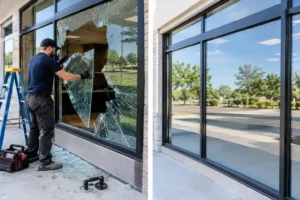
Shower doors are generally made with tempered safety glass. It is designed to break into small pieces rather than dangerous, long shards, but it can still fail suddenly after damage. A chip near an edge, a crack spreading across a panel, or a deep scratch can weaken the glass and create an unpredictable safety risk.
Do not tape over cracked shower glass or keep using the door carefully. Pressure from opening and closing, a change in bathroom temperature, or a light impact can cause damaged tempered glass to shatter. Keep people away from the enclosure and arrange professional service promptly.
2. The Door Is Loose, Dragging, or Falling Off Track
A sliding shower door that jumps its track, drags along the bottom, or takes force to close needs attention. The issue may be worn rollers, a bent track, loose wall anchors, or a frame that has shifted over time. In some cases, a technician can replace the rollers and realign the door.
Replacement is often the better call if the track is damaged, the glass no longer sits securely in the frame, or replacement parts for an older enclosure are unavailable. A door that can detach is not just inconvenient. It can injure someone and damage nearby tile, flooring, or fixtures.
3. Water Leaks Beyond the Shower Enclosure
A few drops on the curb after a shower are one thing. Water consistently reaching the bathroom floor, baseboards, vanity, or drywall is another. Replacing a bottom sweep or side seal may stop a minor leak, especially if the glass and hardware are otherwise in good condition.
But persistent leaks can point to a bigger problem: an incorrectly sized door, a warped frame, failing wall connections, poor shower slope, or an enclosure that was never properly installed. Water can move behind tile and into framing long before you see visible stains. If seals have been replaced repeatedly and the door still leaks, replacing the enclosure may protect the bathroom from more expensive moisture damage.
4. Rust and Corrosion Are Affecting the Hardware
Bathroom humidity is hard on metal hardware. Surface discoloration may be cosmetic, but rusted hinges, corroded fasteners, pitted tracks, and weakened handles deserve a closer look. Corrosion can reduce the hardware’s ability to hold heavy glass safely.
If the glass panel is sound and compatible replacement hardware is available, targeted repair can make sense. If corrosion has spread through multiple components, the enclosure is likely due for replacement. Installing a new door with quality hinges, properly secured mounting points, and hardware suited to a wet environment is a safer long-term investment.
5. The Door No Longer Closes or Seals Correctly
A shower door should close smoothly and align consistently with its seal. Gaps around the edge, a magnet that no longer catches, or a door that swings into the wrong position can let water escape and strain the hinges every day.
Sometimes alignment is the answer. However, doors that have been adjusted several times without lasting improvement may have worn hardware, distorted framing, or installation issues that adjustments cannot solve. Replacement gives you a chance to correct the enclosure layout rather than continuing to fight the same problem.
6. The Frame Is Deteriorated or the Style Is Outdated
A heavily framed shower door with cloudy tracks, stained caulk, and aging metal can make an otherwise clean bathroom feel neglected. Appearance alone is a valid reason to upgrade, particularly before selling a home, turning over a rental unit, or finishing a bathroom remodel.
A frameless or semi-frameless shower enclosure can create a more open look and make cleaning easier because there are fewer channels that trap moisture and soap residue. Still, frameless glass is not automatically right for every shower. It requires sound, properly prepared walls and accurate measurements. A professional can help determine whether your existing tile, curb, and wall structure can support the design you want.
7. Cleaning Never Restores a Clear, Clean Look
Cloudiness is not always on the glass. Mineral buildup, soap film, failing seals, and trapped grime in old tracks can make a shower enclosure look permanently dirty. A deep cleaning may improve surface deposits, while new sweeps and seals can refresh a serviceable door.
When stains are etched into the glass, the frame has deteriorated, or mildew keeps returning in hard-to-reach channels, replacement may be more practical than continual cleaning. New glass and updated hardware can make the shower easier to maintain from day one.
8. Your Household Needs Have Changed
A shower door should fit the people using it. A narrow opening, high curb, unstable sliding door, or hard-to-grip handle can become a daily problem for older adults, young children, or anyone with limited mobility. A replacement project can improve access with a wider opening, different door configuration, safer handle placement, or a walk-in glass panel.
This is also the time to consider whether a pivot door, bypass slider, fixed panel, or custom enclosure best fits the bathroom footprint. The most attractive option is not always the most functional one. Clearance for the vanity, toilet, and towel bars matters just as much as the appearance of the glass.
Repair or Replacement: Make the Cost Decision Carefully
The cheapest immediate option is not always the lowest-cost solution. Replacing a sweep or roller is sensible when it restores safe, reliable operation. Repeated service calls for leaks, loose hardware, and failing parts can cost more over time than installing a properly fitted replacement door.
Consider the age of the enclosure, the availability of matching parts, and whether the bathroom has signs of water damage. If you are already replacing tile, a shower pan, or a vanity, handling the shower glass at the same time can prevent fit problems later. Custom glass should be measured only after the finished shower surfaces are complete, because even small changes in tile thickness or wall alignment affect the fit.
What to Do With a Broken Shower Door
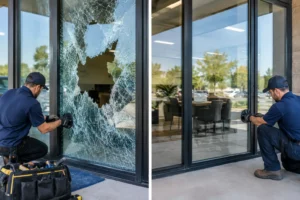
If the glass has shattered or a panel is visibly unstable, keep children, pets, tenants, and customers away from the area. Wear shoes, avoid touching loose pieces, and do not try to remove a heavy glass panel without the right tools and protection. If possible, close the bathroom door and place a clear warning nearby.
For property managers and homeowners in the DC, Northern Virginia, and Maryland area, Quick Glass Repairs can assess damaged shower glass, hardware, tracks, and seals, then recommend a repair or replacement based on the actual condition of the enclosure. Licensed and insured glass specialists can provide precise measurements, safe removal, professional installation, and warranty-backed work.
A shower door should open easily, contain water, and feel secure every time it moves. If yours does not, act before a small bathroom annoyance becomes broken glass or hidden water damage.