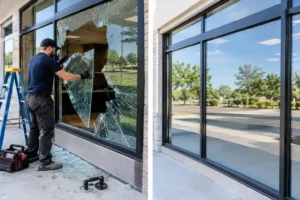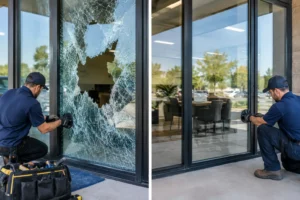


A shower door that scrapes the tile, leaks across the bathroom floor, or suddenly refuses to close is more than a daily annoyance. Loose hardware and stressed glass can turn a normal shower into a slip hazard or, in severe cases, a broken-glass emergency. Fast shower door repair protects your bathroom, prevents water damage, and restores the safe operation your household depends on.
The right response depends on what failed. A worn sweep may be a straightforward repair. A cracked tempered-glass panel, corroded hinge, or door that has dropped out of alignment needs prompt professional attention. Knowing the difference helps homeowners and property managers act before a small problem becomes a larger replacement project.
Signs Your Shower Door Needs Repair Now
Some shower door issues should not wait for a convenient weekend. Stop using the enclosure and arrange service as soon as possible if you see a crack, chip, or sharp edge in the glass. Tempered shower glass is designed to break into small pieces rather than long shards, but it can fail suddenly after being damaged or placed under stress.
A door that drags heavily, swings on its own, or will not stay closed also deserves quick attention. On frameless doors, hinges carry substantial weight. When screws loosen, mounting plates shift, or the door settles out of plumb, the glass can bind against the wall, curb, or adjacent panel. Forcing it shut may worsen the damage.
Water leaking beyond the shower curb is another concern. A few drops after use may be normal, particularly with certain frameless designs. A growing puddle, damp baseboards, stained ceiling below the bathroom, or soft flooring is not. Repeated moisture exposure can damage drywall, subflooring, trim, and nearby cabinetry long before the leak becomes obvious.
Call for immediate help if glass has shattered, a panel is unstable, or hardware has pulled away from the wall. Keep children and pets away from the area. Do not sweep broken tempered glass with bare hands, and do not tape a cracked shower panel as a long-term fix. Quick Glass Repairs provides responsive service throughout the DMV, including emergency help when damaged glass creates an urgent safety issue.
Common Shower Door Repair Problems
Most shower enclosures fail at the moving parts, seals, or mounting points rather than the glass itself. Identifying the symptom gives a glass professional a useful starting point and helps set expectations for the repair.
Door leaks at the bottom or sides
A leaking door may need a new bottom sweep, vinyl seal, drip rail, or properly adjusted hinges. These parts direct water back into the shower, but they wear down, crack, discolor, or lose their shape over time. Soap residue and mineral buildup can also prevent a seal from sitting correctly.
The trade-off is that a new sweep will not fix every leak. If the shower curb slopes outward, the enclosure was installed out of level, or water is spraying directly at a door gap, the solution may require adjustment or a different sealing approach. A professional should inspect the full water path instead of replacing one part and hoping for the best.
Sliding doors that stick, scrape, or jump the track
Sliding shower doors rely on rollers, guides, tracks, and carefully positioned panels. Dirt in the track can create resistance, but damaged rollers, bent metal, missing guides, or loose fasteners can make the door unsafe to operate. A door that jumps the track should not be repeatedly lifted and forced back into place.
In many cases, the track and glass can stay while rollers, guides, and related hardware are repaired or replaced. If corrosion has weakened the track or compatible parts are no longer available, replacement of the enclosure may be the more reliable option.
Frameless door hinges that sag or bind
Frameless glass has a clean look, but it depends on precise measurements and hardware alignment. When a hinge loosens or wears out, a heavy glass door can sag just enough to rub the curb or strike a fixed panel. That contact puts unnecessary stress on the glass edge.
A qualified technician can inspect the hinge condition, glass-to-glass clearances, wall anchoring, and door alignment. Sometimes a careful adjustment and new hardware solve the problem. If the hinge mounting area is damaged, the glass has chips near a cutout, or the wall backing is compromised, the repair needs a broader approach.
Loose handles, clips, or brackets
A handle that wiggles may seem minor, but it can indicate worn gaskets, loose fasteners, or hardware that is no longer gripping the glass correctly. The same applies to fixed-panel clips and support bars. Do not overtighten hardware yourself. Glass can crack when pressure is uneven or a screw is tightened beyond the manufacturer’s limits.
When Shower Door Repair Is Better Than Replacement
Repair is often the practical choice when the glass is intact, the enclosure fits the space well, and the problem is limited to serviceable hardware or seals. Replacing rollers, sweeps, handles, hinges, guides, or damaged vinyl can extend the life of a quality enclosure without the cost and disruption of a full replacement.
Repair also makes sense for rental units and multifamily properties where consistent maintenance matters. Addressing a slow leak or failing slider quickly can prevent complaints, protect finished bathrooms, and avoid taking a unit out of service for more extensive work.
Replacement becomes the safer value when glass is cracked, panels no longer align correctly, metal framing is deeply corroded, or the door system uses obsolete hardware that cannot be matched. It may also be the right time to replace an enclosure that is undersized, difficult to clean, or poorly designed for the shower’s layout.
For homeowners planning a bathroom update, replacement can offer a better long-term result. A properly fitted frameless enclosure can improve access, reduce visual clutter, and provide a cleaner finish. Still, frameless glass is not automatically the best choice for every bathroom. The wall structure, curb condition, shower dimensions, budget, and desired water containment all matter.
Why DIY Adjustments Can Create Bigger Problems
There are safe maintenance tasks a homeowner can handle, such as cleaning tracks with a nonabrasive cleaner, removing mineral deposits according to the hardware manufacturer’s instructions, and checking whether a visible sweep is dirty or torn. Beyond that, shower door work becomes more technical than it appears.
Shower glass is heavy, especially in frameless enclosures. It is also vulnerable at the edges and around drilled holes or hinge cutouts. Removing a door without proper support can chip the glass, strain a hinge, damage tile, or cause the panel to fall. Drilling into tile or changing hinge positions without understanding the backing behind the wall can create leaks or weak mounting points.
A professional glass technician evaluates the whole system: glass condition, hardware compatibility, door weight, anchor points, alignment, seals, and surrounding surfaces. That diagnostic step matters because the visible symptom is not always the root cause.
What to Expect From Professional Service
A good shower door repair visit begins with clear information. When requesting an estimate, describe whether the door is hinged or sliding, framed or frameless, and whether glass is damaged. Photos can help identify hardware and determine whether a same-day repair may be possible.
During the inspection, the technician should explain what failed, whether the glass remains safe, and what repair options are available. For a straightforward hardware or seal issue, the work may be completed efficiently once compatible parts are on hand. Custom glass, specialty hinges, or discontinued systems may require measuring and ordering the correct components.
The goal is not just to make the door move again. It is to leave the enclosure aligned, secure, cleanly finished, and ready for normal use. Licensed and insured workmanship, clear scheduling updates, and warranty-backed materials provide peace of mind when a bathroom fixture is being repaired around tile, plumbing, and finished surfaces.
Preventing the Next Shower Door Problem
Routine care can add years to an enclosure. After showering, use a squeegee or soft cloth to remove standing water from the glass and bottom seals. Clean tracks regularly so grit does not wear down rollers or guides. Avoid harsh abrasives, steel wool, and cleaners that can damage protective finishes or cloud vinyl parts.
Pay attention to small changes. A new squeak, a door that needs a little extra force, or water appearing outside the curb is easier to address before the hardware shifts and the glass is stressed. If your shower door no longer feels stable, stop forcing it and have it checked. A prompt repair is often the simplest way to keep a minor bathroom issue from becoming a safety concern.