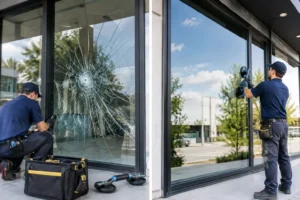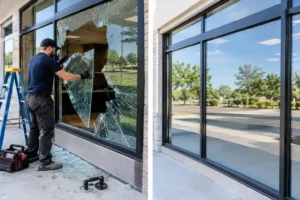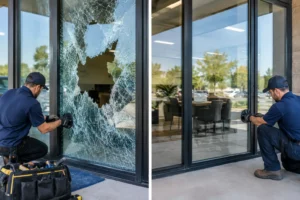


A window can look intact from across the room while quietly losing its job. If you see permanent fog between panes, moisture streaks inside the glass, or a cracked panel in a double-pane window, insulated glass replacement may restore the window without replacing the entire frame. That can mean a faster, more focused repair with less disruption to your home, apartment, office, or commercial property.
For DMV property owners, this is more than a cosmetic concern. Failed or broken insulated glass can reduce comfort near the window, raise heating and cooling demands, affect curb appeal, and leave a property exposed when the damage is severe. The right response depends on what failed, how the window was built, and whether the frame is still in good condition.
What Is an Insulated Glass Unit?
An insulated glass unit, often called an IGU, is the sealed glass package inside a double-pane or triple-pane window. It consists of two or more panes separated by a spacer. The space between panes is sealed at the edges and may contain air or an insulating gas. This construction slows heat transfer and helps reduce condensation compared with a single pane of glass.
The IGU is only one part of the full window. The sash holds the glass unit, while the frame anchors the window opening. That distinction matters because a fogged, broken, or failed IGU does not automatically mean the entire window must be replaced.
When the sash and frame are stable, square, and free of significant rot, corrosion, or warping, a glazing professional can often replace the insulated unit itself. The result is clear glass and restored performance while preserving the existing window structure.
Signs You Need Insulated Glass Replacement
A crack or shattered pane calls for prompt action, especially near an entry, ground-level room, walkway, or active commercial area. Broken glass is a safety and security issue first. Keep people clear of the area and arrange professional service as soon as possible.
Seal failure is less dramatic, but it should not be ignored. The most common sign is fogging or haze between the panes that does not wipe away from either side of the window. You may also notice beads of moisture, mineral-looking streaks, or a cloudy appearance that becomes more noticeable in humid or cold weather.
That moisture is trapped inside the insulated unit because the perimeter seal has failed. Cleaning the room-side glass will not solve it. Drilling the glass or using a temporary defogging service may improve appearance in some cases, but it does not rebuild the original sealed unit or reliably restore its insulating value. Replacing the IGU is typically the lasting repair.
Other warning signs include cold drafts around the glass, increased exterior noise, visible separation at the edge seal, or condensation that repeatedly forms between panes. Condensation on the indoor surface can also point to indoor humidity or air leakage issues, so it is worth having the condition assessed rather than assuming every moisture problem is a failed seal.
Replace the Glass Unit or the Whole Window?
The best answer is not always the biggest project. If only the insulated glass has failed and the surrounding components remain sound, replacing the glass unit is often the practical choice. It preserves a compatible frame, avoids unnecessary construction, and can cost less than full window replacement.
Full replacement may make more sense when there is extensive wood rot, a bent aluminum frame, damaged hardware, recurring water intrusion, failed weatherstripping, or a window that no longer opens, locks, or closes correctly. Older windows can also have multiple issues at once. In that situation, installing a new IGU alone may solve the fogging but leave the underlying structural or operational problem in place.
Commercial properties need the same judgment, with added attention to safety requirements, tenant disruption, and the appearance of storefronts or office façades. A damaged insulated unit in a conference room, retail entry, or multifamily common area can affect security and customer confidence. Fast stabilization may be needed first, followed by a correctly fabricated replacement unit.
What Happens During Insulated Glass Replacement
A professional assessment begins with measurements and an inspection of the sash, frame, glazing stops, seals, and surrounding materials. The replacement unit must match the opening precisely. Even a small measurement error can cause poor fit, stress on the glass, air leaks, or difficulty reinstalling the sash.
The technician also confirms the glass specification. Depending on the window location, the replacement may require tempered safety glass, laminated glass, low-emissivity coating, tinted glass, decorative grids, or a particular thickness. Windows near doors, tubs, showers, stairs, and other hazardous locations often have safety-glazing requirements. Matching those details protects the property and avoids an obvious mismatch with nearby windows.
Once the correct insulated unit is ready, the old glass package is carefully removed. The opening is cleaned, replacement setting materials are installed as needed, and the new unit is secured and sealed. The glass must sit properly within the sash so it is supported evenly and the window can operate as intended.
For standard sizes, the work may move quickly once materials are available. Custom-shaped units, specialty coatings, unusual thicknesses, and glass with internal grids can take longer to fabricate. If glass is broken or the opening is unsecured, the immediate priority is making the area safe. Same-day emergency service may include securing the opening or installing a temporary protective solution while the permanent IGU is ordered.
Choosing the Right Glass for DMV Weather
Washington, DC, Northern Virginia, and nearby Maryland see humid summers, winter cold snaps, heavy rain, and rapid temperature swings. Those conditions make glass selection worth discussing, particularly if several units are failing or you are repairing a sun-facing room.
Low-E glass has a thin coating designed to reduce heat transfer. It can help keep indoor spaces more comfortable by limiting solar heat gain in warm weather and heat loss in colder months. The exact benefit depends on the orientation of the window, shading from trees or nearby buildings, and the rest of the building envelope.
You may not need to upgrade every failed unit. If a single window needs to match surrounding glass closely, an exact visual match may be the priority. But if the unit is in a hot west-facing room, a large sliding glass door, or an office with persistent glare, improved glass performance can be a sensible upgrade. A qualified glazing contractor can explain the trade-offs before the unit is ordered.
Don’t Wait on Broken or Fogged Glass
Fogged glass rarely becomes clear on its own. More importantly, broken insulated glass can turn quickly from a repair problem into an injury, weather-exposure, or security problem. Avoid taping loose shards or trying to remove a damaged IGU yourself. Insulated units are heavy, their edges can be sharp, and improper removal can damage the sash or create a larger opening.
For landlords and property managers, prompt action also helps protect residents and reduce complaints about drafts, water exposure, and poor appearance. For business owners, it keeps entrances, offices, and customer-facing areas safe and presentable with less downtime.
Quick Glass Repairs provides licensed and insured glass service for residential and commercial properties across the DMV, with clear estimates, responsive updates, and warranty-backed workmanship. Whether the issue is a failed seal, a crack, or a shattered pane, the first step is a professional inspection that identifies whether the glass unit can be replaced or whether the full window needs attention.
A clear window should do more than improve the view. It should help keep your property comfortable, protected, and ready for the next season. If yours is fogged or damaged, address it before a manageable repair becomes a more disruptive one.