

A shower door that drags, leaks onto the floor, or suddenly shatters is not a small bathroom annoyance. It can create a slip hazard, damage flooring and drywall, and make a private space feel unsafe. The right shower enclosures do more than improve the look of a bathroom. They contain water where it belongs, operate reliably every day, and give your home a clean, finished feel.
For homeowners, landlords, and property managers in the DC, Virginia, and Maryland area, the best choice depends on the bathroom layout, who uses it, and whether the existing glass can be repaired safely. A clear plan prevents rushed decisions, poor fit, and repeat leaks.
Start With the Bathroom, Not the Glass Style
A frameless glass enclosure may look striking in a renovated primary bath, but appearance is only one part of the decision. Your shower opening, wall condition, curb slope, plumbing locations, and available clearance all affect which enclosure will work well.
Measure the space with the door’s movement in mind. A hinged door needs room to swing without hitting a vanity, toilet, or towel bar. A sliding enclosure can be a smart answer for a tight bathroom, while a fixed panel with an open entry may suit a larger walk-in shower. In some layouts, a pivot door or a custom angled panel is the cleanest solution.
Walls matter just as much. Heavy glass needs solid, properly prepared mounting locations. Tile alone is not a guarantee of support. A professional installer checks where hinges, channels, and clips will be secured before glass is ordered. This helps prevent loose hardware, cracked tile, and a door that falls out of alignment after installation.
Frameless, Semi-Frameless, or Framed?
Frameless enclosures use thicker tempered safety glass and minimal hardware. They create an open appearance and are easier to wipe down because there are fewer metal channels. They also require precise measurements, level surfaces, and careful installation. A small measuring error can lead to gaps, binding, or water escaping at the door edge.
Semi-frameless enclosures retain a more open look while using some framing for support and water control. They can be a practical middle ground for bathrooms where wall or curb conditions are less than perfect.
Framed shower enclosures are often the most budget-conscious option. The frame provides structure and helps manage water, particularly in older bathrooms with uneven walls. The trade-off is more channels and corners that need regular cleaning. A well-installed framed enclosure can still look polished and perform reliably for years.
Choose Glass That Is Made for the Job
Shower glass is not ordinary window glass. Enclosures should use tempered safety glass, which is manufactured to break into many small pieces instead of sharp, dangerous shards if it fails. Tempered glass is strong, but it is not indestructible. A hard impact on an exposed edge, damaged hardware, or installation stress can cause a sudden break.
Glass thickness affects both appearance and performance. Thicker glass has a more substantial feel and is common in frameless systems, but it also places greater demands on hinges, anchors, and wall support. Thinner glass may work well in framed or semi-frameless designs. The right thickness should match the enclosure system, not just a preference for a heavier door.
Clear glass remains the most common choice because it makes a bathroom feel larger and shows off tile work. Frosted, patterned, tinted, and low-iron options can add privacy or reduce the green tint visible in some standard clear glass. For rental properties, clear glass is usually easy to maintain and broad in appeal. For a shared bath, privacy glass may be worth the additional cost.
A protective glass treatment can reduce water spotting and soap buildup. It will not eliminate cleaning, especially with hard water, but it can make regular upkeep faster. The practical habit is still simple: squeegee the glass after showers and use a non-abrasive cleaner designed for shower glass.
Stop Water Leaks Before They Damage the Bathroom
Water outside the shower is a warning sign, not a normal part of using it. A few drops after opening the door can happen, but recurring puddles point to an issue with the enclosure, shower curb, door sweep, seals, or drainage.
The most common causes include worn bottom sweeps, split vinyl seals, loose hinges, doors that no longer close squarely, and failed caulk around fixed panels. In older installations, the curb may not slope back toward the shower. That allows water to sit against seams and find a route into the surrounding floor or wall.
Do not keep adding caulk over a leak without identifying the source. Caulk can seal a correctly prepared joint, but it cannot fix a misaligned door, a bowed track, or water moving in the wrong direction. Moisture behind tile or beneath flooring can lead to staining, swollen trim, mold conditions, and more expensive repairs later.
When a Repair Is Enough
Many enclosure problems can be corrected without replacing all the glass. A technician may be able to replace a worn sweep, adjust hinges, reset a loose handle, renew failed seals, or replace damaged rollers on a sliding door. These repairs are often worthwhile when the glass is intact, the hardware system is still available, and the enclosure is structurally sound.
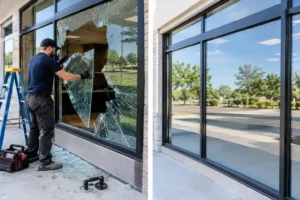
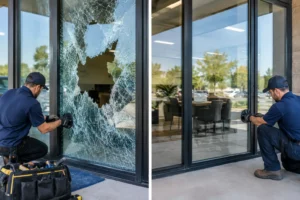
Repairs become less practical when the glass has chips at an edge, visible cracks, deep scratches, corroded hardware, or repeated alignment problems. If a door has shattered or a panel is compromised, keep people away from the area and arrange professional glass service promptly. Do not try to remove large broken pieces without proper protection and tools.
Custom Shower Enclosures Solve the Awkward Spaces
Standard-size doors work in many bathrooms, but older homes, condos, and remodeled spaces often have openings that are not square or do not match standard dimensions. Custom glass is especially useful for neo-angle showers, knee walls, bench seating, steam showers, and walk-in designs with fixed panels.
Custom does not only mean elaborate. It means the glass, hardware, and clearances are planned for the actual opening. A proper field measurement is taken after tile, stone, or wall finishes are complete. This is critical because finished surfaces determine the final dimensions and reveal whether walls are plumb enough for the intended design.
For a steam shower, the enclosure must also manage heat and moisture. A transom panel above the door can provide ventilation when open and help retain steam when closed. The door and seals need to be selected for that environment. This is a case where an attractive open-top shower design may not meet the functional need.
Hardware Is a Daily-Use Decision
Handles, hinges, rollers, and clips get touched constantly. Choose hardware that fits the bathroom’s style, but give equal attention to quality and function. Chrome is versatile and easy to match with existing fixtures. Brushed nickel, matte black, and brass finishes can create a more intentional design, though matching finishes across different manufacturers is not always exact.
Hinged doors should open smoothly and rest in the correct position. Sliding doors should move without grinding, wobbling, or jumping the track. If a door begins to scrape tile or requires force to close, address it early. Continued use can damage the glass edge, hardware, or surrounding finish.
For homes with children, older adults, or anyone with mobility concerns, prioritize a low threshold, a wide opening, and hardware that is easy to grip. A shower enclosure should support safe daily routines, not create another obstacle in the bathroom.
Get Installation Right the First Time
Glass fabrication and installation are precision work. Before installation, confirm the finished opening, glass type, hardware finish, door swing, and water-management details. Ask how the enclosure will be anchored, how gaps will be sealed, and what warranty applies to the workmanship and materials.
A licensed and insured glazing professional should protect the work area, handle glass safely, install the enclosure to the measured conditions, and leave the bathroom clean when the work is complete. Clear communication also matters. You should know when measurements are happening, when glass is expected, and what to do if the existing enclosure is broken or unsafe before replacement.
Quick Glass Repairs provides shower glass repair, replacement, and custom installation with the responsive scheduling and careful workmanship homeowners and property managers need. Whether the issue is a leaking door, damaged panel, or a bathroom ready for an upgrade, do not wait for a small glass problem to become water damage. A properly fitted enclosure brings the room back to a safer, drier, more dependable daily use.