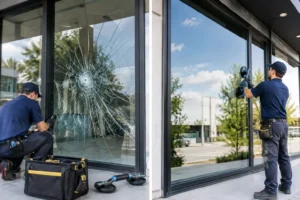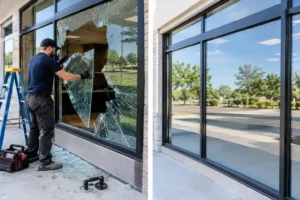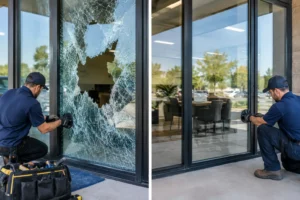
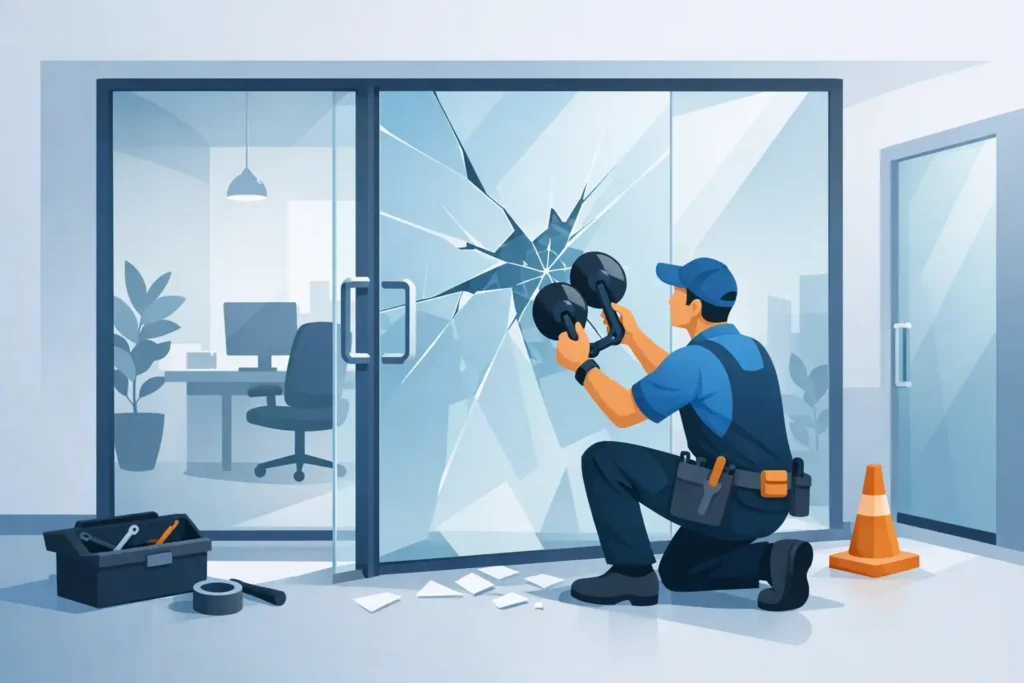
A cracked lobby door, a dragging glass panel, or a shattered sidelight can turn a normal workday into a security and liability problem fast. Office glass door repair is not only about restoring a clean appearance. It protects employees and visitors, secures equipment and records, keeps weather outside, and helps your building stay open without unnecessary disruption.
For offices, medical practices, multifamily buildings, retail-adjacent businesses, and professional suites across the DMV, the right response depends on the damage. Some issues call for immediate emergency boarding and glass replacement. Others can be scheduled promptly before a small alignment or hardware problem becomes a broken door, an injury risk, or a failed entry point.
When an Office Glass Door Needs Immediate Repair
Broken or missing glass requires immediate attention. Even if the opening is away from public view, exposed glass edges and an unsecured entrance create obvious risks. Keep people clear of the area, avoid handling loose fragments, and arrange professional emergency service as soon as possible.
A door that will not lock also deserves urgent action. The glass may be intact, but a damaged closer, misaligned pivot, loose frame, or failing lock can leave your office vulnerable after hours. Do not rely on a temporary wedge, tape, or improvised lockout solution. Those fixes can damage the door further and may create an unsafe exit condition.
Other warning signs are less dramatic but should not be ignored. A crack that starts at a corner, chips around hardware, glass that rattles in its frame, or a door that suddenly scrapes the floor can point to shifting hardware or stress on the panel. Tempered glass is designed to break into smaller pieces, but it can fail suddenly when damaged or improperly supported. Scheduling service early is usually safer and less disruptive than waiting for a complete break.
What Causes Office Glass Door Damage?
Commercial glass doors handle constant traffic. Hundreds of openings and closings each week can wear down pivots, hinges, closers, locks, weatherstripping, and frame components. When those parts are out of adjustment, the weight of the door may no longer be properly supported. That pressure can transfer to the glass, especially near drilled holes, corners, and metal hardware.
Impact is another common cause. A cart, delivery, moving equipment, or a door thrown open by wind can chip or crack the glass. In busy corridors and shared building entrances, repeated contact with nearby walls, furniture, or other doors can also create damage over time.
Weather matters in the Washington, DC, Virginia, and Maryland area as well. Seasonal temperature swings can expose weak seals, loosen glazing, and affect door alignment. Water entering around the frame may damage adjacent materials or contribute to corrosion in hardware. If you see moisture, staining, drafts, or movement around the door, the issue may involve more than the glass itself.
Vandalism and attempted forced entry require a different level of response. The priority is to secure the opening, remove dangerous broken material, document the damage, and install replacement glass that fits the door system and building requirements. A fast temporary securement can protect the property while the correct glass is measured, fabricated, and installed.
Office Glass Door Repair Starts With the Whole System
A reliable repair begins with an inspection of the complete opening, not just the visible crack. A qualified glass technician checks the glass type, thickness, frame condition, door alignment, pivots or hinges, closer operation, locks, handles, and surrounding glazing. This identifies what failed and helps prevent the replacement panel from facing the same stress.
For a small chip or surface scratch, replacement may not always be necessary. The decision depends on the glass type, the chip location, its depth, and whether the damage is near an edge or hardware cutout. Cosmetic repair can occasionally be an option, but it is not appropriate when safety glass has structural damage or when the flaw may spread.
Cracked tempered glass generally needs replacement. Unlike standard annealed glass, tempered glass cannot be cut, drilled, or reliably repaired after it has been manufactured. Once it is compromised, replacing the panel with correctly specified safety glass is the dependable solution.
Insulated glass units can present a different issue. If a glass office door has two panes and develops fogging or moisture between them, the perimeter seal may have failed. The door may still be secure, but its appearance and insulating performance have been affected. In many cases, replacing the insulated unit restores clarity without requiring a full door replacement. The right approach depends on the door construction and the condition of its frame and hardware.
Repair, Replacement, or New Hardware?
The most cost-effective solution is not always the lowest initial price. Replacing only the broken glass can make sense when the frame, hinges, closers, and locking components are in good condition. It keeps downtime and material costs under control while restoring the appearance and safety of the entrance.
However, glass-only replacement is not enough if the door is sagging, slamming, binding, or failing to latch. Installing a new panel without correcting the underlying alignment can put the new glass at risk. In those cases, hardware adjustment or replacement should be handled at the same time.
A full door or storefront system replacement may be worth considering when the frame is severely damaged, the door no longer operates safely, parts are obsolete, or the entrance does not meet the needs of the business. That is a larger project, but it can improve security, accessibility, energy performance, and the overall impression of the property. The trade-off is more planning, fabrication time, and upfront cost.
For property managers, documenting recurring door problems is useful. If the same entry needs frequent adjustments, record when issues occur, what repair was completed, and whether the door experiences unusually heavy traffic. That information can help determine whether a hardware upgrade or a more durable door system is the better long-term investment.
How to Keep the Area Safe Until Help Arrives
After glass breaks, protect people first. Restrict access to the doorway and keep employees, tenants, and visitors away from loose glass. If possible, use an alternate entrance and notify building management or security. Avoid trying to remove large shards from a frame or sweeping glass without appropriate protective equipment.
Do not force a damaged door shut or open. A panel that appears stable may be under tension, and forcing it can cause further breakage. If the door has an electronic access system, communicate the issue with your security provider or facilities contact so the entrance can be managed safely.
For after-hours damage, professional emergency glass service can secure the opening and reduce exposure to weather or unauthorized entry. Temporary boarding is often the safest first step when the correct replacement glass is not immediately available. It is not a finished repair, but it buys your business time without leaving the property exposed.
Choosing a Professional for Office Glass Door Repair
Office doors are different from ordinary residential doors. They may use tempered or laminated safety glass, aluminum storefront frames, concealed closers, floor pivots, panic hardware, access controls, or custom handles. The repair needs to account for those components, the door’s weight, and how the entrance is used each day.
Choose a glazing professional who can clearly explain the problem, provide a straightforward estimate, and coordinate the work around your business operations. Licensed and insured service matters, particularly in common areas and high-traffic commercial spaces. Ask whether the replacement glass and workmanship are covered by a warranty and whether emergency service is available if the opening cannot safely wait.
Communication also matters. Your team should know when technicians will arrive, whether the entry needs to be closed during work, and what temporary measures are required. Clean work areas, careful glass removal, precise installation, and final door testing are part of a proper commercial repair, not extras.
Quick Glass Repairs provides responsive office glass door repair for businesses and property managers throughout Alexandria, Northern Virginia, Washington, DC, and nearby Maryland communities. From emergency securement to scheduled glass and hardware repairs, the focus is simple: protect your property, minimize downtime, and leave the entrance operating the way it should.
A damaged office door rarely gets better on its own. Address the crack, loose hardware, fogged glass, or locking problem while it is still manageable, and your staff can get back to work with a safer, more secure entrance behind them.