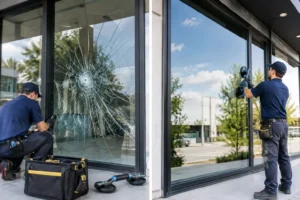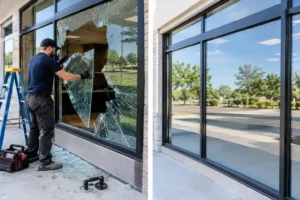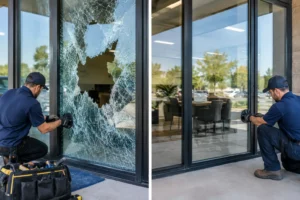
A cracked display window, shattered entry door, or loose glass panel can change the feel of a business in minutes. Commercial storefront glass repair is not just a cosmetic fix. It protects employees and customers, limits theft risk, keeps out rain and wind, and helps your property stay open and presentable.
For businesses across DC, Northern Virginia, and nearby Maryland, the right response depends on the damage, the glass system, and whether the opening can be safely secured. The priority is always the same: remove the immediate hazard, protect the property, and complete a precise repair or replacement without creating unnecessary downtime.
When Storefront Glass Damage Needs Immediate Attention
Not every chip requires an emergency call, but broken storefront glass should never be ignored. Tempered safety glass can shatter into small pieces after impact. Laminated glass may remain in the frame but still have deep cracks, compromised edges, or a damaged interlayer. Either condition can leave an entrance vulnerable.
Call for immediate help when glass is broken, visibly loose, heavily cracked, missing from a door or window opening, or creating sharp exposed edges. Damage near a handle, lock, closer, hinge, or aluminum frame also deserves fast attention because the problem may affect how the door operates and secures.
A storefront may be damaged by vandalism, a delivery accident, severe weather, a failed door closer, or ordinary wear around a high-traffic entrance. The cause matters. Replacing the pane without addressing a misaligned door, damaged frame, or failing hardware can lead to another break soon after the first repair.
Secure the Opening Before the Full Repair
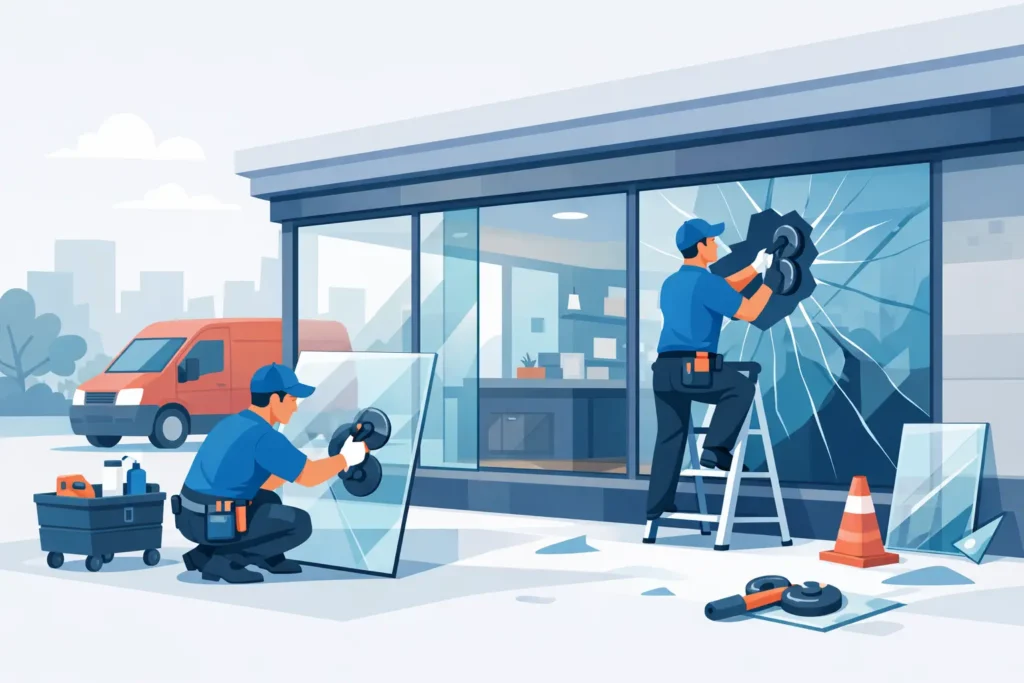
The first job is making the area safe. Keep customers and employees away from broken glass, especially if pieces remain in the frame or on the floor. Do not try to push fractured glass back into place, tape over large cracks, or operate a glass door that is dragging, binding, or hanging unevenly.
A qualified glazing technician can assess the opening, clear dangerous debris, and determine whether temporary board-up or emergency glass installation is needed. A secure temporary solution can protect the property while the correct glass is measured, fabricated, or ordered.
This is especially useful when the storefront uses insulated glass, tinted glass, specialty safety glass, custom sizes, or a particular thickness that is not immediately available. A temporary board-up is not the finished result, but it can prevent an exposed opening from becoming a larger security and weather problem overnight.
Repair or Replace? It Depends on the Damage
Some commercial glass issues can be repaired without replacing the entire storefront system. Others require a new glass unit for safety, performance, and appearance. The right choice is based on the type of glass, the location of the damage, and the condition of the framing.
Minor surface scratches may be candidates for professional assessment, particularly on non-critical interior glass. But deep scratches, cracks, chipped edges, shattered panes, and damaged safety glass usually call for replacement. Cracks tend to spread, and damage near the edge of a pane can weaken it quickly.
For double-pane storefront glass, fogging between the panes is a different problem. It usually means the insulated glass seal has failed. The window may still be intact, but moisture and haze can make the storefront look neglected and reduce insulation. In many cases, the insulated glass unit can be replaced while keeping the existing frame, which can be more practical than replacing the full window system.
A good assessment also checks the surrounding aluminum, metal, or wood frame. Bent glazing channels, worn gaskets, deteriorated sealant, and loose stops can affect the performance of new glass. Replacing only the pane may cost less upfront, but it is not the best value if the opening itself cannot hold and protect the replacement correctly.
The Right Glass Makes a Difference
Commercial storefronts are not all built the same. A retail entrance, office lobby, restaurant front, medical facility, and multifamily building may each need a different glass solution. The replacement should match the system’s required size, thickness, safety rating, and appearance.
Tempered glass is commonly used in doors and sidelites because it is designed to break into smaller pieces when it fails. Laminated glass can offer added hold-together performance because its layers are bonded around an interlayer. In some locations, it may be the better choice for security, noise reduction, or impact resistance.
Insulated glass can help reduce heat transfer and condensation, which matters for storefronts exposed to DC-area summer heat and winter cold. Tinted or low-emissivity glass may improve comfort and reduce glare, but it should be selected carefully to preserve the look of the building and meet any property management or design requirements.
The lowest-priced pane is not always the right pane. A proper commercial storefront glass repair considers code requirements, door use, hardware compatibility, energy performance, and how the replacement will look next to adjacent panels.
Protect Business Hours and Customer Confidence
A damaged storefront sends a message before anyone walks through the door. Customers may wonder whether the business is open, safe, or properly maintained. For offices and professional facilities, cracked or fogged glass can affect the impression clients have before a meeting begins.
Fast service helps reduce disruption, but scheduling still requires good judgment. If the opening is secure, some repairs can be planned before or after business hours to avoid interrupting customers. If the property is exposed, safety and security come first, even if that means an emergency response.
Property managers should also consider the people using the building. A broken common-area door can affect tenant access, package deliveries, leasing activity, and building security. Clear updates from the glass contractor help managers coordinate with tenants, maintenance teams, and ownership without chasing down basic answers.
What a Professional Storefront Glass Repair Visit Should Include
The process should be straightforward. A technician should inspect the damaged glass and frame, identify the type of glass needed, take precise measurements, and explain whether a same-day repair, temporary securing, or ordered replacement is the most appropriate path.
For a completed replacement, the work should include safe removal of damaged material, proper setting of the new glass, secure glazing components, and cleanup of glass debris. On door systems, the technician should also check that the door opens, closes, latches, and aligns correctly. A new pane cannot do its job if the door continues to slam or bind against the frame.
Licensed and insured glazing work matters because storefront glass is a safety system as much as a building feature. Ask about the warranty, expected material timing, and whether the estimate includes labor, glass, sealing, and any necessary frame or hardware adjustments. Clear communication prevents surprises when the repair is underway.
Avoid Repeat Storefront Glass Problems
Once the immediate repair is handled, a few maintenance checks can lower the chance of another failure. Watch for doors that close too hard, scrape the threshold, fail to latch, or require extra force to open. These issues place stress on glass and hardware over time.
Inspect perimeter sealant and gaskets for gaps, shrinking, or water intrusion. After a storm or impact, look for movement in the frame and report it before a small issue becomes a broken pane. For retail locations, keep carts, displays, and delivery routes clear of vulnerable glass corners.
Quick Glass Repairs provides fast, safety-focused service for commercial properties that need broken storefront glass secured, repaired, or replaced with care. Whether the issue calls for emergency help or a scheduled upgrade, a detailed estimate and a clear plan make the next step easier.
Your storefront is part of your security, your daily operations, and your first impression. If the glass is damaged, do not wait for a crack to spread or an unsecured opening to create a larger problem. Get it assessed promptly, protect the property, and get back to serving the people who walk through your doors.