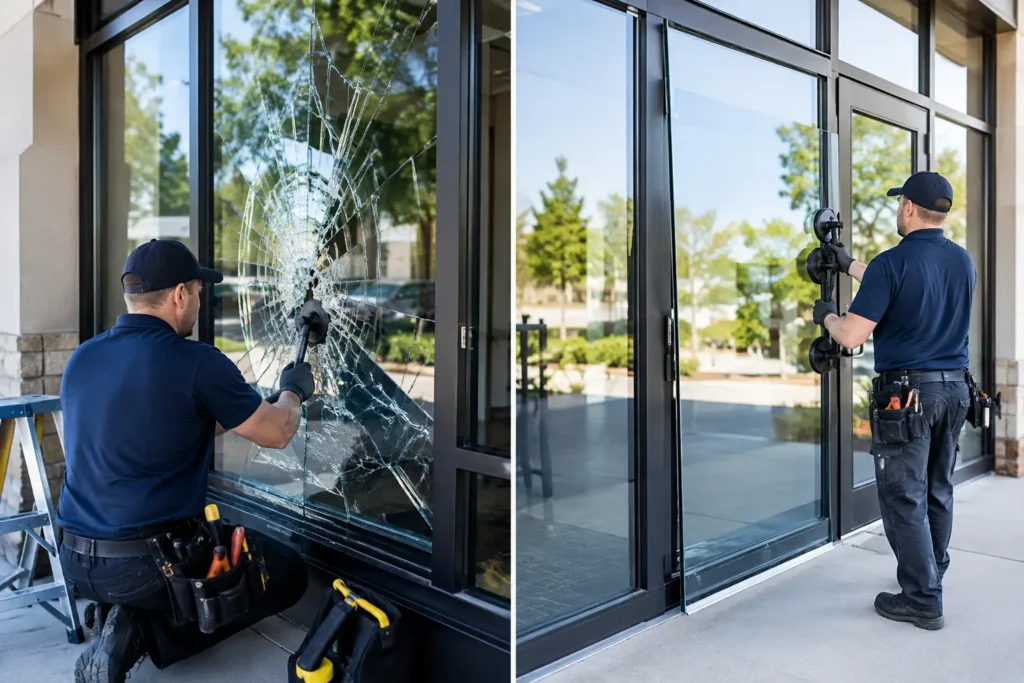
A cracked patio panel, a storefront door that will not close, or shattered entry glass changes the feel of a property immediately. Glass doors are not simply decorative features. They are part of your security, weather barrier, and daily routine. When they are damaged, waiting can leave a home or business exposed to injury, break-ins, water intrusion, rising energy costs, and lost access.
The right fix depends on where the door is located, how the damage happened, and whether the frame and hardware are still sound. Some problems can be repaired quickly. Others call for new glass, upgraded hardware, or a complete door replacement. The key is acting before a minor issue becomes a larger and more expensive disruption.
Broken Glass Doors Need Fast, Safe Action
Broken door glass creates an immediate hazard, especially near busy entrances, walkways, children, pets, customers, and employees. Even when a panel has not fallen out, a deep crack can weaken the glass enough that normal door movement, a temperature change, or a strong gust of wind causes it to fail.
If the glass is shattered or visibly unstable, keep people away from the area. Do not push on cracked panels, try to force a door shut, or apply household tape as a long-term repair. Tape may hold loose fragments temporarily, but it does not restore the strength or safety rating of the door.
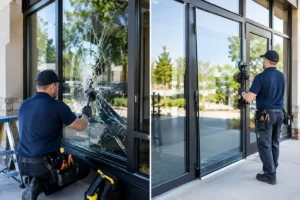
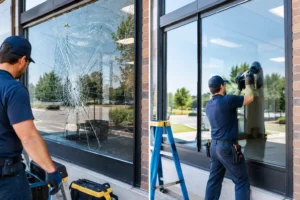
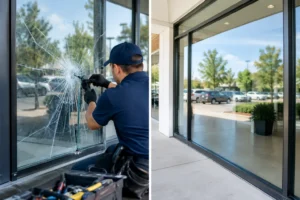
For exterior openings, protecting the opening quickly matters. Rain can damage flooring, drywall, merchandise, and furnishings. An unsecured entry can also create a serious security problem after hours. A professional glazing team can assess the opening, secure it when needed, measure accurately, and install the appropriate replacement glass without turning an urgent problem into a drawn-out project.
Signs Your Glass Door Has a Problem Before It Breaks
Not every glass door issue begins with a dramatic break. Sliding doors and hinged entries often show warning signs weeks or months in advance. Catching them early can preserve the door frame, reduce wear on rollers or hinges, and prevent a sudden failure at the worst possible time.
Fog Between Double-Pane Glass
Cloudiness or moisture trapped between panes means the insulated glass unit seal has failed. The door may still open and close, but its insulating performance has been compromised. In the DMV area, where hot humid summers and cold winters put exterior glass to work, failed seals can lead to uncomfortable rooms and higher heating or cooling costs.
In many cases, the insulated glass unit can be replaced without replacing the entire door. That decision depends on the condition of the frame, sash, glazing stops, and hardware. A proper inspection helps avoid paying for more work than the door actually needs.
Cracks, Chips, and Loose Glass
A small chip at the edge of a glass panel deserves attention. Door glass flexes with everyday use, and edge damage is more likely to spread than damage located near the center. Cracks around handles, hinges, locks, or corners are especially concerning because those areas experience repeated stress.
Loose glass, rattling panels, damaged glazing seals, or gaps around the perimeter can also allow water and outside air into the assembly. These are repair issues, not cosmetic quirks to ignore.
A Door That Drags, Sticks, or Will Not Lock
A door can have perfectly intact glass and still be unsafe or frustrating to use. Sliding glass doors may drag because of worn rollers, dirty tracks, track damage, or door misalignment. Hinged glass doors can sag when hinges loosen or frames shift. Storefront doors may stop latching correctly when pivots, closers, or hardware need adjustment.
Do not force the door. Excess pressure can crack a panel, damage the frame, or turn a simple hardware repair into a full replacement. A glazing professional can identify whether the issue is in the glass, frame, track, rollers, hinges, or locking system.
Repair or Replace? The Decision Comes Down to the Whole System
Replacing glass is often the practical answer when the frame is in good condition and the issue is limited to a broken panel, failed insulated unit, or damaged safety glass. This approach can restore clarity, security, and energy performance while preserving the existing door system.
Full replacement becomes more sensible when the frame is warped, corroded, rotted, or no longer supports the glass securely. It may also be the better investment when hardware is obsolete, the door leaks repeatedly, or multiple components have failed at once. For older sliding doors, replacing worn parts can help, but a door with damaged tracks, poor locks, failed seals, and persistent drafts may be ready for an upgrade.
For commercial properties, appearance and uptime matter alongside safety. A cracked or cloudy glass entry can make a business look neglected. A door that sticks or does not close properly can interrupt customer traffic, compromise security, and create accessibility concerns. Repair is usually preferred when it gets the entrance back in service quickly. Replacement is worth considering when the system is repeatedly disrupting operations.
Choosing the Right Glass for Door Replacement
Door glass is not one-size-fits-all. The location, size, use, and building requirements affect what type of glass belongs in the opening. Areas near doors generally require safety glazing, such as tempered or laminated glass, designed to reduce the danger of sharp shards if broken.
Tempered glass is commonly used for patio doors, entry doors, shower enclosures, and commercial door systems. It is heat-treated for added strength and breaks into small pieces when it fails. Laminated glass holds together with an interlayer, which can add security and help keep the opening intact after impact. The right choice depends on the door design and the level of safety or security the property needs.
For exterior doors, insulated glass units can improve comfort by reducing heat transfer. Options such as low-emissivity coatings, tinted glass, and decorative privacy glass may be useful, but each has trade-offs. Darker glass can reduce glare and solar heat, for example, while also changing the amount of natural light entering the room. Privacy glass can make an entry more comfortable without sacrificing daylight, but it may not suit every architectural style.
A qualified installer should verify measurements, glass thickness, safety requirements, and compatibility with the existing frame before ordering. Precision matters. A panel that is even slightly incorrect can affect operation, weather resistance, and the life of the door.
Why Professional Installation Protects Your Property
Glass door replacement is not a good place for guesswork. Large panels are heavy, edges can be dangerous, and improper setting blocks, seals, or hardware adjustments can lead to stress cracks, leaks, and poor operation. The visible pane is only one part of the system.
Professional service should include clear communication about the damage, realistic timing for custom glass if it is needed, careful removal of broken material, and a clean work area when the job is complete. For emergency damage, securing the property first is often the priority. For planned upgrades, accurate measuring and product selection usually determine whether the finished door performs well for years.
Quick Glass Repairs serves homeowners, property managers, and businesses throughout the DC, Virginia, and Maryland region with licensed and insured glazing work, free estimates, and responsive scheduling. Whether the issue is broken entry glass, a fogged patio door panel, or a commercial door that is no longer functioning correctly, the goal is the same: restore safety, access, and peace of mind without unnecessary delay.
Do Not Wait on Security or Weather Exposure
If broken glass leaves an opening exposed, if a door cannot lock, or if loose glass threatens people nearby, treat it as an urgent repair. Emergency service can help secure the property and reduce the risk of further damage. For non-emergency issues such as fogged glass, dragging sliders, or minor cracks, scheduling an inspection promptly can still save time and money before the problem spreads.
A glass door should open smoothly, close securely, block the weather, and look like it belongs on the property. If yours does not, a fast professional assessment can give you a clear path forward and get the opening working the way it should.