

A wet windowsill on a cold morning may look harmless, but window condensation causes can range from normal indoor humidity to a failed insulated-glass seal. The difference matters. Surface moisture can damage paint, wood trim, and nearby flooring over time. Moisture trapped between panes points to a window problem that will not clear up with a towel or a change in thermostat settings.
For homeowners, landlords, and property managers, the right response starts with identifying where the moisture is forming. That one detail tells you whether to manage indoor humidity, improve airflow, or schedule a professional glass repair.
What Actually Causes Window Condensation?
Condensation occurs when warm, moisture-heavy air touches a colder surface and cools below its dew point. The air can no longer hold all of that moisture, so water collects on the surface. In the DMV, this commonly happens during winter when indoor air is warm and humid while the exterior glass is cold.
Windows are especially prone to condensation because glass does not insulate as well as a well-built wall. Older single-pane windows, damaged double-pane units, and windows with poor air sealing all allow interior glass surfaces to become colder. The colder the glass, the more likely indoor moisture will turn into droplets.
Not every case means the window needs replacement. A little condensation at the bottom edge of an interior pane during extreme cold can be a humidity and ventilation issue. Persistent moisture, fog between panes, peeling trim, or pooling water deserves faster attention.
Interior Window Condensation Causes
When water appears on the room-side surface of the glass, indoor moisture is usually the main source. Everyday living adds significant humidity to a home or building. Cooking, showers, laundry, dishwashers, houseplants, aquariums, and even occupants breathing all release water vapor into the air.
A tightly sealed home can make the issue worse. Energy improvements are valuable, but they reduce natural air exchange. If humid air has nowhere to go, it gathers on the coldest surfaces first – often windows, exterior doors, and corners of exterior walls.
High Indoor Humidity
Indoor humidity should generally stay lower during colder weather, because cold outdoor conditions make window glass colder. A home that feels comfortable at 45% relative humidity in mild weather may see heavy window condensation when outdoor temperatures drop sharply.
A simple hygrometer can help identify the issue. If indoor humidity stays high and windows are regularly wet, run bathroom exhaust fans during and after showers, use the kitchen exhaust fan while cooking, and make sure clothes dryers vent outdoors. A dehumidifier can also help in damp basements, crowded apartments, or spaces with limited ventilation.
Limited Airflow at the Glass
Sometimes the room humidity is reasonable, but warm air cannot reach the window. Closed blinds, heavy curtains, deep shades, and furniture placed directly in front of vents can create a pocket of cool, still air against the glass. Condensation forms there first.
Open window coverings slightly during cold weather, especially overnight. Keep supply vents clear and avoid pressing furniture tightly against exterior walls. These small adjustments can reduce surface moisture, although they will not fix a failed seal or an improperly installed window.
Cold Glass From Older or Damaged Windows
Single-pane windows and aging double-pane units lose heat more readily than modern insulated glass. Drafty frames, worn weatherstripping, and gaps around a window opening can also lower the temperature of the interior glass.
The trade-off is straightforward: reducing humidity may stop the droplets, but it does not improve a window that is uncomfortable, drafty, or driving up heating costs. If condensation is concentrated around one or two windows while others stay dry, the specific glass unit or frame may be the issue.
Condensation Between Double-Pane Windows Means a Failed Seal
Fog, haze, streaks, or droplets between panes are different from ordinary room-side condensation. Double-pane and triple-pane windows use sealed insulated glass units. The space between the panes is designed to stay dry and is often filled with insulating gas.
When the perimeter seal fails, outside air and moisture enter that sealed space. The result is fogging that appears trapped inside the glass. You cannot wipe it off from indoors or outdoors because it is not on an accessible surface.
A failed seal reduces the insulating performance of the window and affects visibility. It may also make a property look neglected, especially in a front entry, living room, office, lobby, or rental unit. In many cases, the frame can remain in place while the failed insulated glass unit is replaced. That can be a more targeted solution than replacing the entire window, depending on the frame condition and the availability of matching glass.
Exterior Condensation Is Usually Good News
Condensation on the outside surface of a window can worry property owners, but it often indicates that the glass is insulating well. During humid weather, especially in the early morning, exterior air can reach the dew point against cool outer glass.
Unlike interior condensation, exterior moisture generally disappears as temperatures rise. It does not signal a failed seal by itself. Still, inspect the window if moisture is accompanied by visible damage, cracked glass, loose glazing, water entering the building, or deteriorating exterior trim.
When Condensation Becomes a Property Damage Problem
A few droplets that evaporate later in the morning are not the same as water running down glass every day. Repeated condensation can stain wood, swell window sills, soften drywall, loosen paint, and encourage mold growth around frames and nearby finishes.
For rental and commercial properties, recurring moisture can become a maintenance issue that spreads beyond one window. Occupants may report musty odors, cold rooms, damaged blinds, or water on floors. Addressing the cause promptly protects the space and helps prevent a minor glazing issue from becoming a larger repair.
Watch for these warning signs:
- Fog or droplets trapped between panes
- Water collecting on the sill or dripping onto flooring
- Black spotting, mildew, peeling paint, or swollen wood around the frame
- Noticeable drafts or unusually cold glass near one window
- Cracked panes, loose glass, or a frame that no longer closes securely
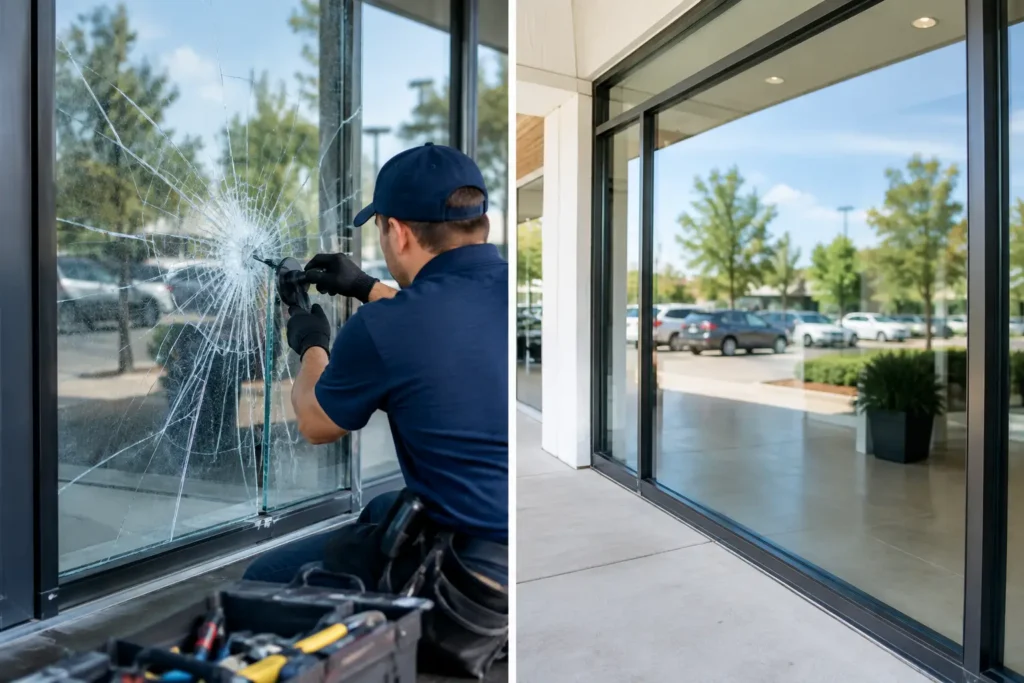
Cracked or broken glass is more than a condensation concern. It can create an immediate safety, security, and weather-exposure problem. Secure the area and arrange professional repair without delay.
What to Do First
Start by locating the moisture. Wipe the glass dry and check whether the water returns on the room side, exterior side, or inside the panes. If it is on the interior surface, measure humidity and improve ventilation for several days. Keep blinds open enough for warm air to circulate and use exhaust fans consistently.
If the moisture is between panes, or if the frame shows deterioration, do not assume a humidity adjustment will solve it. A glazing professional can inspect the insulated glass unit, seals, frame, and surrounding opening to determine whether glass replacement, seal-related repair, or a larger window replacement is appropriate.
Quick Glass Repairs helps residential and commercial property owners across the DMV assess fogged, cracked, and damaged window glass with clear recommendations, careful installation, and responsive scheduling. For an active leak, broken pane, or security concern, treat the situation as urgent rather than waiting for the next change in weather.
A dry window is not just about a clearer view. It protects the finishes around it, keeps conditioned air where it belongs, and gives you early warning when a sealed glass unit needs professional attention.