
A mirror that is slightly too narrow, mounted too high, or fastened into the wrong part of the wall can make an otherwise finished bathroom feel incomplete. Worse, a heavy mirror installed without the right support can crack tile, pull loose from drywall, or become a safety hazard. Custom bathroom mirror installation solves the fit problem, but it requires more than choosing a shape you like.
For homeowners, landlords, and property managers in the DC, Virginia, and Maryland area, the right mirror can improve a small powder room, complete a major renovation, or bring a dated vanity wall back to life without rebuilding the entire bathroom. The key is accurate planning, proper glass selection, and secure mounting from the start.
Why Custom Bathroom Mirrors Need Precise Installation
Bathrooms rarely offer forgiving conditions. Walls may be out of square, vanities may not be perfectly centered, and outlets, light fixtures, tile, medicine cabinets, and plumbing access all compete for space. A standard off-the-shelf mirror may leave awkward gaps or force compromises that are obvious every time you use the room.
A custom-cut mirror can be sized around the actual wall and vanity dimensions. It can run from backsplash to light fixture, fill a wide double-sink vanity, fit inside a recessed area, or create a clean wall-to-wall look. That flexibility is the advantage. The installation must be just as exact, because custom glass is made to a specific size and may not be easy to alter after delivery.
Weight is another concern. Even a modest bathroom mirror can be heavy, especially when it is thick, oversized, framed, or paired with a safety backing. Drywall alone is not always enough to carry that load. Professional installers assess the wall construction and use the right combination of clips, adhesive, screws, anchors, and blocking to hold the mirror securely without damaging the finish.
Start With the Vanity, Not the Empty Wall
The vanity usually determines the mirror size and position. As a practical starting point, a single mirror is often a few inches narrower than the vanity beneath it. For a double vanity, one large mirror can create a clean, open look, while two separate mirrors can give each sink its own visual center.
There is no single rule that works for every bathroom. A wide mirror can make a narrow room feel larger, but it may compete with sconces or reflect clutter from an adjacent wall. Two mirrors create structure in a shared bathroom, but they can make a small wall feel busy. The best choice depends on the room’s dimensions, lighting plan, and how the bathroom is used.
Height matters just as much. The mirror should serve the people using it, not simply follow a standard measurement. In many bathrooms, the bottom edge sits a few inches above the backsplash and the top edge aligns with or falls just below the light fixture. Before fabrication, mark the proposed size on the wall with painter’s tape. This quick step reveals whether the mirror crowds an outlet, blocks a switch plate, or sits too high for shorter household members.
Account for Obstructions Before Measuring
Measure the exact usable area, then measure it again. Include the backsplash, faucet height, outlet covers, light fixtures, wall trim, and any cabinet doors that need clearance. If the mirror will be installed over tile, identify grout lines and tile edges before drilling. A misplaced hole can leave permanent damage.
Older homes and condos may present additional surprises, including uneven plaster walls, bowed surfaces, hidden pipes, or walls that are not level. A custom mirror can be fabricated to accommodate some conditions, but the installer needs accurate information before the glass is cut.
Choose Glass and Edges That Work in a Bathroom
A bathroom mirror is exposed to humidity, steam, cleaning products, and regular use. The mirror should be made for that environment, not treated like a decorative piece meant for a dry hallway.
Standard mirror glass works well for many applications, but thickness should match the size and mounting method. Larger mirrors often benefit from thicker glass because it stays flatter and feels more substantial. In areas where impact is more likely, such as a busy family bathroom or a rental property, safety-backed mirror glass can be a smart choice. The backing helps hold fragments together if the glass breaks.
The edge finish changes both appearance and maintenance. A polished edge provides a clean, finished look for a frameless mirror. A beveled edge adds a decorative border and catches light, though it may not suit every modern bathroom. Framed mirrors can add warmth or contrast, but the frame material must tolerate moisture. Low-quality wood or metal finishes can swell, corrode, or discolor over time.
If the mirror will sit close to a shower or tub, consider the room’s ventilation. No mirror is immune to poor bathroom airflow. Running the exhaust fan during and after showers helps reduce condensation and supports the life of the mirror backing, surrounding paint, and fixtures.
Secure Mounting Is Not a DIY Shortcut
Lightweight, small mirrors can sometimes be handled with basic hardware. Large, custom, wall-spanning, or tile-mounted mirrors are different. They require careful handling and a mounting plan that matches the wall behind them.
Mirror adhesive is common, but it must be compatible with mirror backing. The wrong adhesive can damage the reflective coating and cause black spots or deterioration around the edges. Adhesive also is not a substitute for proper support while it cures. Mechanical clips, J-channels, or concealed fastening systems may be needed depending on the mirror’s size, location, and weight.
Drilling into tile requires another level of care. The wrong bit, too much pressure, or drilling in the wrong location can crack a tile that may be difficult to replace. Installers also need to avoid plumbing and electrical lines concealed behind the wall. This is why a quick-looking mirror project should not be rushed.
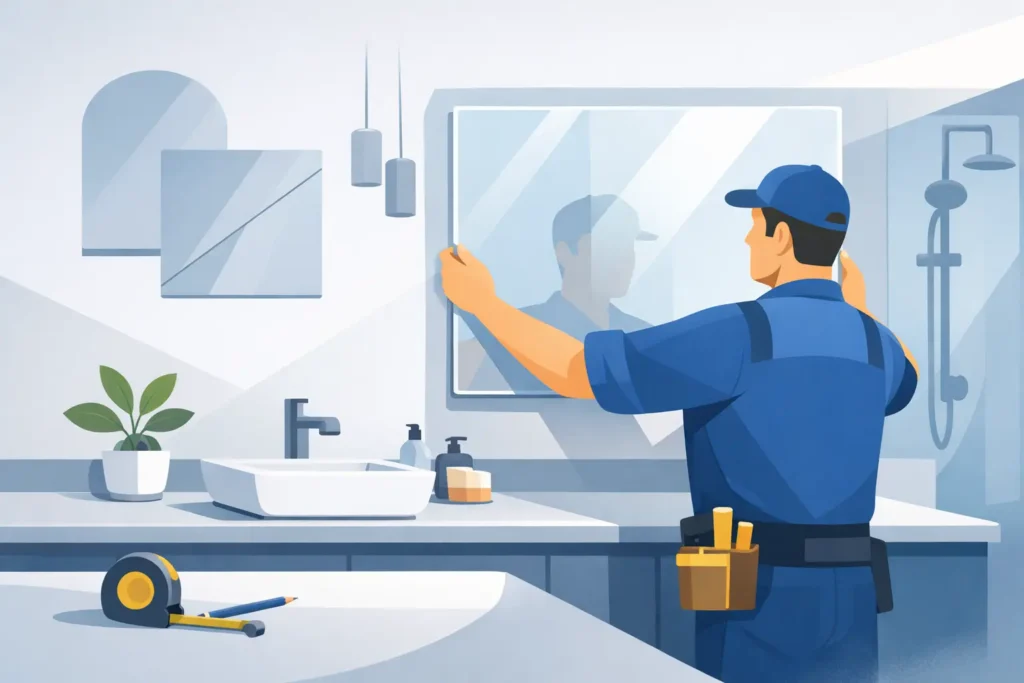
A professional custom bathroom mirror installation typically includes confirming measurements, inspecting wall conditions, coordinating fabrication, protecting nearby surfaces, mounting the glass safely, and cleaning the work area when the job is complete. That process reduces the chance of ordering the wrong size, breaking glass during handling, or discovering that the wall cannot support the planned design.
When Replacement Is the Better Call
Sometimes the mirror is not the only problem. Blackened edges, cloudy spots, peeling backing, deep scratches, chipped corners, or loose hardware are signs that replacement may be safer and more cost-effective than trying to repair the existing piece.
A cracked mirror should be addressed promptly, especially in a home with children, pets, tenants, or frequent guests. Cracks can spread with door vibration, temperature changes, or pressure during cleaning. Loose mirrors deserve the same urgency. Do not keep tightening a failing clip or adding household adhesive to a heavy mirror. The wall and mounting system need to be evaluated before the glass falls.
For property managers, replacing a damaged bathroom mirror quickly also helps protect the condition and appearance of the unit. A clean, secure mirror is a small detail that tenants notice during move-ins, inspections, and showings.
Plan the Installation Around Real Life
Before installation day, clear the vanity countertop and remove fragile items from the work area. Make sure installers can reach the bathroom without moving furniture through tight spaces, and let them know about parking, elevator access, building rules, or restricted work hours. For occupied homes and apartments, good communication keeps disruption low.
It also helps to decide early whether other upgrades are happening at the same time. New lighting, a vanity replacement, fresh tile, or a glass shower enclosure can all affect mirror measurements. Installing the mirror too early can create avoidable rework if another fixture shifts even slightly.
A well-fitted bathroom mirror should look effortless, but that result comes from careful measuring, appropriate materials, and secure installation. If your mirror is cracked, loose, poorly sized, or part of a bathroom update, Quick Glass Repairs can provide a free estimate and professional installation that respects your home, schedule, and walls.