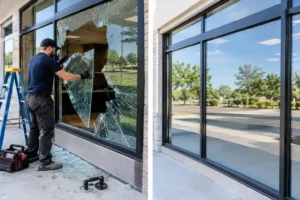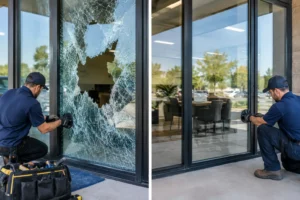

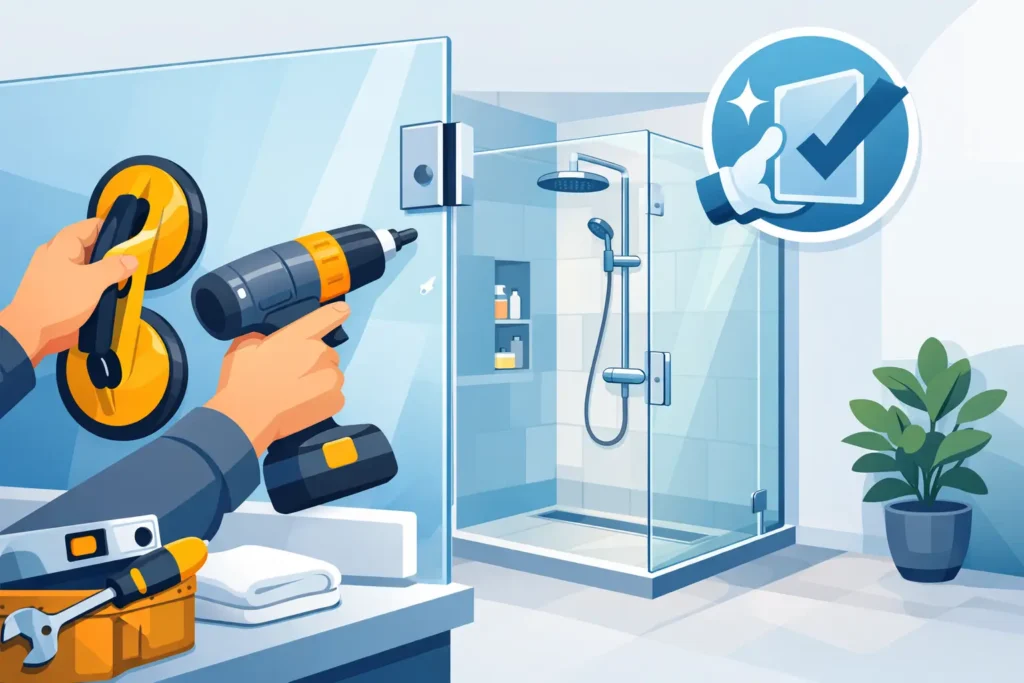
A frameless shower door can make a compact Alexandria condo bathroom feel larger or give a primary bath the clean, custom finish it deserves. But frameless shower door installation is not a place to guess, rush measurements, or treat the glass like a standard door. A small error can cause leaks, uneven gaps, stressed glass, damaged tile, and a door that never closes correctly.
Unlike a framed enclosure, heavy tempered glass depends on accurate layout, secure mounting, and a shower opening that is actually ready for it. The result should look simple because the work behind it was precise.
What Frameless Shower Door Installation Demands
Frameless doors use thick tempered safety glass, commonly 3/8-inch or 1/2-inch, with minimal metal around the edges. Hinges, clamps, channels, and handle hardware support the glass while maintaining the open appearance homeowners want. There is less hardware to hide a wall that is out of plumb or a curb that slopes the wrong way.
That is why measuring is more than taking a width and height. A glass professional measures the opening at several points, checks the walls for plumb, verifies the curb is level where it needs to be, and accounts for tile thickness, grout lines, hinges, handles, and fixed panels. Custom glass is fabricated from those measurements. Once tempered, it cannot be cut down on site.
The glass itself is designed to break into small, less dangerous pieces if it fails, but it remains heavy and must be handled carefully. A typical frameless door can weigh well over 70 pounds. Proper lifting, protected edges, and correctly installed hardware are basic safety requirements, not optional extras.
Start With the Shower, Not the Door
Many installation problems begin before the glass arrives. A beautiful enclosure cannot compensate for a shower base that sends water toward the bathroom floor or walls that do not provide secure support for hinges.
The curb or threshold needs a slight inward pitch so water drains back into the shower. If water pools along the outside edge, adding more silicone is not a dependable fix. The underlying slope needs attention first. Likewise, tile and grout should be complete, cured, and sound before drilling begins. Loose tile, cracked grout, or hollow areas can fail when hardware is fastened through the finished surface.
Wall structure matters most at hinged doors. Depending on the door design and hardware, backing may be needed behind the tile or wall finish to hold the hinge screws securely. A professional evaluates the mounting location rather than assuming every tiled wall has adequate framing. In some showers, a fixed panel and wall channel, or a pivot configuration, may be the safer design choice.
Waterproofing also deserves respect. Holes drilled through tile must be planned carefully and sealed correctly. Random drilling can create an opening for moisture behind the wall, where damage may go unnoticed until drywall, framing, or adjacent finishes are affected.
Choosing the Right Door Configuration
A frameless enclosure is not one product. The right layout depends on the size and shape of the shower, how the bathroom is used, and where water naturally lands during a shower.
A single swing door works well for many alcove showers, provided there is enough room for the door to open without hitting a vanity, toilet, or towel bar. A door with a fixed return panel can provide a wider entry while keeping the glass stable. For a walk-in shower, a fixed glass panel may deliver the open look homeowners prefer, but it must be wide enough and positioned correctly to limit splash-out.
Sliding frameless-style systems can be useful where swing clearance is limited. They offer a modern look, though they have more moving parts than a stationary panel and may require more ongoing cleaning. A fully open walk-in layout is equally dependent on showerhead placement, water pressure, and the direction of spray. What looks great in a showroom may leave puddles in a smaller bathroom if the layout is copied without adjustment.
Clear glass is the most common choice because it highlights tile and makes the room feel open. Low-iron glass reduces the faint green tint found in standard clear glass and can be worthwhile when the design includes white stone or light tile. Patterned or frosted glass adds privacy, but it changes the visual openness of the enclosure. Hardware finishes should match the bathroom’s other fixtures where possible, but durability and availability matter as much as color.
The Installation Process, Step by Step
A reliable installation begins with a site visit and clear measurements, not an estimate based only on a photo. The installer confirms the opening, discusses the desired door swing, checks wall conditions, and identifies anything that should be corrected before fabrication.
After measurements are approved, the glass is ordered or fabricated to fit the actual opening. Lead times vary based on the glass type, size, hardware, and whether the enclosure includes notches, angles, or custom panels. This is one reason replacing a broken shower panel is not always a same-day job, even when the initial inspection can happen quickly.
On installation day, technicians protect nearby finishes and bring the glass into the bathroom with care. They place channels or hinge hardware, drill only where required, set the panels, align the door, and check the reveal around every edge. The door should open and close without rubbing, binding, or drifting.
The final step is sealing the appropriate joints. Silicone helps control water at fixed glass-to-wall, glass-to-curb, and channel connections. It is not a substitute for a properly designed enclosure, and it should be allowed to cure before the shower is used. Your installer should provide clear guidance on when the enclosure can get wet, typically at least 24 hours depending on the sealant and conditions.
Common Problems That Should Not Be Ignored
A frameless enclosure should feel solid, look aligned, and keep normal shower spray where it belongs. If something changes, address it early. Small adjustments are easier than replacing tile, repairing a wet wall, or dealing with a shattered panel.
Watch for these warning signs:
- Water consistently escapes from the same corner, hinge side, or door gap.
- The door drags, will not stay in position, or suddenly needs force to close.
- Hinges, clamps, or handles feel loose or show corrosion.
- Silicone is separating, turning dark, or allowing water behind a fixed panel.
- A tile crack appears near a hinge or mounting point.
Do not overtighten hardware yourself. Tempered glass has strong faces but vulnerable edges, and excessive pressure at a hinge or clamp can create stress. Avoid slamming the door, hanging towels from the handle, or letting children swing on it. These are simple habits, but they protect a substantial glass investment.
Cleaning Without Damaging the Finish
Soap residue and mineral deposits are especially common in the DC, Virginia, and Maryland area. A squeegee after each shower is the easiest way to keep clear glass looking clear. Use a non-abrasive cleaner and a soft cloth for regular cleaning. Harsh scouring pads, abrasive powders, and aggressive chemicals can dull hardware finishes, scratch glass, or damage protective coatings.
If water spots have built up, the right cleaning method depends on the glass and hardware finish. A professional can advise whether the issue is surface mineral buildup, coating wear, or etching that will not fully clean away. Glass protection treatments can reduce routine buildup, but they still need regular care.
When Professional Installation Is the Better Call
DIY kits can make sense for lightweight, standardized enclosures with straightforward wall conditions. A custom frameless door is different. The cost of a measurement error, damaged tile, or broken custom panel can erase any initial savings quickly.
For homeowners and property managers, professional installation brings accountability at every stage: correct measuring, appropriate hardware, safe glass handling, water-aware layout, and a clear answer if an adjustment is needed. Quick Glass Repairs provides licensed and insured glass service, free estimates, and workmanship backed by warranties for customers who want the job handled carefully from the first measurement to the final door check.
A frameless shower door should make the bathroom easier to enjoy, not add another leak or maintenance concern. When the opening is prepared, the glass is custom measured, and the hardware is installed with care, the finished enclosure earns its clean, open look every day.