A sliding glass door should move with one hand, latch without force, and sit squarely in its frame. When it drags, grinds, jumps the track, or takes real effort to open, sliding glass door roller repair may be the answer. Ignoring that resistance can turn a manageable hardware repair into a damaged track, broken glass, failed lock, or door that no longer closes securely.
For homes, apartments, and commercial properties across the DMV, a sticking patio door is more than an annoyance. It can limit access to a deck or balcony, let in drafts and rain, create a security concern, and put extra pressure on the glass panel every time someone forces it open. Fast diagnosis matters because the roller is only one part of a system that has to work together.
What Sliding Door Rollers Actually Do
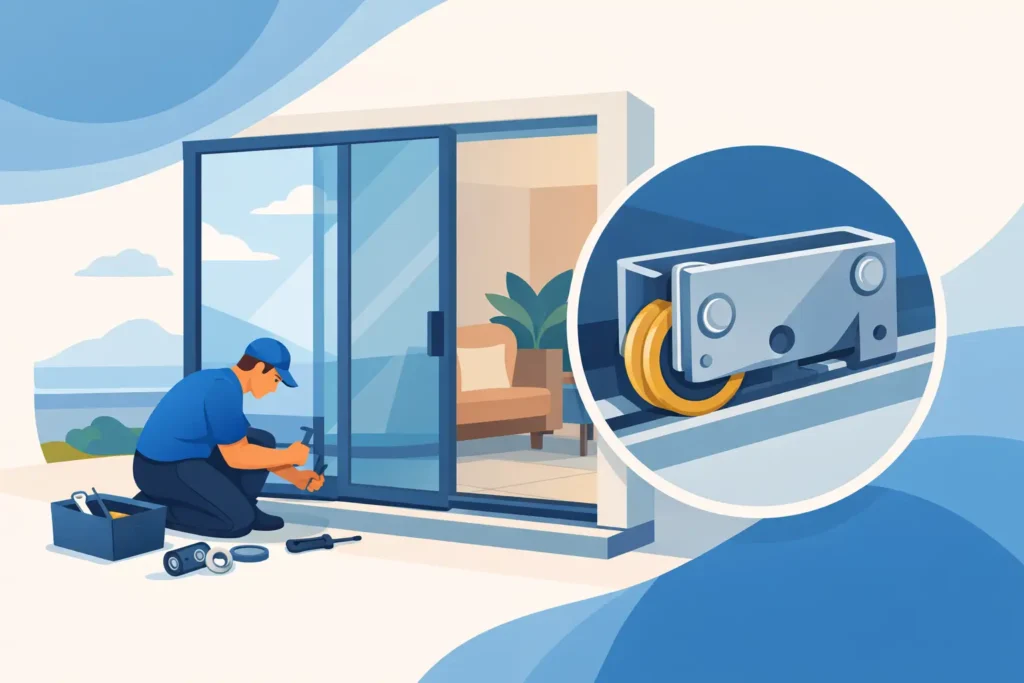
Most sliding glass doors ride on small wheel assemblies mounted at the bottom of the moving panel. These assemblies, commonly called rollers, carry the considerable weight of the glass and frame while allowing the panel to glide across a metal track. Adjustment screws raise or lower the rollers so the door aligns with the frame, meets the weatherstripping properly, and locks as intended.
Over time, rollers can wear down, seize from dirt or corrosion, crack, flatten, or fall out of adjustment. A door that weighs hundreds of pounds then drags directly against the track instead of rolling over it. That friction can shave metal from the rail, damage the bottom frame, and make the panel harder to control.
The correct repair depends on the condition of both the roller assemblies and the track. Replacing rollers can restore a door that has a sound track and frame. If the track is deeply gouged, bent, or worn flat, new rollers alone may not solve the problem for long.
Signs You Need Sliding Glass Door Roller Repair
A rough-moving door often gives clear warnings before it stops working altogether. Grinding or scraping sounds usually indicate that a wheel is not rolling correctly or the panel is sitting too low. A door that moves smoothly in one direction but binds in the other can point to uneven roller adjustment, a damaged track section, or a frame that has shifted.
Watch for a panel that rubs at the top, leaves a gap at one corner, or will not latch without lifting it. Those issues affect more than convenience. A misaligned door may not fully engage its lock, and gaps around the frame can allow water, insects, outside air, and moisture inside.
Visible black debris, metal shavings, or broken wheel fragments in the lower track are also strong signs that the operating hardware needs attention. Cleaning loose debris may make the door feel better temporarily, but it will not repair a worn wheel, a corroded roller housing, or a damaged rail.
If the glass is cracked, the frame is bent, or the panel has come partly off its track, do not keep forcing the door. The panel is heavy and can shift unexpectedly. Secure the opening if possible and arrange professional service promptly, especially when the door is an exterior entry point.
Why Rollers Fail in DMV Homes and Properties
Roller failure is usually gradual. Seasonal temperature swings cause metal components to expand and contract. Rain, humidity, and wind-driven grit collect in outdoor tracks. In older doors, original rollers may simply be at the end of their service life.
Poor drainage is another common factor. When water sits in the bottom track, steel components can rust and aluminum surfaces can corrode. Dirt mixes with moisture into an abrasive paste that wears both the wheels and the rail. Pet hair, leaves, and construction dust can contribute too.
The door’s weight matters as well. Double-pane insulated glass improves comfort and energy efficiency, but it is heavier than older single-pane glass. If a replacement glass unit was installed without checking roller condition and panel alignment, weakened hardware can become obvious soon afterward.
Not every hard-to-slide door has failed rollers. A dirty track, loose adjustment screw, broken handle, failing lock, warped frame, or settlement around the opening can create similar symptoms. That is why a proper inspection should come before ordering parts or deciding on replacement.
What a Professional Roller Repair Involves
A lasting repair begins with checking how the panel sits in the frame, how the lock engages, and whether the track is still serviceable. The technician removes the door panel safely, inspects the roller assemblies, clears debris, and examines the bottom rail for dents, corrosion, and wear.
When rollers are the problem, matching replacement assemblies is critical. Sliding door hardware is not one-size-fits-all. Roller dimensions, wheel material, mounting points, adjustment locations, and door-frame profiles vary by manufacturer and age. Installing a close-looking but incorrect part can leave the door uneven or cause the same failure to return quickly.
After the hardware is replaced, the panel is reset and adjusted so it rolls freely while maintaining even contact with weatherstripping. The technician should test travel, panel clearance, latch alignment, and lock operation. The work is not complete just because the door moves. It must close, seal, and secure properly.
If track damage is minor, careful cleaning and repair may be enough. Severe track wear can require a more extensive repair or door replacement. This is the trade-off property owners should understand: spending on rollers makes sense when the door system is otherwise sound. When the frame, rail, glass, and locking system are all deteriorating, a replacement can be the safer long-term investment.
Can You Fix a Sliding Door Roller Yourself?
Some maintenance is appropriate for a homeowner or property manager. Vacuuming the bottom track, removing loose dirt, and wiping the track with a mild cleaner can reduce drag. Check that drainage openings are clear, and avoid using heavy grease that attracts grit and becomes sticky over time. A dry lubricant designed for door tracks may help after cleaning if the rollers are still in good condition.
Roller replacement is different. The glass panel must be lifted out of the frame and supported without twisting or chipping the edges. Older doors may have brittle glazing components, concealed adjustment hardware, or unexpectedly heavy insulated units. A wrong adjustment can make the panel unstable or prevent the lock from engaging.
DIY work can be reasonable for an experienced person with the correct parts, safe lifting help, and a door that is not damaged. It is not the best choice when the door is oversized, the glass is cracked, the panel has derailed, the track is damaged, or the door serves as an important security barrier. In those situations, professional repair protects the glass, the opening, and the people using it.
When to Schedule Service Right Away
Do not wait if the door will not lock, has come off track, has a cracked pane, leaves an opening around the frame, or requires enough force that someone could fall while trying to move it. Property managers should also act quickly when a patio or balcony door is difficult to operate in a rental unit. Delays can lead to tenant complaints, moisture damage, preventable injuries, and avoidable emergency calls.
Quick Glass Repairs provides licensed and insured sliding door service with clear communication, free estimates, and workmanship backed by warranties. For urgent glass or door safety issues, same-day availability and 24/7 emergency response can help restore security without leaving an exterior opening exposed.
A sliding door does not need to become completely stuck before it deserves attention. Repairing worn rollers early protects the track, keeps the lock aligned, and brings back the easy, secure operation your property should have.